
Summer Vegetable Pasta
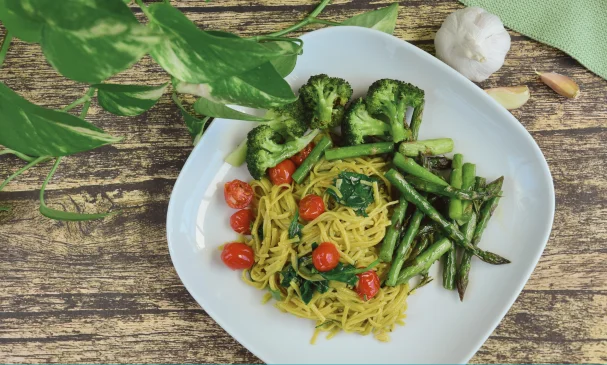
A bright, lemony vegetable dish made with zucchini noodles instead of traditional pasta, tossed with asparagus, broccoli, tomatoes and a herby cottage cheese sauce. It comes together in about 30 minutes for a colourful summer meal.
Ingredients
- 15 ml (1 tbsp)olive oil
- 340 g (12 oz)cherry tomatoes, preferably yellow
- 4 clovesgarlic, minced
- 227 g (8 oz)asparagus, woody ends trimmed and cut into 2.5 cm pieces
- 227 g (8 oz)broccoli florets
- 340 g (12 oz)frozen zucchini noodles
- 227 g (8 oz)low-fat cottage cheese
- 10 ml (2 tsp)lemon zest
- 45 ml (3 tbsp)fresh basil, thinly sliced
- 30 ml (2 tbsp)fresh parsley, finely chopped
- 60 ml (¼ cup)lemon juice
Instructions
- 1
Boil the water
Bring a large pot of water to the boil.
- 2
Blister the tomatoes
While the water heats, set a large sauté pan over medium-high heat and add the olive oil. Once hot, add the tomatoes. Cook for about 5 minutes, shaking the pan from time to time, until the tomatoes start to blister and collapse.
- 3
Cook the garlic
Lower the heat and add the garlic. Cook for about 1 minute, until fragrant. Transfer the tomatoes and garlic to a large bowl and set aside the pan without cleaning it.
- 4
Blanch the vegetables
When the water boils, cook the asparagus for 1 minute, then lift it out with a strainer and add it to the bowl of vegetables. Repeat with the broccoli. The source method also mentions peas, but they are not included in the ingredient list.
- 5
Cook the noodles
Cook the zucchini noodles according to the packet instructions, then set them aside.
- 6
Mix the herbs
In a separate bowl, combine the cottage cheese, lemon zest, basil and parsley.
- 7
Combine and heat
Return the sauté pan to medium-high heat. Add the vegetables, zucchini noodles, cottage cheese mixture and lemon juice. Stir to combine and cook for about 5 minutes, until hot and coated in the sauce.
What is summer vegetable pasta?
This is a vegetable-forward take on pasta, using spiralised zucchini in place of traditional wheat noodles. It draws on familiar Italian-inspired flavours—tomatoes, garlic, basil and olive oil—while the cottage cheese makes a quick, tangy sauce.
The recipe works by cooking the vegetables in stages, then bringing them together briefly with lemon and herbs. That keeps the zucchini noodles from spending too long in the pan.
Nutrition and macros by portion
The nutrition label shows one serving as written: 140 calories, 11g protein, 15g carbs, 5g fat.
| Portion | Adjustment | kcal | Protein | Carbs | Fat |
|---|---|---|---|---|---|
| Lighter | Use less olive oil | 98 kcal | 8g | 11g | 4g |
| This serving | As written | 140 kcal | 11g | 15g | 5g |
| Hungry | Add a larger portion | 210 kcal | 17g | 23g | 8g |
The zucchini, tomatoes, asparagus and broccoli contribute most of the carbohydrates, while the cottage cheese supplies protein and some fat. Olive oil adds most of the added fat. For a more filling balanced plate, serve a portion with wholegrain bread or a grain and extra vegetables.
Choose and prepare the vegetables
Tomatoes: Cherry tomatoes blister quickly in a hot pan, concentrating their sweetness while still holding some shape. Yellow ones make a colourful choice, but red tomatoes work too.
Asparagus and broccoli: Trim the woody asparagus ends and cut the spears into short pieces so they are easy to eat with the noodles. The ingredient list does not include peas, although the method mentions them; use only the listed vegetables unless you choose to add some.
Get the zucchini texture right
Frozen zucchini noodles can release water as they cook, so follow the packet directions and avoid leaving them in the final pan longer than needed. The brief final heating is intended to warm and coat them, not cook them until soft.
If the noodles seem wet after cooking, drain away excess liquid before adding them to the sauce. This helps keep the cottage cheese mixture from becoming thin.
Build the lemony sauce
Cottage cheese: Stir it with the lemon zest and herbs before it goes into the hot pan, so those flavours are distributed through the sauce. It gives the dish a creamy coating without needing a separate sauce-making stage.
Lemon: The juice brightens the vegetables, while the zest adds fragrant citrus flavour. Add both as directed, then taste before serving in case you prefer a little extra lemon.
Watch the cooking times
Blanching: One minute is enough for the asparagus in the recipe; remove it promptly so it does not keep cooking in the water. The broccoli is blanched separately, though no duration is specified, so cook it briefly until just tender.
Final toss: Heat everything together for about 5 minutes, stirring so the sauce coats the vegetables and noodles. Stop once it is hot; prolonged cooking can soften the zucchini and break down the tomatoes.
Serve it while hot
Serve the dish straight from the pan while the sauce is warm and the vegetables still have some bite. It can be a light main course or a generous vegetable side.
For a more substantial plate, pair it with crusty bread or a simple grain on the side. A crisp green salad also suits the lemon and basil flavours.
Recipe notes & tips
- Have the vegetables and herb mixture ready before you start cooking, as the final steps move quickly.
- Shake the pan occasionally while blistering the tomatoes so they colour on more than one side.
- Lift the asparagus out with a strainer rather than pouring away the blanching water if you are reusing it for the broccoli.
- Check the packet directions before cooking frozen zucchini noodles, since brands can differ.
- Drain excess liquid from the cooked zucchini noodles before combining them with the sauce.
- Taste the finished dish and adjust the lemon to suit your preference.
Variations
- Add peas: Include peas if you want to follow the method's mention of them, even though they are not listed as an ingredient.
- Use red tomatoes: Swap in red cherry tomatoes for a similar sweet, juicy result.
- Add chilli: Stir in a pinch of chilli flakes with the garlic for gentle heat.
- Change the herbs: Use extra basil or parsley if you do not have both herbs to hand.
- Finish with cheese: Scatter a little grated hard cheese over the hot dish for a savoury finish.
Common mistakes to avoid
- Overcooking the zucchini: Follow the packet directions and keep the final heating brief so the noodles do not turn mushy.
- Watery sauce: Drain excess liquid from the zucchini noodles before tossing them with the cottage cheese mixture.
- Burning the garlic: Lower the heat before adding it and cook only until fragrant, about 1 minute.
- Soft vegetables: Blanch the asparagus briefly and check the broccoli as it cooks so both retain some bite.
- Crowding the tomatoes: Use a large sauté pan and shake it occasionally to help the tomatoes blister rather than steam.
How to store
Refrigerate leftovers in an airtight container for up to 3 days. Reheat gently in a pan or microwave until hot; the zucchini noodles may soften and release more liquid after storage.
Frequently asked questions
Can I use fresh zucchini noodles?
Yes. Use the same weight and cook them according to their texture, since fresh noodles may need less time than frozen ones.
Do I need to thaw the frozen zucchini noodles first?
Follow the packet instructions; the recipe does not specify thawing. Drain away any excess liquid after cooking before adding them to the pan.
How long should I cook the broccoli?
The method does not give a time for the broccoli. Blanch it briefly and remove it when just tender, so it keeps some bite.
Are peas part of the recipe?
The method mentions peas, but the ingredient list does not include them or give an amount. The listed version can be made with asparagus and broccoli alone.
Can I make this ahead?
It is best freshly cooked, as zucchini noodles can soften and release liquid over time. You can prepare and chop the vegetables and mix the herbs with the cottage cheese ahead, then cook and combine just before serving.
Cook it from the original
This recipe comes from diabetesfoodhub.org. Their page has the author’s own photos, notes and tips — the best place to cook it from.
Open the recipe on diabetesfoodhub.org