
Fried Chicken Breast
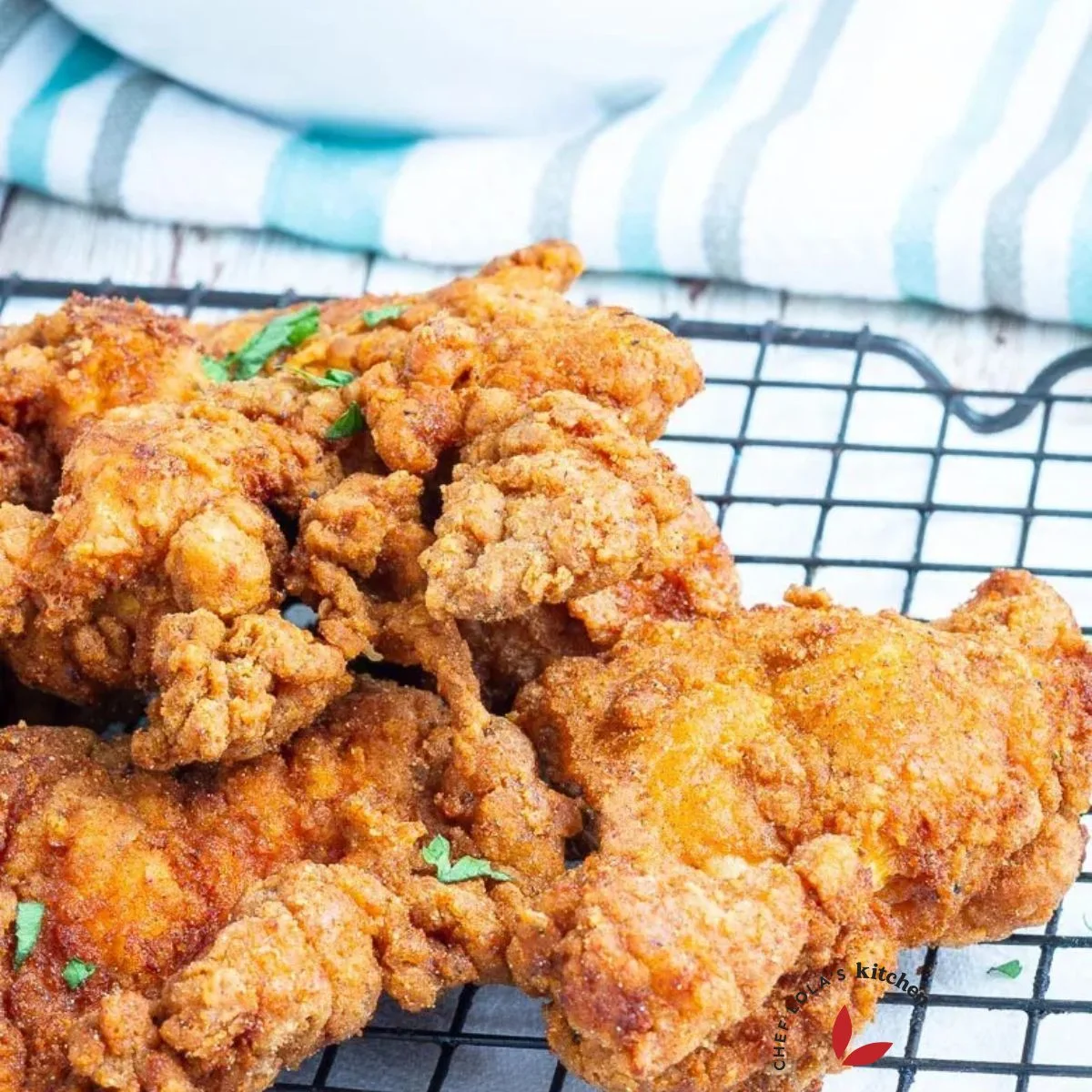
This American-style fried chicken breast is seasoned, coated in a spiced flour mixture and fried until crisp and browned. It makes a satisfying weeknight main that pairs easily with pasta, salad, rice or potatoes.
Ingredients
- 6boneless chicken breasts
- 2 tablespoons (about 14 g)smoked paprika
- ½–1 teaspooncayenne pepper
- 1 teaspoononion powder
- 1 teaspoongarlic powder
- ½ teaspoonwhite pepper
- 2 teaspoonssalt
- 2 teaspoonsthyme
- 1 teaspoonchicken bouillon powder
- 240 ml (1 cup)buttermilk
- 2eggs
- 125 g (1 cup)plain flour
- 90 g (¾ cup)cornflour (cornstarch)
- 1 teaspoonbaking powder
- To tastevegetable oil, for frying
- To tastesalt, for the buttermilk mixture
- To tastepepper, for the buttermilk mixture
Instructions
- 1
Mix the spices
In a mixing bowl, combine the smoked paprika, cayenne, onion powder, garlic powder, white pepper, salt and bouillon powder.
- 2
Flatten the chicken
Place the chicken between two pieces of cling film. Using a meat mallet or the bottom of a saucepan, gently pound it until evenly sized and about 1.3 cm (½ inch) thick.
- 3
Season the chicken
Sprinkle 1 tablespoon of the spice mix evenly over both sides of the chicken pieces. Keep the remaining spice mix for later.
- 4
Mix the buttermilk
In a bowl, combine the buttermilk and eggs, then season with salt and pepper to taste. Mix well.
- 5
Prepare the coating
In a separate bowl, combine the remaining spice mix with the plain flour, cornflour and baking powder. Mix well.
- 6
Coat the chicken
Dip each spice-coated chicken piece into the buttermilk mixture, then dip it in the flour mixture.
- 7
Fry until crisp
Heat the oil to about 180°C (350°F). Once hot, add the chicken in batches without overcrowding the pan. Fry for about 4 minutes on each side, until crisp and browned or the internal temperature reaches 74°C (165°F).
- 8
Drain the chicken
Remove the cooked chicken from the oil and place it on a wire rack so excess fat can drip away.
What is fried chicken breast?
Fried chicken is a familiar American dish, with seasoned chicken cooked in hot oil beneath a crisp coating. This version uses boneless breasts, which are flattened before frying so they cook more evenly.
The spice blend flavours both the chicken and its flour coating, while buttermilk and egg help the coating cling. The result is a crisp outside and tender meat when the chicken is cooked just through.
Nutrition and macros by portion
The nutrition label shows one serving as written: 391 calories, 30g protein, 35g carbs, 14g fat.
| Portion | Adjustment | kcal | Protein | Carbs | Fat |
|---|---|---|---|---|---|
| Lighter | Serve with extra salad | 274 kcal | 21g | 25g | 10g |
| This serving | As written | 391 kcal | 30g | 35g | 14g |
| Hungry | Add a larger side | 587 kcal | 44g | 53g | 21g |
The flour and cornflour provide most of the carbohydrates, while the chicken supplies much of the protein. Fat comes mainly from the frying oil, with smaller amounts from the eggs and buttermilk. For a balanced plate, pair a piece of chicken with vegetables or salad alongside a moderate portion of rice or potatoes.
Why flatten the breasts?
Even thickness: gently pound each breast between cling film until it is about 1.3 cm (½ inch) thick. This helps the thinner and thicker parts finish cooking at roughly the same time.
Gentle pressure: use a meat mallet or the bottom of a saucepan and stop once the pieces are even. Pounding too forcefully can tear the meat.
Building the seasoning
Spice mix: smoked paprika, cayenne, onion and garlic powders, white pepper, salt, thyme and bouillon bring savoury, smoky warmth. The method first mixes the paprika, cayenne, onion powder, garlic powder, white pepper, salt and bouillon; the thyme is listed among the ingredients but is not specified in that mixing instruction.
Heat level: the recipe gives a range of ½–1 teaspoon of cayenne, so use the lower amount for milder chicken or the higher amount for more heat.
Getting the coating to stick
Buttermilk and egg: dip each seasoned piece into this mixture first to give the flour coating something to adhere to. Let any excess drip back into the bowl before moving on.
Flour mixture: coat the chicken on all sides with the seasoned flour, cornflour and baking powder. The cornflour is part of the crisp coating, so distribute it evenly through the mixture.
Frying and checking doneness
Oil temperature: heat the oil to about 180°C (350°F) before adding chicken. Work in batches, as the recipe directs, rather than crowding the pan.
Colour and timing: fry for about 4 minutes per side, looking for a crisp, browned coating. The recipe also gives an internal temperature of 74°C (165°F) as a doneness cue.
Serving ideas
Fresh sides: serve the chicken with a salad or vegetables to add a lighter, crisp contrast to the fried coating.
Heartier sides: pasta, rice or potatoes make it a more substantial meal. Serve the chicken soon after draining so the coating stays crisp.
Recipe notes & tips
- Pound the chicken between cling film to keep the work surface cleaner.
- Mix the flour coating thoroughly so the spices are distributed throughout.
- Dip and coat the chicken one piece at a time, as directed.
- Fry in batches to avoid overcrowding the pan.
- Use the browned, crisp coating and the stated internal temperature as doneness checks.
- Drain the cooked chicken on a wire rack so excess oil can drip away.
Variations
- Milder spice: use ½ teaspoon cayenne for less heat.
- Hotter coating: use up to 1 teaspoon cayenne for more kick.
- Herb emphasis: include the listed thyme in the seasoning mix.
- Rice pairing: serve with rice for a simple, filling plate.
- Salad pairing: add a crisp salad for a fresh contrast.
Common mistakes to avoid
- Uneven pieces: pound the breasts to about 1.3 cm (½ inch) thick so they cook more evenly.
- Crowded pan: the recipe advises frying in batches rather than adding too many pieces at once.
- Cool oil: heat the oil to about 180°C (350°F) before adding the chicken.
- Patchy coating: dip each piece in the buttermilk mixture before coating it in the flour mixture.
- Guessing doneness: check for a browned, crisp coating or an internal temperature of 74°C (165°F).
How to store
Refrigerate leftover chicken in a covered container and eat within 3 days. Reheat in an oven until hot throughout; the coating may soften during storage.
Frequently asked questions
How thick should the chicken be?
Pound it to an even thickness of about 1.3 cm (½ inch), as directed in the method.
How long should I fry each piece?
The method gives about 4 minutes per side. The chicken should be crisp and browned or reach an internal temperature of 74°C (165°F).
Can I make the chicken less spicy?
Yes. Use ½ teaspoon of cayenne, the lower end of the amount listed.
Why fry in batches?
The recipe specifies batches to avoid overcrowding the pan. Cook the pieces in turns rather than adding them all at once.
What can I serve with fried chicken breast?
The recipe description suggests pasta, salad, rice or potatoes. A salad or vegetables offer a fresh contrast to the crisp coating.
Cook it from the original
This recipe comes from cheflolaskitchen.com. Their page has the author’s own photos, notes and tips — the best place to cook it from.
Open the recipe on cheflolaskitchen.com