
Roasted Butternut Squash
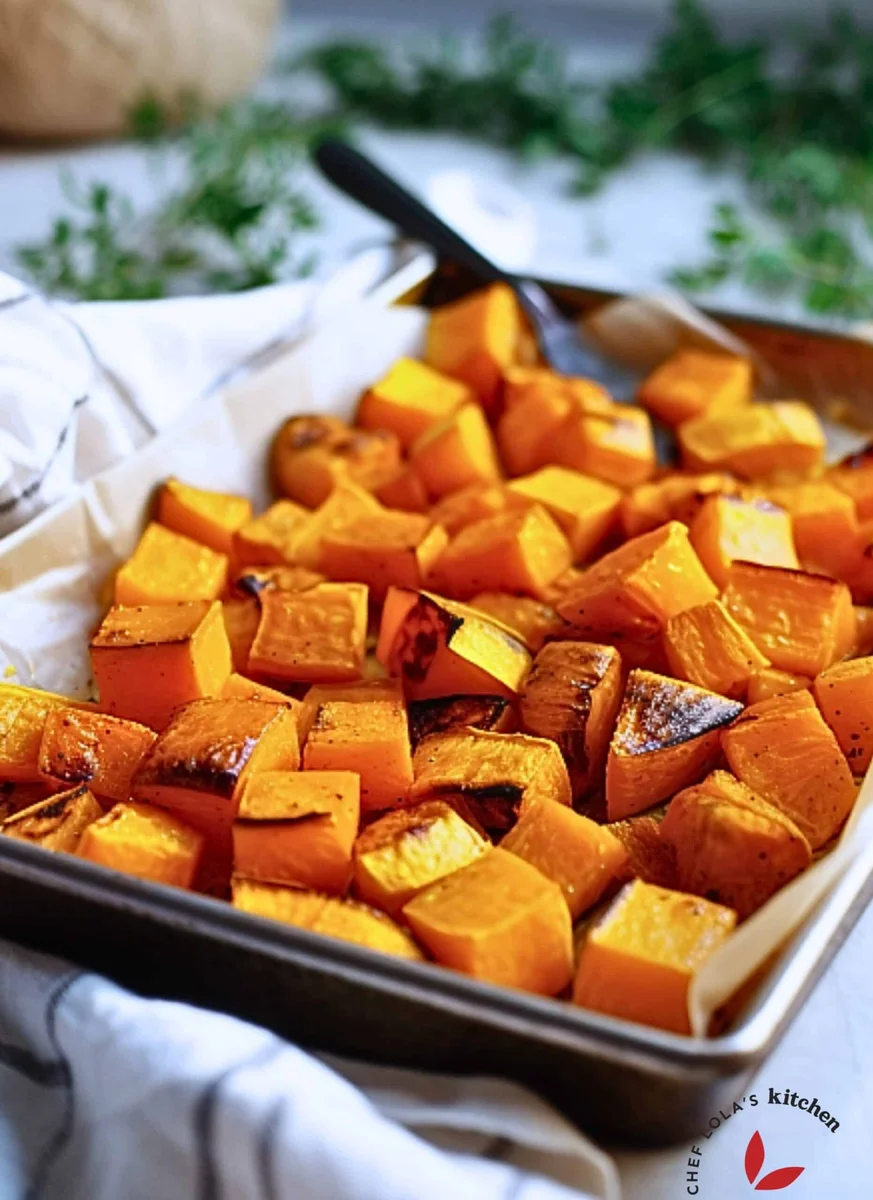
Roasted butternut squash is a simple autumn side with tender cubes, lightly browned edges, garlic and fresh herbs. It takes about 40 minutes and needs only a handful of ingredients, with an optional drizzle of maple syrup or honey for sweetness.
Ingredients
- 1 medium-sized squash (around 1.36 kg)butternut squash
- 45 ml (3 tablespoons)olive oil
- 2 clovesgarlic, minced
- to tastesalt and pepper
- 7.5 ml (½ tablespoon)fresh rosemary, chopped (or thyme)
- 30 ml (2 tablespoons)maple syrup or honey (optional)
Instructions
- 1
Heat the oven
Preheat the oven to 200°C (400°F) and line a baking sheet with parchment paper.
- 2
Cut the squash
Peel the squash with a vegetable peeler, halve it lengthways and scoop out the seeds. Cut the flesh into 2.5 cm (1-inch) cubes.
- 3
Season the cubes
Put the squash in a large bowl. Add the olive oil, minced garlic, rosemary, salt and pepper, then toss until the cubes are evenly coated.
- 4
Spread on tray
Arrange the seasoned squash on the lined baking sheet in a single layer.
- 5
Roast until tender
Bake for 25–35 minutes, stirring the squash halfway through, until tender and lightly browned at the edges.
- 6
Add optional sweetness
For a hint of sweetness, drizzle the hot squash with maple syrup or honey as soon as it comes out of the oven.
- 7
Cool and serve
Leave the squash to cool for a few minutes, then serve as a side dish.
What is roasted butternut squash?
Butternut squash is a winter squash from the Americas, and roasting is a straightforward way to bring out its naturally sweet, mellow flavour. In this version, the cubes are coated with olive oil, garlic and herbs before they go into the oven.
The method keeps the ingredient list short while aiming for soft centres and lightly browned edges. Maple syrup or honey is optional, so the squash can be served savoury or with a sweeter finish.
Nutrition and macros by portion
The nutrition label shows one serving as written: 123 calories, 2g protein, 15g carbs, 7g fat.
| Portion | Adjustment | kcal | Protein | Carbs | Fat |
|---|---|---|---|---|---|
| Lighter | Use less olive oil | 86 kcal | 2g | 11g | 5g |
| This serving | As written | 123 kcal | 2g | 15g | 7g |
| Hungry | Serve a larger portion | 185 kcal | 3g | 23g | 11g |
The squash provides most of the carbohydrates, while the olive oil contributes most of the fat; the squash and garlic provide a modest amount of protein. Pair a serving with a protein-rich main and another vegetable for a more balanced plate.
Choosing the seasonings
Fresh rosemary: Its aromatic, pine-like flavour stands up well to the squash. Thyme is an alternative if you prefer a gentler herbal note.
Garlic: Minced garlic is tossed with the oil so it coats the cubes. Keep it distributed across the squash to avoid clumps on the tray.
Sweetener: Maple syrup or honey is added only after roasting. This keeps it optional and gives you control over how sweet the finished side tastes.
Cutting the squash
Peel the squash before cutting it into halves, then use a spoon to remove the seeds. Take care when cutting: the skin and flesh can be firm, so steady the squash on a stable board.
Even cubes matter more than perfectly precise measurements. Pieces close to 2.5 cm (1 inch) should cook at a similar rate.
Getting the texture right
Single layer: Give the cubes space on the baking sheet rather than piling them up. This helps them roast instead of sitting crowded together.
Halfway stir: Turn the squash once during baking to encourage even cooking and browning. The cubes are ready when a fork slips into the centre and the edges have taken on a little colour.
Timing and doneness
The stated roasting window is 25–35 minutes at 200°C (400°F). Start checking towards the lower end, as cube size and oven performance can affect how quickly the squash softens.
If the centres are still firm, give the tray more time and check again. Avoid relying on colour alone: the squash should also be tender throughout.
Serving ideas
Serve the squash warm alongside a main course, or add it to a plate with a protein-rich dish and another vegetable. Its mild sweetness and herbal seasoning pair well with simple savoury flavours.
For a sweeter finish, use the optional maple syrup or honey just after roasting. If you are serving it as part of a larger meal, taste it first and adjust the salt and pepper as needed.
Recipe notes & tips
- Use a stable chopping board when peeling and cutting the firm squash.
- Cut the cubes to a similar size so they roast at roughly the same pace.
- Toss thoroughly so the oil and seasonings reach all the pieces.
- Spread the squash in one layer rather than crowding the baking sheet.
- Stir the cubes once halfway through roasting for more even browning.
- Add the optional maple syrup or honey after baking, not before.
Variations
- Try thyme: Use chopped fresh thyme in place of the rosemary.
- Keep it savoury: Leave out the optional maple syrup or honey.
- Add sweetness: Drizzle with maple syrup after roasting for a sweeter finish.
- Use honey: Swap the optional maple syrup for honey.
- Adjust the herbs: Combine rosemary and thyme while keeping the total amount similar.
Common mistakes to avoid
- Uneven cubes: Cut them to a similar size so smaller pieces do not soften much faster.
- Crowded tray: Spread the squash in a single layer so it roasts rather than steams.
- Skipping the stir: Turn the cubes halfway through to encourage even cooking.
- Under-seasoning: Toss the squash well with the oil, garlic, herbs, salt and pepper before roasting.
- Adding syrup too early: Drizzle maple syrup or honey over the squash only after it leaves the oven.
How to store
Refrigerate leftovers in an airtight container for up to 3–4 days. Reheat in the oven until hot, or warm them in a frying pan; the edges may be softer after storage.
Frequently asked questions
Can I leave the squash unpeeled?
This method calls for peeling the squash first. For the closest result to the recipe, remove the skin before cutting it into cubes.
Can I use dried rosemary instead of fresh?
The recipe specifies fresh rosemary or thyme. Dried herbs are more concentrated, so use a smaller amount and season to taste.
How do I know when the squash is cooked?
It should be tender when pierced with a fork, with lightly browned edges. The recipe gives a roasting time of 25–35 minutes, with a stir halfway through.
Can I make this without maple syrup or honey?
Yes. Both are optional, and the squash can be served with the garlic, herbs, salt and pepper alone.
Why is my squash not browning?
The cubes may be crowded on the baking sheet. Arrange them in a single layer with room between them and stir once halfway through.
Cook it from the original
This recipe comes from cheflolaskitchen.com. Their page has the author’s own photos, notes and tips — the best place to cook it from.
Open the recipe on cheflolaskitchen.com