
Nasi Goreng (Indonesian Fried Rice)
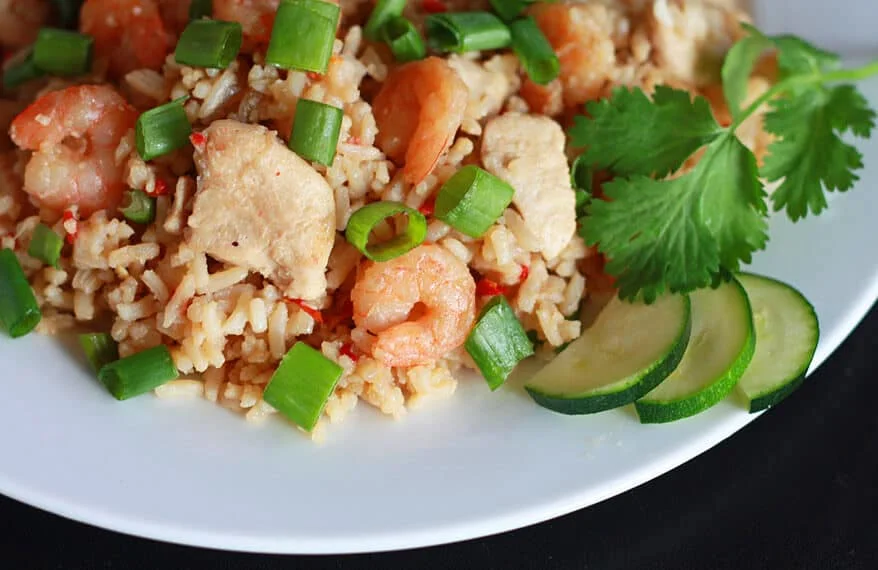
Nasi goreng is Indonesian fried rice tossed with chicken, shrimp, aromatics and sweet-savoury kecap manis. Chilling the rice overnight helps keep the grains separate as they fry, while a fried egg makes a satisfying optional topping.
Ingredients
- 285 g (1½ cups)long-grain white rice
- 710 ml (3 cups)chicken broth
- 45 ml (3 tablespoons)olive oil or vegetable oil
- About 300 g (2 cups)shallots or onions, thinly sliced
- 2 clovesgarlic, minced
- 454 g (1 lb)skinless, boneless chicken breast, cut into 1.3 cm (½-inch) pieces
- 454 g (1 lb)medium shrimp, peeled and deveined
- 2–3fresh hot red chillies, with seeds and membranes discarded
- 5 g (1 teaspoon)salt
- 60 ml (¼ cup)chicken broth
- 45–60 ml (3–4 tablespoons)kecap manis
- 15 ml (1 tablespoon)Asian fish sauce
- 4spring onions, sliced
- 4eggs, fried, to serve with the rice (optional)
Instructions
- 1
Cook the rice
Bring the rice and 710 ml chicken broth to the boil in a saucepan. Turn the heat down low, cover and cook for 15 minutes, or until the rice is tender and the liquid has been absorbed. Fluff with a fork, spread on a baking tray and leave to cool. Refrigerate uncovered overnight, then separate the grains with your fingers the next day.
- 2
Fry the aromatics
Heat the oil in a wok or heavy frying pan over a high heat until hot. Add the onions and stir-fry for 1 minute, then add the garlic and stir-fry for 30 seconds.
- 3
Cook the chicken
Add the chicken and stir-fry for about 3–4 minutes, until cooked.
- 4
Add the seafood
Add the shrimp, chillies and salt. Stir-fry for another 3 minutes, or until the shrimp are cooked; take care not to overcook them, or they may turn tough.
- 5
Toss with rice
Add the cold rice, 60 ml chicken broth, 45 ml kecap manis and the fish sauce. Toss until the rice is heated through, adding more kecap manis to taste. Add the spring onions and toss to combine.
- 6
Serve with eggs
Serve straight away, topped with a fried egg per portion if you like.
What is nasi goreng?
Nasi goreng means fried rice in Indonesian and is a familiar dish across Indonesia, with many household and regional variations. This version combines rice with chicken, shrimp, chilli and kecap manis, a thick, sweet Indonesian soy sauce.
The sweet-savoury seasoning coats the grains, while the mix of meat and seafood makes this version especially substantial. A fried egg on top is an optional finishing touch.
Nutrition and macros by portion
The nutrition label shows one serving as written: 750 calories, 52g protein, 75g carbs, 24g fat.
| Portion | Adjustment | kcal | Protein | Carbs | Fat |
|---|---|---|---|---|---|
| Lighter | Skip the fried egg | 525 kcal | 36g | 53g | 17g |
| This serving | As written | 750 kcal | 52g | 75g | 24g |
| Hungry | Add a fried egg | 1125 kcal | 78g | 113g | 36g |
Most of the carbohydrates come from the rice, while the chicken and shrimp provide much of the protein. Oil, kecap manis and the optional fried egg contribute fat; the sauces and broth also contribute sodium. For a more balanced plate, serve it with a side of fresh vegetables.
Why chill the rice overnight?
Cold, rested rice is less moist and easier to separate than freshly cooked rice, helping it fry without clumping. Spread it out to cool before refrigerating, as directed, then loosen the grains by hand before adding them to the pan.
The overnight rest is part of the method, so allow for it even though the listed active cooking time is 40 minutes.
Choosing the seasoning
Kecap manis: This Indonesian sweet soy sauce brings both sweetness and savoury depth. Start with 3 tablespoons, then add more to taste as the rice heats through.
Fish sauce: A tablespoon adds a salty, savoury note alongside the kecap manis. Taste the finished rice before adding extra salt, since the broth and sauces also contribute seasoning.
Chillies: Removing the seeds and membranes keeps the heat more controlled. Use two chillies for a gentler result or three for more warmth.
Getting the stir-fry right
Hot pan: Heat the wok or heavy frying pan well before the oil and vegetables go in. Keep the ingredients moving as they cook so the garlic does not sit too long in the hottest part of the pan.
Order matters: The onions soften first, followed briefly by the garlic; chicken cooks before the shrimp. Add the rice and sauces only after the seafood is cooked.
When the chicken and shrimp are done
Chicken: Stir-fry the pieces for about 3–4 minutes, as specified, until cooked through. Cutting them evenly helps them cook at a similar pace.
Shrimp: Allow about 3 minutes, checking that they are cooked before moving on. Take them off the heat promptly once done, since extra cooking can make them tough.
Serving the rice
Toss in the spring onions at the end so they retain some freshness, then serve the rice immediately while hot. If using the optional eggs, fry them separately and place one on each serving.
The recipe is a complete meal as written. A simple side of fresh cucumber or other crisp vegetables can add a cool contrast to the savoury, sweet and spicy rice.
Recipe notes & tips
- Cook the rice the day before so it has time to cool and chill uncovered overnight.
- Spread the cooked rice across a baking tray to help it cool before refrigerating.
- Break up the chilled rice by hand so clumps are less likely to remain in the finished dish.
- Prepare the chicken, shrimp and sliced vegetables before heating the wok, as the cooking moves quickly.
- Begin with 3 tablespoons of kecap manis and adjust the seasoning to taste.
- Add the spring onions at the end, tossing just long enough to combine.
Variations
- Use vegetable oil: Choose it instead of olive oil for a more neutral flavour.
- Adjust the heat: Use two chillies for less spice or three for a hotter result.
- Make it egg-free: Leave off the optional fried eggs.
- Use onions: Choose sliced onions instead of shallots, as the recipe allows.
- Change the topping: Serve the fried egg separately if you prefer to add it at the table.
Common mistakes to avoid
- Using freshly cooked rice: It can be moist and clumpy; cool it on a tray and refrigerate it uncovered overnight as directed.
- Adding all the kecap manis at once: The recipe gives a range; start with 3 tablespoons and add more to taste.
- Overcooking the shrimp: They can become tough; stop stir-frying once they are cooked.
- Crowding the cooking stages: Adding everything together skips the recipe's timing; cook the onions, garlic, chicken and shrimp in order.
- Leaving garlic in the pan too long: Add it after the onions and stir-fry for just 30 seconds before adding the chicken.
How to store
Refrigerate leftover rice promptly in a covered container and use within 1–2 days. Reheat until steaming hot, stirring so the rice and meat heat evenly; cook fried eggs fresh for serving.
Frequently asked questions
Can I make the rice on the same day?
The recipe calls for cooling the cooked rice and refrigerating it uncovered overnight. That rest helps the grains separate for frying, so plan ahead rather than skipping it.
How spicy is this nasi goreng?
The heat depends on the chillies. The recipe removes their seeds and membranes; use two for a milder version or three for more heat.
Can I leave out the shrimp?
The recipe includes both chicken and shrimp, so leaving out the shrimp changes the dish. If you do, keep an eye on the seasoning and avoid extending the cooking time for the chicken unnecessarily.
What can I use instead of kecap manis?
Kecap manis gives this dish its characteristic sweet-savoury seasoning. The recipe does not specify a substitute, so use it if possible and adjust the amount to taste.
How do I know the shrimp are cooked?
Stir-fry them for about 3 minutes, as directed, and check that they are cooked before adding the rice. Avoid cooking them longer than needed, since they can become tough.
Do I have to serve it with fried eggs?
No. The eggs are optional; serve the rice without them if you prefer.
Cook it from the original
This recipe comes from daringgourmet.com. Their page has the author’s own photos, notes and tips — the best place to cook it from.
Open the recipe on daringgourmet.com