
Spicy Tuna Crispy Rice (Nobu Copycat)
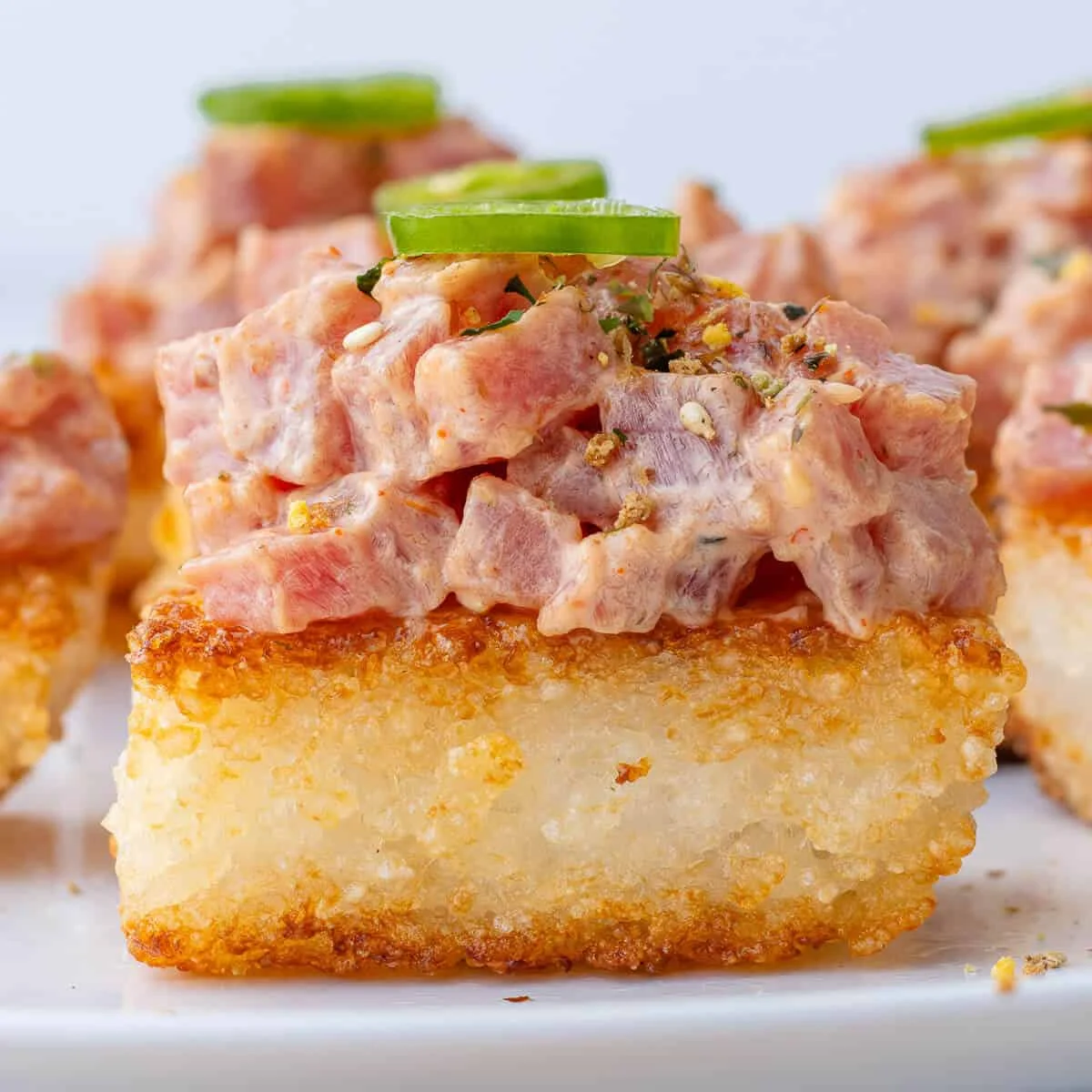
These Japanese-inspired bites pair golden, pan-fried sushi rice with creamy, spicy diced tuna. They make an impressive appetiser, with most of the preparation happening while the rice chills and sets.
Ingredients
- 190 g (1 cup)Japanese sushi rice
- 355 ml (1½ cups)water
- 1 teaspoonsugar
- 1½ tablespoonsrice wine vinegar
- Pinchsea salt
- 60 ml (4 tablespoons)neutral oil, such as rapeseed oil
- 200 g (7 oz)fresh sushi-grade ahi tuna
- 2 tablespoonsJapanese Kewpie mayonnaise
- 1 tablespoon, or to tastesriracha
- 2 teaspoonssoy sauce
- 1 teaspoonsesame oil
- To tastefurikake, jalapeño slices, avocado slices or mashed avocado
Instructions
- 1
Rinse the rice
Rinse the sushi rice under water about five times, until the water is nearly clear rather than cloudy. If using a rice cooker, skip to cooking the rice.
- 2
Cook the rice
Put the rice and 355 ml water in a saucepan over medium-high heat and bring to the boil. Reduce the heat to low-medium, cover and simmer for 15 minutes. Take the pan off the heat and leave it covered for 5 minutes to steam.
- 3
Season the rice
Mix the sugar, rice wine vinegar and a pinch of salt in a small bowl. Transfer the cooked rice to a large bowl, pour over the vinegar mixture and gently fold it through with a wooden paddle or spatula until evenly seasoned.
- 4
Chill the rice
Line a tray or container with cling film and transfer the rice to it. Press it into a compact, even layer with the back of a spoon. Chill in the fridge for 3 hours or in the freezer for 1 hour, until set.
- 5
Cut into squares
Once set, use a sharp knife to cut the rice into even squares or rectangles.
- 6
Fry the rice
Heat the neutral oil in a large frying pan over medium-high heat. Carefully add the rice pieces, leaving space between them, and fry for a few minutes on each side until golden brown. Transfer them to a cooling rack to help keep them crisp.
- 7
Dice the tuna
With a sharp knife, cut the tuna into small cubes and place them in a large bowl.
- 8
Mix the topping
Add the Kewpie mayonnaise, sriracha, soy sauce and sesame oil to the tuna. Stir with a spoon, then taste and adjust the seasoning and heat to your preference.
- 9
Assemble and serve
Spoon some spicy tuna onto each crispy rice piece. Finish with furikake and a jalapeño slice, if using, and serve with soy sauce for dipping.
What is spicy tuna crispy rice?
This appetiser brings together seasoned Japanese sushi rice and a topping of spicy tuna, mayonnaise and chilli sauce. It is inspired by the crispy rice and raw-fish combinations found in Japanese restaurants.
Here, the rice is pressed into a slab, chilled until firm and fried in individual pieces. That makes a crisp, golden base for the cool, creamy tuna.
Nutrition and macros by portion
The nutrition label shows one serving as written: 172 calories, 6g protein, 16g carbs, 9g fat.
| Portion | Adjustment | kcal | Protein | Carbs | Fat |
|---|---|---|---|---|---|
| Lighter | Use less mayonnaise | 120 kcal | 4g | 11g | 6g |
| This serving | As written | 172 kcal | 6g | 16g | 9g |
| Hungry | Serve extra rice pieces | 258 kcal | 9g | 24g | 14g |
The rice supplies most of the carbohydrates, while the frying oil, mayonnaise and sesame oil contribute much of the fat. Tuna provides the protein, with soy sauce also contributing sodium. Serve with a fresh vegetable salad to add contrast and round out the plate.
Why chill the rice?
Firm, compact rice is much easier to cut and move into the frying pan than warm, loose rice. The recipe allows 3 hours in the fridge or 1 hour in the freezer for it to set.
Press the rice into an even layer before chilling so the pieces are a similar thickness and cook at roughly the same rate.
Getting a crisp, golden base
Rice: Rinse it about five times, as directed, to remove excess surface starch before cooking. Once cooked, fold in the vinegar mixture gently so the grains are seasoned without being mashed.
Frying: Use a large pan over medium-high heat and leave space between the pieces. Fry for a few minutes on each side, looking for an evenly golden surface, then rest them on a cooling rack.
Choosing and handling the tuna
Tuna: Use fresh, sushi-grade ahi tuna as specified, and keep it chilled until you are ready to dice and mix it. Cut it into small, even cubes so it sits neatly on the rice.
Sauce: Kewpie mayonnaise gives the topping a creamy base, while sriracha brings the heat and soy sauce and sesame oil add savoury depth. Taste the mixture before assembling and adjust the sriracha to suit.
A neat way to assemble
Let the fried rice pieces rest on a rack rather than stacking them, which helps preserve their crisp exterior. Add the tuna shortly before serving so its moisture does not soften the rice.
Use a small spoonful of topping on each piece, then finish with furikake and a jalapeño slice if desired. Avocado can also be used as a topping, as listed in the ingredients.
Serving ideas
Serve the pieces as a starter or party appetiser, with soy sauce on the side for dipping. A fresh, lightly dressed salad or sliced vegetables can add a crisp contrast to the rich tuna and fried rice.
Arrange the toppings just before serving so the rice stays at its best. If making a platter, keep the pieces in a single layer.
Recipe notes & tips
- Rinse the rice until the water is nearly clear, as directed, before cooking.
- Use a wooden paddle or spatula to fold the vinegar mixture through the cooked rice gently.
- Press the rice into a level, compact layer so it cuts into even pieces after chilling.
- Keep the tuna chilled while preparing the rice and toppings.
- Fry the rice in batches if needed so the pieces have room in the pan.
- Add the tuna topping close to serving time to help the rice stay crisp.
Variations
- Adjust the heat: Use less sriracha for a milder tuna topping.
- Add avocado: Top with avocado slices or a little mashed avocado instead of jalapeño.
- Use a different garnish: Sprinkle furikake over the assembled bites for extra savoury flavour.
- Change the shape: Cut the chilled rice into rectangles rather than squares.
- Serve with soy: Put soy sauce on the side for dipping.
Common mistakes to avoid
- Skipping the chill: Warm rice is harder to cut and handle; chill it for 3 hours or freeze it for 1 hour until set.
- Uneven rice layer: Pieces may cook inconsistently; press the rice into a compact, level layer before chilling.
- Crowding the pan: The pieces need space to fry evenly; cook them in batches if necessary.
- Turning too soon: The rice may not have browned; fry each side for a few minutes until golden.
- Stacking the fried pieces: They can lose their crispness; let them rest in a single layer on a cooling rack.
- Adding topping too early: The tuna mixture can soften the rice; assemble shortly before serving.
How to store
For the best texture, serve the fried rice and tuna topping soon after assembly. Refrigerate any leftover tuna mixture promptly in a covered container and use within 1 day; keep leftover rice pieces separate and reheat them in a frying pan until hot and crisp. Do not leave the raw tuna at room temperature.
Frequently asked questions
Can I use a rice cooker?
Yes. The method says to skip the saucepan cooking step if you are using a rice cooker; rinse the rice first, then cook it according to your cooker’s instructions.
How long does the rice need to chill?
Chill it in the fridge for 3 hours or in the freezer for 1 hour. It should be set and firm enough to cut into pieces.
Can I make the rice ahead?
Yes. Cook, season, press and chill the rice in advance, then cut and fry it when you are ready to serve. Keep it covered while chilling.
How can I make the tuna less spicy?
Start with less sriracha than the listed tablespoon, mix the topping and taste it. Add more gradually if you want extra heat.
What can I use instead of jalapeño?
Use avocado slices or mashed avocado, both listed as topping options, or finish the bites with furikake.
How do I keep the rice crispy?
Leave space between the pieces while frying and rest them on a cooling rack rather than stacking them. Add the tuna topping shortly before serving.
Cook it from the original
This recipe comes from cookingwithayeh.com. Their page has the author’s own photos, notes and tips — the best place to cook it from.
Open the recipe on cookingwithayeh.com