
Salsa Tatemada (Charred Roasted Salsa)
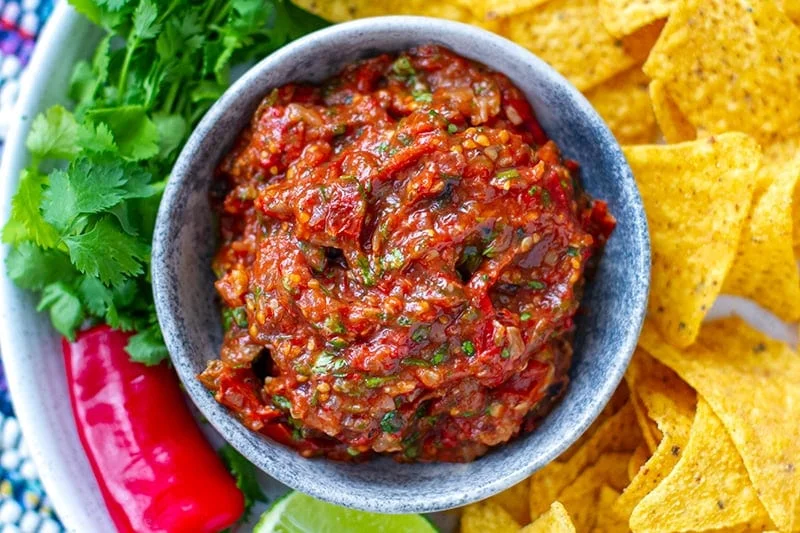
Salsa tatemada is a smoky Mexican salsa made by charring tomatoes, onion, chiles and garlic before blending them with fresh coriander and lime. Serve it as a dip or spoon it over tacos, grilled food and other savoury dishes.
Ingredients
- A littleolive oil
- 1 largeonion, cut into 5–7 wedges
- 1red chilli (serrano), halved lengthways and deseeded
- 1green jalapeño, halved and deseeded
- 300–350 g (0.7 lb)cherry tomatoes
- 5garlic cloves, left whole in their skins
- 15 g (⅓ cup)fresh coriander
- 15 ml (1 tablespoon)lime juice
- ⅓ teaspoonsalt
Instructions
- 1
Heat the oven
Preheat the oven to 250°C (480°F). Drizzle a flat baking tray with a little olive oil, then spread the tomatoes, chillies, onion and whole garlic cloves in their skins across it. Roast on the middle shelf for 20 minutes. Take out the garlic, return the tray to the oven and roast the remaining vegetables for another 5–10 minutes.
- 2
Cool the vegetables
Remove the garlic from its skins and leave the vegetables to cool slightly.
- 3
Pulse the salsa
Put all the roasted ingredients into a food processor or blender; a mortar and pestle can also be used. Add the coriander, lime juice and salt, then blend in short pulses until the salsa is coarse rather than smooth.
- 4
Serve or store
Serve straight away, or refrigerate in an airtight container for up to 7 days.
- 5
Make a larger batch
Double the ingredients for a larger batch, or add a few extra tomatoes.
What is salsa tatemada?
Salsa tatemada is a Mexican salsa built around charred ingredients; the name refers to the toasted or charred quality that gives it its distinctive flavour. This version roasts tomatoes, onion, chillies and garlic, then finishes them with coriander and lime.
The short roasting and brief pulsing keep the salsa smoky and fresh, with a coarse texture that works for dipping or spooning over a meal.
Nutrition and macros by portion
The nutrition label shows one serving as written: 72 calories, 2g protein, 9g carbs, 4g fat.
| Portion | Adjustment | kcal | Protein | Carbs | Fat |
|---|---|---|---|---|---|
| Lighter | Use less olive oil | 50 kcal | 1g | 6g | 3g |
| This serving | As written | 72 kcal | 2g | 9g | 4g |
| Hungry | Serve with extra tortillas | 108 kcal | 3g | 14g | 6g |
The tomatoes and onion provide most of the carbohydrates, while the olive oil contributes fat; the vegetables and coriander provide a small amount of protein. Serve it with beans or another protein-rich dish and plenty of vegetables to make a more balanced plate.
Choosing the ingredients
Tomatoes: Cherry tomatoes roast quickly and bring sweetness and acidity. Use the full 300–350 g range depending on how tomato-forward you want the salsa.
Chillies: Serrano and jalapeño provide the heat. Removing the seeds makes the result milder; leave some in if you prefer more fire.
Garlic: Roast the cloves in their skins so they soften without scorching, then squeeze them out before blending.
Getting the char right
Spread the vegetables across the tray rather than piling them up, so they roast and blister instead of steaming. The oven is very hot, so keep an eye on them during the final 5–10 minutes.
Take out the garlic after the first 20 minutes as directed; the smaller cloves can brown before the other vegetables are ready.
Keep a coarse texture
Pulse briefly and check the salsa between bursts. It should be combined but still have visible pieces, not the consistency of a smooth purée.
A mortar and pestle offers a more hands-on way to crush the roasted ingredients. Work in batches if needed, keeping the same chunky finish.
Adjust the heat and balance
Heat: The two types of chilli give the salsa a layered warmth. For a gentler result, deseed them thoroughly; for more heat, retain some seeds.
Finish: Lime juice lifts the roasted flavours, while salt brings them into focus. Taste after blending and adjust only if needed.
When to serve it
The salsa can be served as soon as it is blended, once the roasted vegetables have cooled slightly. It also works as a condiment alongside tacos, grilled vegetables, eggs or roasted meat.
For a simple spread, serve it with tortilla chips and other dips. Its smoky, tangy flavour also makes a useful contrast to richer dishes.
Recipe notes & tips
- Line the baking tray if you want to make cleanup easier.
- Cut the onion into similarly sized wedges so the pieces roast at a similar pace.
- Keep the garlic cloves whole and in their skins during roasting.
- Let the vegetables cool slightly before blending to reduce steam and splatter.
- Pulse in short bursts and stop while the salsa is still chunky.
Variations
- Milder salsa: Deseed both chillies thoroughly before roasting.
- More tomato: Add a few extra cherry tomatoes for a fruitier result.
- Smokier flavour: Let the vegetables develop deeper char, checking often so they do not burn.
- Mortar and pestle: Crush the roasted ingredients by hand for a more traditional-style texture.
- Extra lime: Add a little more lime juice at the end for a sharper finish.
Common mistakes to avoid
- Crowded tray: The vegetables may steam instead of charring; spread them out evenly.
- Overcooked garlic: It can turn bitter; remove the cloves after the first 20 minutes.
- Smooth blending: The salsa loses its intended texture; use short pulses and stop early.
- Blending while very hot: Steam can build up in the blender; let the vegetables cool slightly first.
- Too much chilli heat: The salsa can overpower the other flavours; remove the seeds before roasting.
How to store
Keep the salsa in an airtight container in the refrigerator for up to 7 days. Serve it chilled or let it sit briefly at room temperature before serving; stir to redistribute any separated juices.
Frequently asked questions
Can I make this salsa without a food processor?
Yes. Use a mortar and pestle to crush the roasted vegetables with the coriander, lime juice and salt, working until the salsa is coarse.
How do I make it less spicy?
Remove the seeds from both chillies before roasting, as the recipe directs. For an even milder salsa, use less chilli.
Can I use larger tomatoes?
Yes, but cut them into pieces so they roast evenly with the onion and chillies. Check their doneness as they may take a different amount of time.
Why roast the garlic in its skin?
The skin helps protect the cloves from the high oven heat. Remove it after roasting, once the garlic has softened.
Can I prepare the salsa ahead?
Yes. Make it ahead and store it in an airtight container in the refrigerator for up to 7 days.
How can I make a larger batch?
Double the ingredients as suggested. Roast in batches if necessary so the vegetables have room to char.
Cook it from the original
This recipe comes from cookedandloved.com. Their page has the author’s own photos, notes and tips — the best place to cook it from.
Open the recipe on cookedandloved.com