
Garlic Herb Butter Chicken
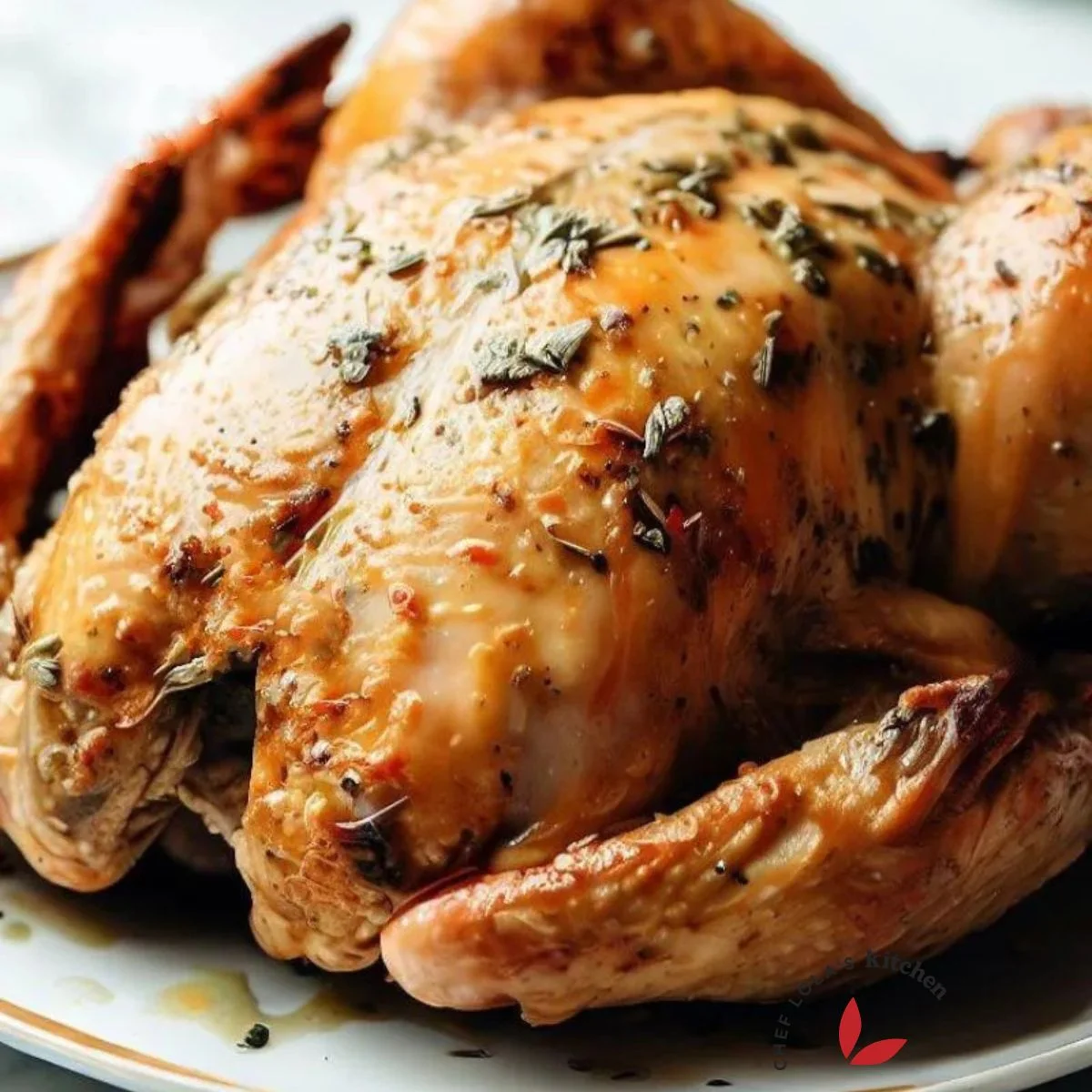
A whole roast chicken gets its flavour from softened butter mixed with fresh herbs, garlic and lemon, rubbed both beneath and over the skin. It makes a generous centrepiece, with roasting-pan juices to spoon over the carved meat.
Ingredients
- 1 whole, 1.4–1.8 kg (3–4 lb)chicken
- 113 g (8 tablespoons)unsalted butter, softened
- 60 ml (¼ cup)mixed fresh herbs, any two of parsley, thyme, rosemary and oregano, finely chopped
- 4 clovesgarlic, minced
- 1lemon, zested and juiced
- to tastesalt and pepper
- 1 largeonion, peeled and quartered
- 1lemon, halved
- 2 sprigsrosemary
- 2 sprigsthyme
- 120 ml (½ cup), optionalchicken broth or white wine
Instructions
- 1
Heat the oven
Preheat the oven to 220°C (425°F).
- 2
Prepare the chicken
Remove the giblets and any excess fat from the cavity. Rinse the chicken inside and out with cold water, then pat it dry with paper towels.
- 3
Mix the herb butter
In a small bowl, combine the softened butter, chopped herbs, minced garlic, lemon zest and lemon juice. Season to taste with salt and pepper.
- 4
Butter the chicken
Carefully loosen the skin over the breasts and thighs without tearing it. Spread about two-thirds of the herb butter beneath the skin, covering the breast and thigh meat, then rub the rest over the outside. Season the chicken generously with salt and pepper.
- 5
Fill the cavity
Put the onion quarters, halved lemon, rosemary sprigs and thyme sprigs inside the chicken.
- 6
Tuck the wings
Tie the legs together with kitchen twine and tuck the wing tips beneath the chicken.
- 7
Roast the chicken
Set the chicken breast-side up on a rack in a roasting pan. If using broth or wine, pour it into the bottom of the pan. Roast for 1 hour 15 minutes, until the juices run clear when you cut between a leg and thigh and the internal temperature reaches 74°C (165°F).
- 8
Rest before carving
Take the chicken out of the oven and move it to a cutting board. Loosely tent it with foil and leave it to rest for 15–20 minutes before carving.
- 9
Carve and serve
Carve the chicken and serve.
What is garlic herb butter chicken?
This is a whole roast chicken flavoured with butter, herbs, garlic and lemon. The recipe draws on the familiar approach of roasting poultry with aromatics, rather than a specific regional cuisine.
The butter goes both under the skin and over it, so the seasoning is in close contact with the meat as well as the outside. Onion, lemon and herb sprigs in the cavity add fragrance while the chicken roasts.
Nutrition and macros by portion
The nutrition label shows one serving as written: 238 calories, 2g protein, 10g carbs, 23g fat.
| Portion | Adjustment | kcal | Protein | Carbs | Fat |
|---|---|---|---|---|---|
| Lighter | Less butter, more vegetables | 167 kcal | 1g | 7g | 16g |
| This serving | As written | 238 kcal | 2g | 10g | 23g |
| Hungry | Larger chicken portion | 357 kcal | 2g | 15g | 35g |
The chicken provides most of the protein, while the butter contributes much of the fat; the onion, lemon and any broth or wine add smaller amounts of carbohydrate. Serve a portion with vegetables and potatoes or another starch to make a balanced plate.
Choosing the herbs
Fresh herbs: Choose any two from parsley, thyme, rosemary and oregano, as the recipe allows. Chop them finely so they mix evenly into the softened butter.
Garlic and lemon: Minced garlic, lemon zest and juice give the butter a savoury, bright flavour. Zest the lemon before juicing it.
Getting the butter under the skin
Loosen gently: Work your fingers under the skin over the breasts and thighs, taking care not to puncture it. Spread roughly two-thirds of the butter underneath, where it seasons the meat directly.
Finish outside: Rub the remaining mixture over the skin and season the chicken generously. This also helps distribute the herb and garlic flavour across the surface.
Roasting and checking doneness
Set-up: Roast the chicken breast-side up on a rack, with broth or wine in the bottom of the pan if you are using it. The rack keeps the chicken raised above the liquid.
Doneness: The recipe gives both a visual check and a temperature target: juices should run clear at the joint between leg and thigh, and the internal temperature should reach 74°C. Check at the thickest part without touching bone.
Resting before carving
Resting time: Transfer the chicken to a board and tent it with foil for 15–20 minutes. This pause also makes carving easier than cutting straight from the oven.
Carving: Separate the legs and wings, then slice the breast meat. Serve the portions with any pan juices you wish to spoon over them.
What to serve with it
Potatoes: Creamy mashed potatoes are a natural match for the herb butter and roasting juices. Roast potatoes or boiled new potatoes are alternatives if you prefer a different texture.
Vegetables: Add a green vegetable, such as steamed greens or green beans, for a fresh contrast. The chicken is also substantial enough to serve with a simple salad.
Recipe notes & tips
- Let the butter soften enough to mix easily, but keep it cool enough to spread.
- Chop the herbs finely so they are easy to distribute beneath the skin.
- Use kitchen twine to keep the legs together and tuck the wing tips underneath.
- If you use broth or wine, pour it into the pan rather than over the chicken.
- Rest the chicken for the full 15–20 minutes before carving.
- Check the temperature at the thickest part of the meat, away from the bone.
Variations
- Change the herbs: Use any two of the listed fresh herbs to alter the flavour.
- Use white wine: Pour white wine into the roasting pan instead of chicken broth.
- Skip the pan liquid: Leave out the optional broth or wine and roast without it.
- Add extra lemon: Serve with additional lemon wedges for squeezing at the table.
- Pair with mash: Serve with creamy mashed potatoes to make a more filling meal.
Common mistakes to avoid
- Tearing the skin: Loosen it slowly with your fingers rather than forcing it.
- Uneven buttering: Spread most of the mixture under the skin over both breasts and thighs.
- Skipping the temperature check: Check that the thickest part reaches 74°C, as well as looking for clear juices.
- Carving too soon: Rest the chicken for 15–20 minutes before cutting into it.
- Putting the chicken flat in the pan: Use a rack as directed so the chicken is raised above the pan bottom.
How to store
Refrigerate leftover chicken in a covered container within 2 hours of cooking and use within 3–4 days. Reheat portions until steaming hot throughout; add a little broth when reheating if the meat seems dry.
Frequently asked questions
Can I use dried herbs instead of fresh?
The recipe specifies fresh herbs. Dried herbs have a more concentrated flavour, so use them only if you are comfortable adjusting the amount to taste.
Do I have to use broth or wine?
No. The liquid is optional; the recipe works without it. If using it, pour it into the bottom of the roasting pan.
How do I know the chicken is cooked?
Check for clear juices where the leg meets the thigh and an internal temperature of 74°C (165°F) in the thickest part, away from the bone.
Why put butter beneath the skin?
It places the herb butter directly against the breast and thigh meat. Loosen the skin carefully so it stays intact.
Can I prepare the herb butter ahead?
You can mix the butter, herbs, garlic and lemon ahead and keep it chilled. Soften it enough to spread before seasoning the chicken.
How long should the chicken rest?
Rest it under a loose foil tent for 15–20 minutes before carving, as the recipe directs.
Cook it from the original
This recipe comes from cheflolaskitchen.com. Their page has the author’s own photos, notes and tips — the best place to cook it from.
Open the recipe on cheflolaskitchen.com