
Tropical Pineapple Strawberry Smoothie
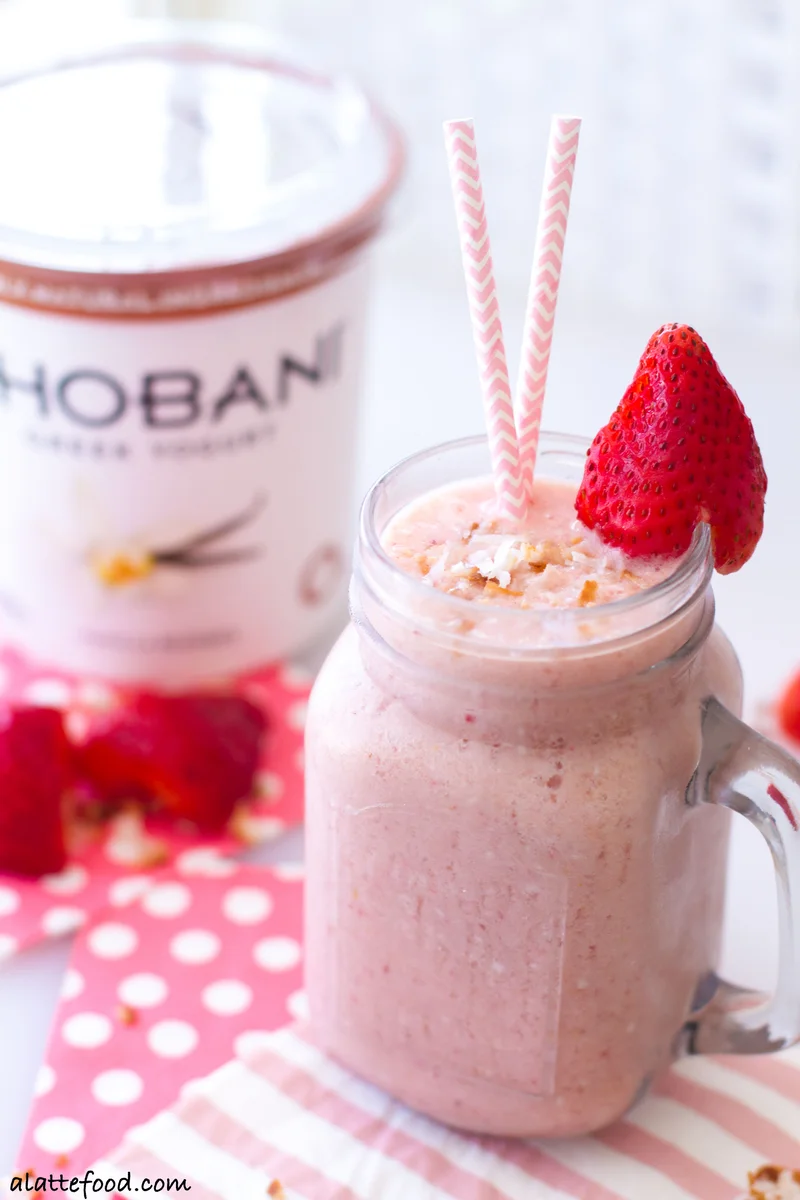
A quick, creamy fruit smoothie blending pineapple, strawberries, mandarin oranges and banana with Greek yoghurt and toasted coconut. It takes just five minutes to make and works as a breakfast or snack.
Ingredients
- 240 ml (1 cup)coconut milk (almond milk is fine as well)
- 90 ml (¼ cup + 2 tablespoons)orange juice
- 2 mediumbananas
- 75 g (½ cup)frozen strawberries (fresh is fine)
- 82 g (½ cup)frozen pineapple (fresh is fine)
- 45 g (¼ cup)frozen mandarin oranges (fresh is fine)
- 120 g (½ cup)Chobani Greek yoghurt (plain, strawberry or vanilla)
- 20 g (¼ cup)toasted coconut
Instructions
- 1
Blend until smooth
Put all the ingredients in a high-powered blender and blend for about 1–2 minutes, until smooth.
- 2
Serve the smoothie
Enjoy!
What is a tropical fruit smoothie?
A fruit smoothie is a blended drink made from fruit and a liquid base, often with yoghurt for creaminess. This version brings together pineapple, strawberries, mandarin oranges and banana, with coconut adding a fragrant finishing note.
There is no single origin for this particular combination; it uses familiar smoothie ingredients to create a bright, tropical-style flavour. The banana and Greek yoghurt give the drink body, while orange juice helps the fruit blend.
Nutrition and macros by portion
The nutrition label shows one serving as written: 220 calories, 5g protein, 43g carbs, 6g fat.
| Portion | Adjustment | kcal | Protein | Carbs | Fat |
|---|---|---|---|---|---|
| Lighter | Use almond milk | 154 kcal | 4g | 30g | 4g |
| This serving | As written | 220 kcal | 5g | 43g | 6g |
| Hungry | Make a larger serving | 330 kcal | 8g | 65g | 9g |
Bananas, orange juice and the other fruits provide most of the carbohydrates, while the yoghurt contributes protein and the coconut milk and toasted coconut provide much of the fat. Serve with toast, oats or another filling side if you want a more balanced breakfast.
Choosing the ingredients
Fruit: Frozen strawberries, pineapple and mandarins make the drink cold straight from the blender. Fresh fruit works too, though the smoothie may be less chilled and a little thinner.
Milk and yoghurt: Coconut milk supports the tropical flavour, while almond milk is an alternative. Plain, strawberry or vanilla Greek yoghurt will all work; the flavoured options make the result sweeter.
Getting a smooth blend
Loading: Add the ingredients to the blender together, as the method directs. If your blender struggles with frozen pieces, pause and scrape down the sides before blending again.
Blending: Give the mixture 1–2 minutes, checking that no fruit chunks remain. Stop once it looks evenly creamy rather than continuing to blend unnecessarily.
Adjusting the texture
Thicker: Use frozen fruit and blend just until smooth. If the mixture is too thick to move, add a small splash of coconut milk or almond milk.
Thinner: Blend in a little more milk or orange juice. Add it gradually so the drink does not become runny.
Serving and finishing
Toasted coconut: It adds a gently nutty flavour and a little texture. Sprinkle some on top just before serving if you would like it to remain distinct.
Pairing: Serve the smoothie on its own for a quick breakfast or snack, or alongside toast or porridge for a more substantial meal.
Making it to order
Timing: This recipe takes about five minutes in total, so it is best blended shortly before serving. The listed blending time is about 1–2 minutes.
Fruit swaps: Fresh fruit can replace the frozen fruit, as the recipe allows. For a colder drink with fresh fruit, blend in a few ice cubes, bearing in mind that they will dilute the flavour slightly.
Recipe notes & tips
- Use ripe bananas for a naturally sweet, creamy base.
- If using fresh fruit, chill it beforehand for a colder smoothie.
- Check that the frozen fruit is broken into pieces your blender can handle.
- Blend until the mixture is even, then stop to preserve a thick texture.
- Add any extra liquid a little at a time to avoid thinning the smoothie too much.
- Sprinkle the toasted coconut over the drinks just before serving.
Variations
- Use almond milk: Swap it for the coconut milk for a milder flavour.
- Choose plain yoghurt: Use plain Greek yoghurt for a less sweet-tasting smoothie.
- Use fresh fruit: Replace the frozen fruit with fresh strawberries, pineapple and mandarins.
- Change the yoghurt: Try strawberry or vanilla Greek yoghurt as listed in the recipe.
- Boost the coconut: Add a little extra toasted coconut on top for more texture.
Common mistakes to avoid
- Adding too much liquid: The smoothie can turn thin; blend in extra liquid gradually.
- Leaving fruit chunks: Blend for the full 1–2 minutes and check for an even consistency.
- Using a blender that is struggling: Pause and scrape down the sides before continuing.
- Blending for too long: Stop as soon as the fruit is smooth to avoid warming the drink.
- Adding toasted coconut too early as a topping: Sprinkle it on after blending so it keeps its texture.
How to store
This smoothie is best served straight after blending. If needed, cover and refrigerate it for up to 24 hours, then stir or shake well before drinking; it may separate as it stands.
Frequently asked questions
Can I use fresh fruit instead of frozen?
Yes. The recipe allows fresh strawberries, pineapple and mandarins. The smoothie may be less cold and slightly thinner.
Can I use almond milk?
Yes, almond milk is listed as an alternative to coconut milk. It will give the smoothie a different, milder flavour.
Which Greek yoghurt should I use?
Plain, strawberry or vanilla Greek yoghurt all work. Choose based on how sweet and fruity you want the drink to taste.
How long should I blend it?
Blend for about 1–2 minutes, until the mixture is smooth and no fruit pieces remain.
Can I prepare it ahead?
It is best fresh, but you can refrigerate it in a covered container for up to 24 hours. Stir or shake it before serving.
How can I make it thicker?
Use frozen fruit and avoid adding extra liquid unless the blender needs help. Blend only until smooth.
Cook it from the original
This recipe comes from alattefood.com. Their page has the author’s own photos, notes and tips — the best place to cook it from.
Open the recipe on alattefood.com