
Pesto Pasta (Authentic Italian in 15 Minutes)
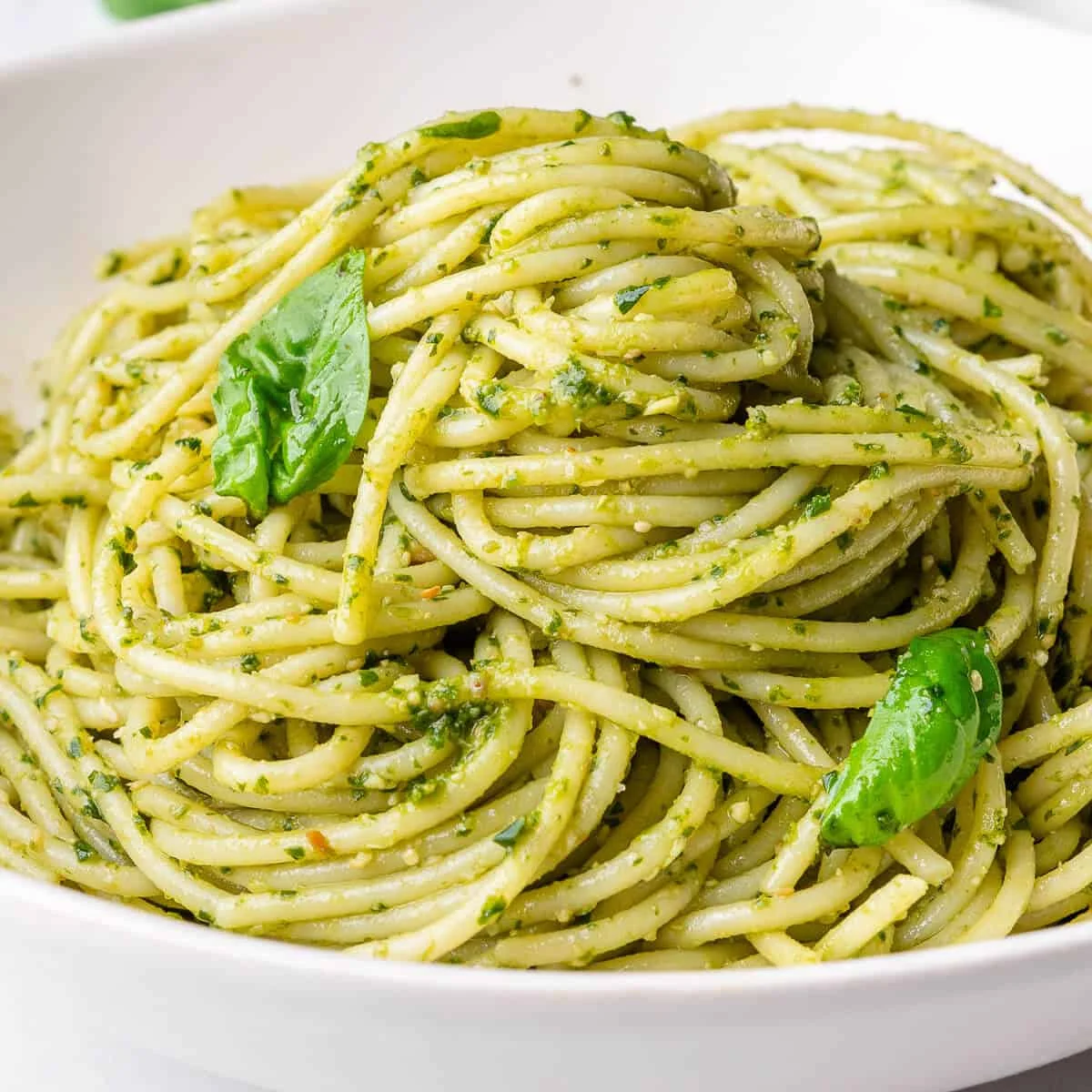
Pesto pasta pairs al dente spaghetti with a fresh basil pesto, tossed with a little pasta water for a glossy, silky coating. It comes together in 13 minutes and works well served hot or cold.
Ingredients
- 170 g (6 oz)pasta, such as spaghetti
- 3–4 tbsp (45–60 ml)basil pesto, homemade or shop-bought
- To garnish, optionalgrated Parmesan and basil leaves
- 40 g (1.5 oz; about 2 cups)fresh basil leaves
- 2garlic cloves
- 2 tbsp (about 18 g)pine nuts
- 25 g (¼ cup)grated Parmesan
- Juice of ¼lemon
- 60 ml (4 tbsp)extra virgin olive oil
- To tastesalt and black pepper
Instructions
- 1
Toast the pine nuts
If making homemade pesto, toast the pine nuts in a skillet over low heat for a few minutes, until lightly toasted. If using shop-bought pesto, skip to cooking the pasta.
- 2
Add pesto ingredients
Put the basil, garlic, Parmesan, lemon juice, olive oil and toasted pine nuts in a food processor or blender. Add a good pinch of salt and pepper.
- 3
Blend the pesto
Pulse until combined, keeping a little texture rather than blending it completely smooth. You can also use a mortar and pestle.
- 4
Cook the pasta
Boil the pasta in a pot of heavily salted water until al dente, following the packet instructions.
- 5
Reserve pasta water
Drain the pasta and transfer it to a large bowl, keeping some of the cooking water aside.
- 6
Toss with pesto
Add a good splash of pasta water and the pesto to the bowl, starting with 3 tablespoons of pesto, especially if it is shop-bought. Gently toss with tongs without breaking the pasta. Add more pasta water gradually to make the coating silky, and a fourth spoonful of pesto if you like.
- 7
Season and serve
Taste and adjust the seasoning. If using shop-bought pesto, add a squeeze of lemon juice if you want to brighten the flavour. Serve with grated Parmesan and basil leaves.
What is pesto pasta?
Pesto pasta is an Italian dish of pasta coated in pesto, a sauce traditionally made with basil, garlic, cheese, pine nuts and olive oil. This version uses spaghetti and can be made with homemade or shop-bought pesto.
Fresh basil and a short blend keep the homemade sauce fragrant, while reserved pasta water helps it cling to the strands. The quick method makes it suitable for a weeknight meal, and it can also be enjoyed cold.
Nutrition and macros by portion
The nutrition label shows one serving as written: 414 calories, 13g protein, 68g carbs, 10g fat.
| Portion | Adjustment | kcal | Protein | Carbs | Fat |
|---|---|---|---|---|---|
| Lighter | Use less pesto | 290 kcal | 9g | 48g | 7g |
| This serving | As written | 414 kcal | 13g | 68g | 10g |
| Hungry | Add more pasta | 621 kcal | 20g | 102g | 15g |
The pasta provides most of the carbohydrates, while olive oil, pine nuts and Parmesan contribute much of the fat. Parmesan and the nuts also provide some protein, alongside the pasta. Add a green salad or vegetables alongside to round out the plate.
Choosing the ingredients
Pasta: Spaghetti works well here, but other shapes can hold the pesto too. Cook it in well-salted water so the pasta itself is seasoned.
Pesto: Homemade pesto gives you control over its texture and seasoning; shop-bought pesto keeps preparation especially quick. Begin with 3 tablespoons and add more to taste.
Basil and cheese: Use fresh basil leaves and grated Parmesan for the homemade pesto. The optional extra Parmesan and basil make a simple finishing garnish.
Making homemade pesto
Toasting the pine nuts over low heat brings out their flavour; watch them closely and stop when they are lightly toasted. Let them cool briefly before adding them to the blender.
Pulse rather than blending continuously. A little texture gives the pesto character, and the ingredients should be combined without turning the sauce completely smooth.
Getting a silky coating
Pasta water: Keep some of the starchy cooking water before draining. Add a splash to the bowl with the pesto to help loosen it and coat the spaghetti.
Tossing: Use tongs and turn the pasta gently so the strands stay intact. Add pasta water a little at a time until the sauce looks glossy and clings to the pasta.
Checking the pasta
Cook the pasta until al dente, using the packet timing as your guide. Taste a strand near the end of cooking to check that it is tender but still has a slight bite.
Season after tossing, since both the pasta water and pesto contribute salt. A squeeze of lemon can lift shop-bought pesto if its flavour needs brightening.
Serving ideas
Serve the pasta straight away with grated Parmesan and basil leaves if using. A simple green salad or sliced tomatoes make an easy accompaniment.
For a cold serving, let the pasta cool after tossing and check the seasoning again before eating. The pesto flavour is also good with a little extra lemon juice.
Recipe notes & tips
- Salt the pasta water generously so the spaghetti is seasoned as it cooks.
- Keep the pine nuts over low heat and stir them so they toast evenly.
- Reserve the pasta water before draining; it is harder to adjust the sauce without it.
- Start with 3 tablespoons of pesto and add more only after tasting.
- Toss the pasta gently with tongs to avoid breaking the strands.
- Add lemon a little at a time, particularly if the pesto is already tangy.
Variations
- Use another pasta shape: Choose a shape with ridges or curves to hold the pesto.
- Add vegetables: Toss in cooked peas or sliced cherry tomatoes before serving.
- Make it nut-free: Leave out the pine nuts and blend the remaining pesto ingredients.
- Add extra lemon: Stir in a little more juice for a brighter finish.
- Change the garnish: Finish with extra basil or Parmesan to taste.
Common mistakes to avoid
- Over-toasting the pine nuts: They can darken quickly, so toast them over low heat and watch closely.
- Over-blending the pesto: It can lose its texture, so use short pulses and stop once combined.
- Forgetting the pasta water: Reserve some before draining so you can loosen the pesto.
- Adding all the pesto at once: Start with 3 tablespoons and increase it to suit your taste.
- Tossing too roughly: The spaghetti can break, so turn it gently with tongs.
- Overcooking the pasta: Check it against the packet instructions and taste for a firm bite.
How to store
Refrigerate leftovers in a covered container and eat within 2 days. Reheat gently with a small splash of water, or serve cold after checking the seasoning.
Frequently asked questions
Can I use shop-bought pesto?
Yes. Skip the homemade pesto preparation and begin with cooking the pasta. Start with 3 tablespoons of pesto, then add more if needed.
How do I keep pesto pasta silky?
Reserve some pasta water and add it gradually while tossing the pasta with the pesto. Stop when the sauce coats the strands smoothly.
Can I make this with a different pasta shape?
Yes. Use another pasta shape and cook it until al dente according to the packet instructions.
Can pesto pasta be served cold?
Yes. The recipe can be enjoyed cold; check the seasoning again before serving, as the flavour may need a little extra lemon or salt.
How can I tell when the pasta is al dente?
Taste a strand towards the end of the packet cooking time. It should be cooked through but still have a slight bite.
Can I make the pesto without a food processor?
Yes. The pesto can be made in a mortar and pestle instead; combine the ingredients until they reach a textured consistency.
Cook it from the original
This recipe comes from cookingwithayeh.com. Their page has the author’s own photos, notes and tips — the best place to cook it from.
Open the recipe on cookingwithayeh.com