
Perfect White Sandwich Bread
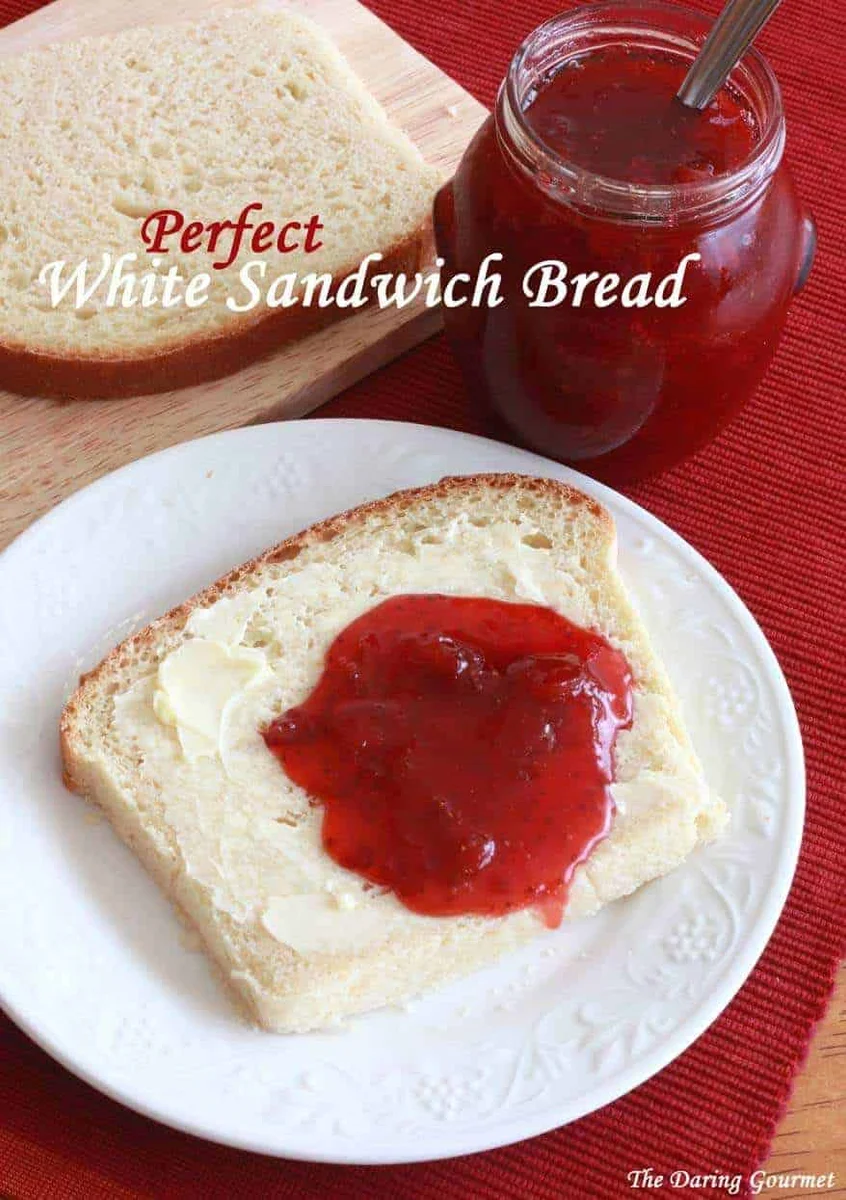
A soft, lightly sweet white loaf with a fine crumb that slices well for sandwiches and toast. A warm proving environment and a little steam in the oven help give it a good rise and a tender crust.
Ingredients
- 420 g (3 1/2 cups)plain flour, plus more as needed
- 10 g (2 teaspoons)salt
- 240 ml (1 cup)lukewarm whole milk
- 80 ml (1/3 cup)lukewarm water
- 28 g (2 tablespoons)unsalted butter, melted
- 63 g (3 tablespoons)honey
- 7 g (2 1/4 teaspoons)instant yeast
Instructions
- 1
Warm the oven
Grease a 23 x 13 cm (9 x 5 inch) loaf pan. Set the oven rack at its lowest position and heat the oven to 93°C (200°F). Leave it on for 10 minutes, then switch it off without opening the door.
- 2
Mix and prove
While the oven warms, put the flour and salt in a stand mixer fitted with a dough hook and stir to combine. Mix the lukewarm milk, water, melted butter, honey and yeast in a bowl, making sure the liquids are not too hot. Run the mixer on low and add the liquid mixture gradually. Once the dough comes together, mix on medium for about 10 minutes, until smooth and satiny. If it is still sticking to the bowl after 5 minutes of kneading, add extra flour 1 tablespoon at a time until it stops. Turn the dough onto a lightly floured surface and knead it into a round ball. Put it in a very lightly oiled large bowl, turning it to coat, then cover loosely with cling film. Leave in the warm oven for about 50 minutes, or until doubled in size.
- 3
Shape the loaf
Take out the dough and gently press it into an 20 cm (8 inch) square about 2.5 cm (1 inch) thick. Starting at the far edge, roll it towards you into a firm cylinder, pressing as you go so the dough sticks to itself. Turn it seam-side up and pinch the seam closed. Place it seam-side down in the prepared pan and gently press it so it reaches all four sides. Cover with cling film and leave in a warm spot for another 30 minutes, or until almost doubled.
- 4
Bake and cool
Heat the oven to 177°C (350°F). Boil 475 ml (2 cups) water, pour it into a baking dish and set the dish on the bottom oven rack. For best results, put the loaf pan on the rack above the water; if the oven is too small, set it beside the water dish. Bake for 40–50 minutes, until the top is golden brown. Turn the loaf out and tap its underside with your knuckles; it should sound hollow when done. Alternatively, insert an instant-read thermometer at an angle from a short end, just above the pan rim, towards the centre; it should read 91°C (195°F). Remove the bread from the pan, cool to room temperature on a wire rack, then slice and serve.
What is white sandwich bread?
White sandwich bread is a yeast-raised loaf made with refined flour and shaped to give even, easy-to-slice pieces. This version enriches the dough with milk, butter and honey, giving it a soft texture and a gentle sweetness.
Its method relies on two rises: one for the dough and another after shaping. The rolled cylinder helps create a neat loaf that fills the pan.
Nutrition and macros by portion
The nutrition label shows one serving as written: 139 calories, 4g protein, 26g carbs, 2g fat.
| Portion | Adjustment | kcal | Protein | Carbs | Fat |
|---|---|---|---|---|---|
| Lighter | Thinner slices | 97 kcal | 3g | 18g | 1g |
| This serving | As written | 139 kcal | 4g | 26g | 2g |
| Hungry | Larger portion | 209 kcal | 6g | 39g | 3g |
The flour and honey provide most of the carbohydrates, while the milk and flour contribute protein. Butter and whole milk supply much of the fat; serve a slice as part of a sandwich with a protein-rich filling and vegetables for a more balanced plate.
Choosing and mixing the ingredients
Flour and salt: plain flour forms the loaf's structure, while salt seasons the dough. Keep the extra flour for adjusting sticky dough, adding it a tablespoon at a time rather than all at once.
Milk and yeast: lukewarm liquids help the yeast work, but hot liquid can damage it. The dough should come together before you increase the mixer speed.
Kneading and the first rise
Kneading: about 10 minutes on medium develops a smooth, satiny dough. If it clings to the sides after 5 minutes, add flour gradually until it releases.
Proving: the switched-off oven provides a warm place for the dough to rise for about 50 minutes. Look for the dough to double rather than relying only on the clock.
Rolling and the second rise
Shaping: press the dough into an even square, then roll it firmly into a cylinder from the far edge towards you. Pinch the seam closed so the loaf holds its shape.
Final prove: set the loaf seam-side down and press it gently into the corners of the pan. After about 30 minutes in a warm spot, it should be nearly doubled.
Steam and doneness
Steam: the dish of boiling water adds moisture to the oven while the bread bakes. Keep the loaf above it if the oven allows, or place the pans side by side if space is limited.
Doneness: aim for a golden-brown top and a hollow sound when you tap the loaf's underside. An instant-read thermometer should show 91°C (195°F) in the centre.
Cooling and serving
Cooling: remove the loaf from its pan and let it cool fully on a wire rack before slicing. Cutting while it is still hot can compress the soft crumb.
Serving: use the slices for sandwiches, toast or a simple buttered snack. For a meal, pair a sandwich with soup or salad.
Recipe notes & tips
- Check that the milk and water feel lukewarm rather than hot before adding the yeast.
- Add extra flour only if the dough is still sticking after 5 minutes of kneading.
- Use a lightly oiled bowl and turn the dough once so its surface is coated.
- Pinch the seam closed before placing the shaped loaf in the pan.
- Cool the loaf completely on a wire rack before cutting it.
- Use the temperature check as well as the colour and hollow sound to judge doneness.
Variations
- Seeded crust: sprinkle seeds over the loaf before baking for a crunchy top.
- Wholemeal blend: replace part of the plain flour with wholemeal flour, adjusting the dough with extra flour only as needed.
- Less sweet: reduce the honey to suit your taste, keeping in mind that this changes the dough from the stated recipe.
- Herb loaf: knead dried herbs into the dough for a savoury variation.
- Toast topping: brush the cooled slices with butter before toasting for extra richness.
Common mistakes to avoid
- Hot liquids: they can harm the yeast; let the milk and water become lukewarm before mixing.
- Too much extra flour: it can make the loaf dense; add it a tablespoon at a time only if the dough sticks.
- Unsealed seam: the loaf can open as it rises; pinch the rolled dough closed and place it seam-side down.
- Rushing the rise: the loaf may be undersized; wait until the dough has doubled for the first prove and is nearly doubled for the second.
- Slicing while hot: the crumb can squash; wait until the loaf reaches room temperature.
- Guessing doneness by colour alone: check for a hollow sound underneath or a centre temperature of 91°C (195°F).
How to store
Once completely cool, keep the loaf in a sealed bag or bread bin at room temperature and use within a few days. Freeze sliced bread for longer storage, then defrost or toast slices as needed.
Frequently asked questions
Can I make the dough without a stand mixer?
Yes. Mix the ingredients by hand until they form a dough, then knead on a lightly floured surface until smooth and satiny. The recipe's kneading time is written for a stand mixer, so use the dough's texture as your cue.
How warm should the milk and water be?
They should feel lukewarm, not hot. The method warns that liquids that are too hot can kill the yeast.
How do I know the dough has risen enough?
For the first rise, wait until it has doubled in size. After shaping, it should be almost doubled before baking.
Do I have to use the baking dish of water?
The method uses boiling water to create steam during baking. Put the loaf above the dish where possible, or beside it if your oven is too small.
Can I slice the bread as soon as it comes out of the oven?
No; let it cool to room temperature on a wire rack first. This helps the soft crumb hold its shape when sliced.
How can I check whether the loaf is baked through?
The crust should be golden brown and the underside should sound hollow when tapped. If using an instant-read thermometer, the centre should reach 91°C (195°F).
Cook it from the original
This recipe comes from daringgourmet.com. Their page has the author’s own photos, notes and tips — the best place to cook it from.
Open the recipe on daringgourmet.com