
Creamy Artichoke Spinach Pasta
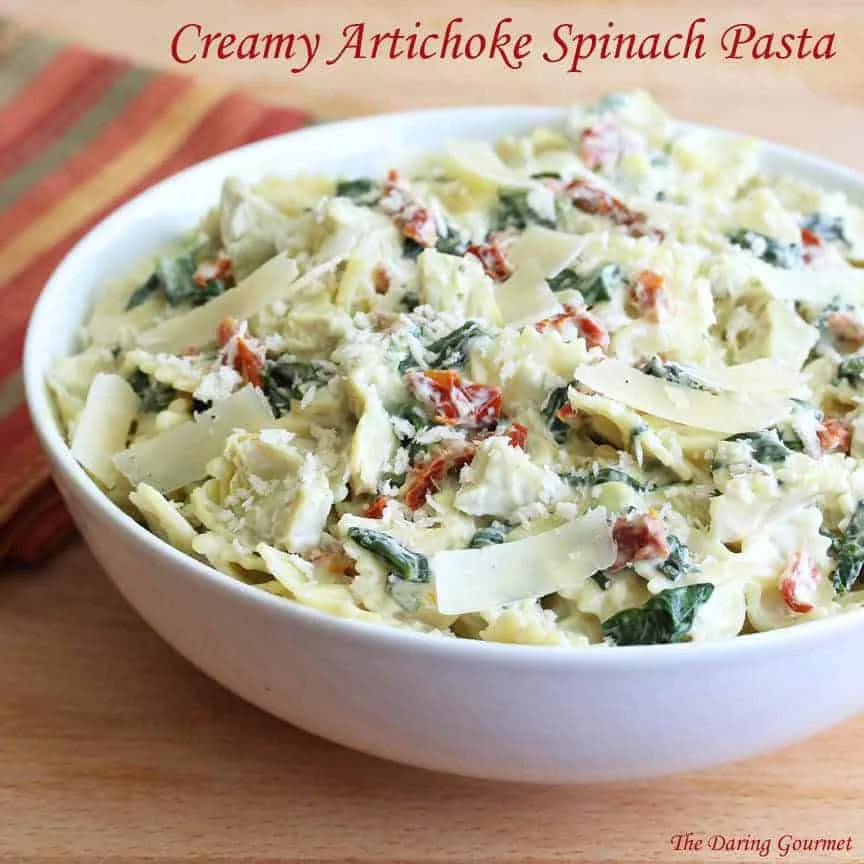
This American-style pasta combines bowtie pasta with a creamy spinach and artichoke sauce, sun-dried tomatoes and melted cheese. It comes together in one skillet and makes a warm, filling meal for sharing.
Ingredients
- 340 g (12 oz)dried bowtie pasta (farfalle)
- 43 g (3 tablespoons)butter
- 4 clovesgarlic, minced
- 227 g (8 oz)cream cheese
- 480 ml (2 cups)whole milk
- 1 can, 397 g (14 oz)artichoke hearts, quartered
- 80 ml (⅓ cup)sun-dried tomatoes packed in oil, chopped
- 15 ml (1 tablespoon)fresh parsley, chopped
- 3.75 ml (¾ teaspoon)salt
- 1.25 ml (¼ teaspoon)freshly ground black pepper
- 113 g (1 cup)mozzarella cheese, grated
- 50 g (½ cup)Parmesan cheese, grated
- 340 g (two 6 oz bags)baby spinach leaves, or spinach with stalks removed
- To tastepanko breadcrumbs, for sprinkling
- To tasteParmesan cheese shavings, for garnish (optional)
Instructions
- 1
Cook the garlic
Melt the butter in a large skillet over medium-high heat. Add the minced garlic and cook for 2 minutes.
- 2
Make the sauce
Add the cream cheese and stir until melted; it may still look lumpy. Pour in the milk, bring it to a simmer and whisk constantly until smooth. Add the salt and black pepper, then simmer for 3 minutes.
- 3
Add vegetables
Stir in the artichokes, sun-dried tomatoes and parsley. Simmer for 3 minutes.
- 4
Melt the cheese
Add the grated mozzarella and Parmesan, stirring until they have melted into the sauce.
- 5
Wilt the spinach
Stir in the spinach and simmer for 3 minutes, or until it is wilted and soft.
- 6
Combine and serve
Add the cooked al dente pasta and stir thoroughly to coat. Taste and add salt and pepper as needed, then transfer to a serving dish. Sprinkle with panko and optional Parmesan shavings, and serve warm straight away.
What is creamy artichoke spinach pasta?
This is a creamy American-style pasta dish built around familiar spinach-and-artichoke dip flavours. Artichokes and leafy spinach meet a rich, cheesy sauce, with sun-dried tomatoes adding a tangy, savoury note.
The skillet method brings the sauce together while the pasta cooks separately. Folding the pasta in at the end helps the farfalle pick up plenty of sauce.
Nutrition and macros by portion
The nutrition label shows one serving as written: 900 calories, 38g protein, 78g carbs, 47g fat.
| Portion | Adjustment | kcal | Protein | Carbs | Fat |
|---|---|---|---|---|---|
| Lighter | Use less cheese | 630 kcal | 27g | 55g | 33g |
| This serving | As written | 900 kcal | 38g | 78g | 47g |
| Hungry | Serve a larger portion | 1350 kcal | 57g | 117g | 71g |
The pasta supplies most of the carbohydrates, while butter, cream cheese, milk and the grated cheeses contribute much of the fat; the cheeses, milk and pasta also provide protein. Serve a moderate helping with salad or extra vegetables to balance the rich sauce.
The sauce ingredients
Cream cheese: it gives the sauce body and a slight tang. Whisk it into the milk patiently; it can look lumpy at first, but should smooth out as it simmers.
Milk and cheese: whole milk loosens the cream cheese, while mozzarella and Parmesan melt in near the end. Keep the sauce at a gentle simmer rather than a hard boil.
Getting the vegetables ready
Artichokes: quartered hearts are easy to mix through the pasta and hold their shape during simmering. If they are packed in liquid, drain them before adding.
Spinach: baby leaves are convenient, while larger spinach should have its stalks removed as directed. Add it once the cheeses have melted so it wilts without cooking for too long.
A smooth, creamy finish
Whisking: keep whisking as the milk comes to a simmer to break up the cream cheese. Once the sauce looks smooth, stir rather than whisk when adding the vegetables and grated cheese.
Cheese: add the mozzarella and Parmesan after the vegetables have simmered. Stir until melted, then add the pasta so the sauce coats it evenly.
Pasta and timing
Farfalle: cook it al dente according to the packet directions, then drain it before combining it with the sauce. Slightly firm pasta is less likely to turn soft as it absorbs the sauce.
Serving: the sauce is best warm and freshly made. Have the cooked pasta ready before the spinach goes into the skillet, so the finished dish can be served promptly.
Serving ideas
The panko and Parmesan shavings add a contrasting finish, so sprinkle them over just before serving. For more crunch, serve extra panko at the table rather than letting it sit in the sauce.
A simple green salad or steamed vegetables make a fresh accompaniment. Crusty bread is another option for scooping up any sauce left on the plate.
Recipe notes & tips
- Cook and drain the pasta before the spinach goes into the skillet so it is ready to add at the end.
- Whisk continuously while the milk comes to a simmer to help smooth out the cream cheese.
- Drain the artichokes well if they are packed in liquid, so they do not thin the sauce.
- Add the spinach in batches if the skillet is crowded; it will shrink as it wilts.
- Taste the sauce before adding more salt, as Parmesan can already be quite salty.
- Sprinkle on the panko just before serving to keep its texture distinct.
Variations
- Add mushrooms: sauté sliced mushrooms in the butter before adding the garlic.
- Use another pasta shape: short shapes such as penne or fusilli also catch the creamy sauce.
- Add chilli: stir in chilli flakes with the garlic for a little heat.
- Try a crisp topping: toast the panko separately in a little butter and scatter it over just before serving.
- Use frozen spinach: thaw it completely and squeeze out excess water before stirring it in.
Common mistakes to avoid
- Boiling the sauce hard: it can become uneven; keep it at a gentle simmer.
- Stopping whisking too soon: cream cheese lumps may remain; continue whisking as the milk heats.
- Adding wet artichokes: extra liquid can loosen the sauce; drain them before cooking.
- Overcooking the spinach: it can lose its fresh texture; simmer only until wilted and soft.
- Leaving the panko on too early: it softens in the sauce; add it at the point of serving.
How to store
Refrigerate leftovers in a covered container for up to 3 days. Reheat gently in a saucepan or microwave, stirring in a splash of milk if the sauce has thickened; the panko will soften during storage.
Frequently asked questions
Do I need to cook the pasta separately?
Yes. Cook it al dente according to the packet directions, then drain it and stir it into the finished sauce.
Can I use frozen spinach?
Yes. Thaw it and squeeze out excess water before adding it, so it does not make the sauce watery.
Why does the cream cheese look lumpy at first?
It may remain lumpy as it melts into the butter, as the method describes. Whisk continuously after adding the milk until the sauce is smooth.
Can I make this ahead?
It is best freshly made, but you can cook the pasta ahead and refrigerate it separately. Reheat the sauce gently and combine them just before serving.
How can I make the topping crunchier?
Toast the panko separately and scatter it over the pasta just before serving. This keeps it from soaking up the sauce.
What can I serve with it?
A crisp green salad or simple steamed vegetables pair well with the creamy sauce. Bread is also useful for the extra sauce.
Cook it from the original
This recipe comes from daringgourmet.com. Their page has the author’s own photos, notes and tips — the best place to cook it from.
Open the recipe on daringgourmet.com