
Almond polvorones for Christmas dinner: an easy, simple and delicious recipe
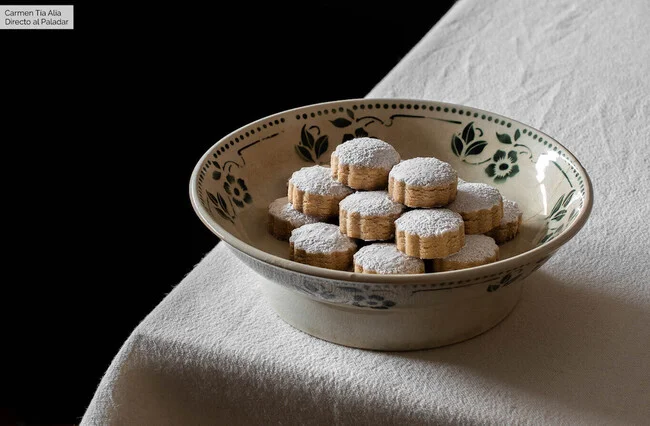
These Spanish almond polvorones are crumbly, buttery biscuits traditionally enjoyed at Christmas. Toasting the flour and almonds gives them a warm, nutty flavour, while a short chill makes the dough easier to shape.
Ingredients
- 160 gplain flour
- 40 gground almonds
- 80 glard
- 60 gicing sugar
- 2 gground cinnamon
- 2 gsalt
Instructions
- 1
Toast the flour
Preheat the oven to 180 °C, with heat from above and below. Spread the flour on a baking tray and bake for about 15 minutes, until lightly toasted. Remove the tray, stir the flour and leave it to cool.
- 2
Toast the almonds
Spread the ground almonds on a tray and toast them in the oven for 8–10 minutes, just until they take on a little colour. Remove them from the oven and leave to cool.
- 3
Mix the dough
Once the flour is cool, sift it into a large, deep bowl. Add the ground almonds, icing sugar, a pinch of cinnamon, a pinch of salt and the room-temperature lard. Stir and mix until you have an even dough.
- 4
Chill and roll
Wrap the dough in cling film and chill it for at least 30 minutes. Then roll it out on a sheet of baking parchment to a thickness of about 1–1.5 cm.
- 5
Cut the biscuits
Cut out rounds with a round cutter or biscuit moulds. A small cutter makes more, bite-sized polvorones. Arrange them on a baking tray lined with baking parchment or a silicone mat.
- 6
Bake the polvorones
Preheat the oven to 210 °C, with heat from above and below. Bake the biscuits for about 10 minutes, watching closely so they do not brown too much, as they can turn bitter. Take them out as soon as the edges begin to brown.
- 7
Cool and serve
Leave the polvorones to cool on the tray before dusting them with icing sugar. Handle them very carefully when moving them to a serving plate or wrapping them in their traditional papers.
What are polvorones?
Polvorones are crumbly Spanish biscuits associated with Christmas, and their name refers to their powdery, delicate texture. This version combines toasted flour and almonds with lard, sugar and cinnamon.
Toasting the flour is a defining part of the method: it adds a subtle roasted flavour and helps give the biscuits their characteristic crumb. The dough is shaped and baked briefly, so the edges just begin to colour.
Nutrition and macros by portion
The nutrition label shows one serving as written: 63 calories, 1g protein, 7g carbs, 3g fat.
| Portion | Adjustment | kcal | Protein | Carbs | Fat |
|---|---|---|---|---|---|
| Lighter | Smaller polvorones | 44 kcal | 1g | 5g | 2g |
| This serving | As written | 63 kcal | 1g | 7g | 3g |
| Hungry | Larger serving | 95 kcal | 1g | 10g | 5g |
The flour and icing sugar provide most of the carbohydrates, while lard supplies most of the fat; the almonds contribute some protein and additional fat. Enjoy a polvorón alongside fruit or after a meal with a protein-rich main course to make the overall plate more balanced.
Why toast the flour and almonds?
Flour first: spread it evenly on the tray and stir it after baking so it cools evenly. Let it cool fully before mixing it into the dough.
Almonds next: give the ground almonds 8–10 minutes, just long enough to pick up some colour. Keep an eye on them, as their smaller quantity means they can toast quickly.
Getting the dough right
Room-temperature lard: it is easier to work into the dry ingredients when softened, helping the mixture come together without overworking it.
Even mixing: combine the ingredients until the dough is homogeneous. Chill it for at least 30 minutes so it is firmer and easier to roll and cut.
Rolling and cutting
Thickness: aim for 1–1.5 cm, as the recipe suggests. Keeping the dough at an even thickness helps the biscuits bake at a similar rate.
Small rounds: a smaller cutter makes more bite-sized biscuits, but whichever size you choose, transfer the cut shapes gently so they keep their form.
Watch the bake
Hot oven: bake at 210 °C for about 10 minutes, checking towards the end. The best cue is the first hint of colour around the edges.
Light colouring: do not wait for the tops to become deeply golden. Over-browning can make the polvorones bitter, so take them out as soon as the edges start to toast.
Cooling and serving
Cool before moving: these biscuits are fragile while warm, so leave them on the tray until they have cooled. Dust them with icing sugar before transferring them carefully.
Serve them with coffee, tea or after a Christmas meal. Their rich, crumbly texture also makes them a natural addition to a festive biscuit assortment.
Recipe notes & tips
- Spread the flour and almonds in an even layer so they toast consistently.
- Let both toasted ingredients cool completely before making the dough.
- Use a lightly floured rolling pin if the dough sticks to the parchment.
- Keep the dough at an even thickness to help the polvorones bake uniformly.
- Check the edges closely during the final minutes, as they should only just begin to brown.
- Wait until the biscuits are cool before handling them, as they are especially delicate when warm.
Variations
- Citrus note: add finely grated lemon zest to the dough for a fresh aroma.
- More spice: increase the cinnamon slightly for a warmer flavour.
- Larger biscuits: use a wider cutter and keep the dough at the same thickness.
- Extra almond: replace a small part of the flour with more ground almonds, keeping in mind that the texture may change.
- Festive finish: dust the cooled biscuits generously with icing sugar before serving.
Common mistakes to avoid
- Flour not cooled: warm flour can soften the lard; let it reach room temperature before mixing.
- Almonds over-toasted: they can turn bitter; remove them once they have taken on a little colour.
- Dough too warm: it may be difficult to cut cleanly; chill it for at least 30 minutes.
- Uneven rolling: biscuits of different thicknesses bake at different rates; roll the dough evenly.
- Over-baking: deeply browned edges can taste bitter; take the tray out when the edges first begin to colour.
- Moving them warm: polvorones can crumble easily; cool them on the tray before transferring.
How to store
Once fully cool, store the polvorones in an airtight container at room temperature for up to a week. They are delicate and are best served as they are rather than reheated.
Frequently asked questions
Why do I need to toast the flour?
Toasting gives the flour a lightly roasted flavour and contributes to the characteristic texture of polvorones. Cool it completely before mixing it with the other ingredients.
Can I make the dough ahead?
Yes. The dough already needs at least 30 minutes of chilling, so you can prepare it ahead and keep it wrapped in the fridge until ready to roll.
How thick should I roll the dough?
Aim for 1–1.5 cm, as in the method. An even thickness helps the biscuits bake consistently.
How do I know when the polvorones are done?
They need about 10 minutes at 210 °C. Remove them when the edges just begin to brown; baking them until deeply golden can make them bitter.
Why are my polvorones crumbling?
They are naturally delicate, especially while warm. Let them cool completely on the baking tray and move them gently.
Can I use a small biscuit cutter?
Yes. A small cutter makes more bite-sized polvorones, as long as you handle the cut dough carefully.
Cook it from the original
This recipe comes from directoalpaladar.com.mx. Their page has the author’s own photos, notes and tips — the best place to cook it from.
Open the recipe on directoalpaladar.com.mx