
Kusksu (Libyan Couscous with Spicy Beef and Vegetables)
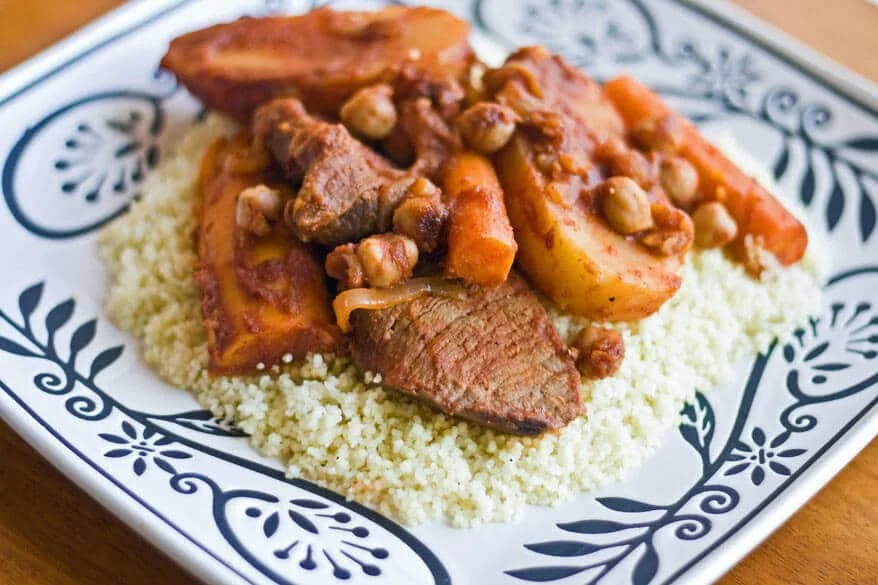
Kusksu is a Libyan couscous dish served with beef and vegetables in a warmly spiced tomato sauce. The meat and vegetables simmer until tender, making this a substantial one-pot topping for a platter of couscous.
Ingredients
- 454 g (1 pound)stewing beef, cut into four pieces
- 22.5 ml (1 1/2 tablespoons)oil, for frying
- 1 largeonion, halved and cut into half-rings
- 15 ml (1 tablespoon)extra virgin olive oil
- 3garlic cloves, finely chopped
- 2 mediumpotatoes, peeled and halved
- 2carrots, halved
- 227 g (8 ounces)pumpkin or yam, cut into four chunks
- 240 ml (1 cup)cooked garbanzo beans
- 1bay leaf
- 5 ml (1 teaspoon)hot chilli powder
- 30 ml (2 tablespoons)hararat
- 80 ml (1/3 cup)tomato purée
- 120 ml (1/2 cup)chopped tomatoes
- 15 ml (1 tablespoon)brown sugar
- 7.5 ml (1 1/2 teaspoons)salt
- 710 ml (3 cups)beef broth
- to tasteoil, for frying
- amount not specifiedcouscous
- 2 cinnamon sticks, broken into 4 pieces eachcinnamon sticks
- 20 ml (4 teaspoons)cumin seeds
- 20 ml (4 teaspoons)coriander seeds
- 2red chillies
- 5 ml (1 teaspoon)allspice berries
Instructions
- 1
Toast the spices
To make the hararat, heat a large non-stick frying pan and add the cinnamon, cumin, coriander, chillies and allspice. Toast for about 4 minutes, stirring often, until very fragrant. Tip into a bowl to cool, then grind in a spice or coffee grinder. Keep in an airtight jar until needed.
- 2
Simmer the stew
Heat the frying oil in a Dutch oven over medium-high heat. Brown the beef on all sides, then add the onion and cook for 5–7 minutes, until soft and translucent. Add the garlic and cook for 1 minute. Stir in the chilli powder, hararat, tomatoes, tomato purée, beef broth, salt and brown sugar. Bring to the boil, reduce to a simmer, cover and cook for 30 minutes. Add the vegetables and garbanzo beans, bring back to the boil, then reduce the heat, cover and simmer for a further 40 minutes, until the beef and vegetables are tender and the sauce has thickened.
- 3
Serve with couscous
Put the couscous on a serving platter and arrange the meat and vegetables over it. Spoon the tomato-based sauce over everything.
What is kusksu?
Kusksu is a Libyan couscous dish served with a stew of meat, vegetables and a spiced tomato sauce. Couscous is a familiar staple across North Africa, while the specific ingredients and seasoning vary from kitchen to kitchen.
Here, beef, potatoes, carrots, pumpkin or yam, and garbanzo beans make the topping hearty. Hararat and chilli powder bring warmth and heat to the tomato-rich sauce.
Nutrition and macros by portion
The nutrition label shows one serving as written: 690 calories, 42g protein, 75g carbs, 22g fat.
| Portion | Adjustment | kcal | Protein | Carbs | Fat |
|---|---|---|---|---|---|
| Lighter | More vegetables, less couscous | 483 kcal | 29g | 53g | 15g |
| This serving | As written | 690 kcal | 42g | 75g | 22g |
| Hungry | Extra couscous portion | 1035 kcal | 63g | 113g | 33g |
The beef contributes most of the protein, while the couscous, potatoes and garbanzo beans provide much of the carbohydrate. Beef and frying oil contribute fat, and the sauce and vegetables add some fibre and natural sugars. For a balanced plate, serve a moderate portion of couscous with plenty of the vegetables and stew.
Building the hararat
Whole spices: Toasting the cinnamon, cumin, coriander, chillies and allspice releases their aroma before they are ground. Keep them moving in the pan and take them off the heat once they smell fragrant.
Freshly ground blend: Grinding the cooled spices makes the hararat ready to stir into the stew. The recipe makes more than the two tablespoons used here, so keep the remainder airtight.
Browning the beef
Good contact: Give the beef room in the pan so its surfaces brown rather than steam. If the pieces crowd the base, brown them in batches.
Onion and garlic: Soften the onion after browning the meat, then add the garlic briefly. This builds flavour in the same pot before the liquid ingredients go in.
Getting the simmer right
Covered cooking: Once the broth mixture boils, lower the heat and cover the pot for the first 30 minutes. A gentle simmer helps the beef cook without the sauce reducing too quickly.
Vegetable timing: Add the potatoes, carrots, pumpkin or yam, and garbanzo beans for the final 40 minutes. They are ready when tender, while the beef should also be easy to pierce.
A thick, spiced sauce
Tomato base: Tomato purée and chopped tomatoes give the broth body and a savoury-sweet base. Brown sugar rounds the flavour, while the salt and chilli powder season it.
Final consistency: The sauce should thicken as the ingredients simmer together. If it still looks quite thin at the end, check that the simmer has been steady and allow the stated cooking time to finish.
Serving the platter
Couscous base: The recipe does not specify the amount of couscous or how to prepare it, so use the quantity and preparation method on your couscous packet. Arrange the cooked meat and vegetables over the prepared couscous.
Sauce on top: Ladle the tomato sauce over the platter just before serving. A crisp green salad or simply dressed vegetables can provide a fresh contrast.
Recipe notes & tips
- Cut the vegetables into similarly sized pieces so they become tender at roughly the same time.
- Stir the whole spices regularly as they toast, since small seeds can scorch quickly.
- Let the beef brown before adding the onion to build flavour in the pot.
- Use a low, steady simmer once the pot is covered.
- Taste the sauce before serving and adjust the seasoning if needed.
- Prepare the couscous separately according to its packet instructions, as the recipe does not give a method.
Variations
- Choose the root vegetable: Use pumpkin or yam, as listed, depending on what you have.
- Adjust the heat: Use less hot chilli powder for a milder stew.
- Make extra hararat: Grind and store the remaining spice blend in an airtight jar.
- Use lamb: Swap in stewing lamb pieces, allowing for tenderness as the doneness cue.
- Add a fresh side: Serve with a crisp salad for contrast with the rich sauce.
Common mistakes to avoid
- Crowding the beef: The pieces may steam instead of browning; brown them in batches if needed.
- Scorching the spices: Keep them moving and remove them from the pan when fragrant, after about 4 minutes.
- Boiling too hard: A vigorous simmer can reduce the sauce too quickly; lower the heat after bringing it to the boil.
- Adding vegetables too early: They may become overly soft; add them after the initial 30-minute simmer.
- Serving without checking tenderness: Continue the covered simmer until both beef and vegetables are tender, up to the stated 40 minutes after adding them.
How to store
Refrigerate leftover stew in a covered container for up to 3 days, ideally separate from the couscous. Reheat the stew gently in a saucepan until piping hot, adding a splash of water or broth if the sauce has thickened too much.
Frequently asked questions
What is hararat?
Hararat is the toasted, ground spice blend made here from cinnamon, cumin, coriander, red chillies and allspice. This recipe uses two tablespoons in the stew.
Can I make the hararat ahead?
Yes. Once cooled and ground, store it in an airtight jar until needed.
How do I know when the beef is done?
After the full simmer, it should be tender when pierced. The vegetables should also be soft enough to pierce without falling apart.
Can I use pumpkin instead of yam?
Yes. The ingredient list gives pumpkin or yam as alternatives; cut your choice into four chunks.
How much couscous should I prepare?
The recipe does not specify a quantity. Use the packet guidance to prepare enough couscous for four servings.
Can I make the stew less spicy?
Reduce the hot chilli powder to suit your preference. The hararat also contains red chillies, so reducing that blend will change its flavour as well.
Cook it from the original
This recipe comes from daringgourmet.com. Their page has the author’s own photos, notes and tips — the best place to cook it from.
Open the recipe on daringgourmet.com