
Oaxacan tamales with cochinita pibil
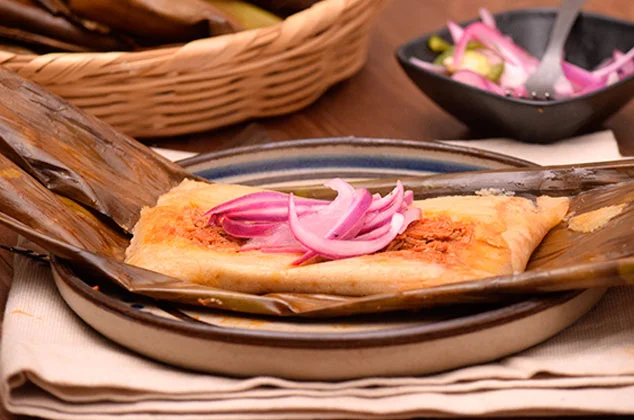
These Oaxacan-style tamales pair banana-leaf-wrapped masa with a guajillo-seasoned cochinita pibil filling. They take a little preparation, but the steaming does most of the work and leaves the tamales tender and aromatic.
Ingredients
- 1 kgmasa harina for tamales
- 100 gvegetable shortening
- 200 glard
- to tastecold meat-cooking broth
- 6guajillo chillies, deseeded, toasted and softened
- 1/4onion
- 1garlic clove
- 2black peppercorns
- 1 pinchground cumin
- 1/4apple cider vinegar
- 1 tablespoon (15 ml)oil
- 12 squaresbanana leaves, toasted
- to tastepickled red onion
Instructions
- 1
Blend the chillies
Blend the guajillo chillies with the onion, garlic, peppercorns, cumin, apple cider vinegar and some of the liquid used to soften the chillies.
- 2
Strain the sauce
Season with salt, then strain the sauce into a saucepan with hot oil.
- 3
Cook the filling
Fry the sauce for a few minutes until it has cooked down. Add the meat and stir to coat.
- 4
Cool the filling
Adjust the seasoning and cook for a further 10 minutes. Set aside and leave to cool.
- 5
Whip the fats
Put the vegetable shortening and lard in a bowl and beat until soft and fluffy.
- 6
Mix the masa
Gradually add the crumbled masa, alternating with the broth, and keep mixing.
- 7
Check the consistency
Add salt and continue mixing until the masa is slightly loose but does not stick to your hands. You can add a little baking powder.
- 8
Fill the leaves
Put some masa in the centre of each banana leaf and spread it into a square. Cover with the meat filling.
- 9
Fold the parcels
Fold the sides in towards the centre to make a parcel.
- 10
Arrange for steaming
Place the tamales crosswise in a tamalera or steamer. Cover well with plastic wrap and the lid.
- 11
Steam the tamales
Cook for approximately 1 hour and 10 minutes.
- 12
Serve with onion
Serve with pickled red onion.
What are Oaxacan tamales?
Tamales are a traditional Mexican dish made by wrapping seasoned masa and a filling in leaves, then steaming the parcels. Oaxacan versions are often associated with banana-leaf wrapping, which gives the outside a different character from corn-husk-wrapped tamales.
This recipe combines that style of tamal with cochinita pibil, a Yucatán-style pork preparation flavoured here with guajillo chilli. The contrast between mild masa, savoury filling and pickled onion makes each parcel feel complete.
Nutrition and macros by portion
The nutrition label shows one serving as written: 200 calories, 0g protein, 0g carbs, 0g fat.
| Portion | Adjustment | kcal | Protein | Carbs | Fat |
|---|---|---|---|---|---|
| Lighter | Use less masa and fat | 140 kcal | 0g | 0g | 0g |
| This serving | As written | 200 kcal | 0g | 0g | 0g |
| Hungry | Serve an extra tamal | 300 kcal | 0g | 0g | 0g |
The masa supplies most of the carbohydrates, while the shortening and lard are the main sources of fat. The meat filling would provide protein, but its type and amount are not specified in the ingredient list; serve a tamal with vegetables or salad to balance the plate.
Building the chilli filling
Guajillo chillies: Toasting and softening them before blending helps them break down into a smooth sauce. Use the chilli-softening liquid in the blend as directed, rather than assuming it is the cold broth used for the masa.
Cooked meat: The method calls for adding cooked meat to the sauce, but the ingredient list does not specify the meat or its quantity. Have the cooked cochinita ready before starting, and note that the published list leaves this detail unstated.
Getting the masa right
Whipped fats: Beat the vegetable shortening and lard until soft and fluffy before adding the masa. This makes them easier to distribute evenly through the mixture.
Broth: Add it gradually as you alternate with the masa. The finished mixture should be slightly loose yet not cling to your hands; add only enough broth to reach that cue.
Filling and folding
Banana leaves: Toast the leaves as specified so they become flexible enough to fold without splitting. Spread the masa into a square in the centre of each leaf, leaving space around the edges for folding.
Filling: Keep the meat in the middle of the masa rather than spreading it to the edges. Fold the leaf towards the centre to enclose it into a neat parcel.
Steaming and doneness
Arrange the parcels crosswise in the steamer, as the recipe directs, and cover the steamer securely with plastic wrap and its lid. Steam for approximately 1 hour and 10 minutes.
The method gives a cooking time but no separate doneness test. If the masa still seems wet or unset when you open one, continue steaming and check again before serving.
Serving the tamales
Pickled red onion is the stated accompaniment, bringing a sharp, crisp contrast to the rich filling and soft masa. Drain it before serving so excess pickling liquid does not make the tamales soggy.
For a fuller meal, serve with a simple salad or cooked vegetables. Keep the sides lightly seasoned so they do not compete with the chilli sauce.
Recipe notes & tips
- Prepare the cooked meat filling before beginning the masa, since the method does not give a separate meat-cooking step.
- Add broth a little at a time so the masa does not become too wet.
- Toast the banana leaves until pliable enough to fold without tearing.
- Keep the filling centred so it stays enclosed when you fold each parcel.
- Make sure the steamer lid fits well to keep steam around the tamales.
Variations
- More chilli: Add extra guajillo to the sauce if you prefer a stronger chilli flavour.
- Other leaf wrapping: Use corn husks if banana leaves are unavailable, allowing for a different wrapping style.
- Extra onion: Serve with more pickled red onion for a sharper contrast.
- Smoother sauce: Blend the chilli mixture thoroughly before straining it into the pan.
- Vegetarian filling: Replace the meat with cooked beans or vegetables, while noting this changes the cochinita-style filling.
Common mistakes to avoid
- Adding broth too quickly: The masa can become overly wet; add it gradually and stop when the mixture is slightly loose but not sticky.
- Skipping the leaf toasting: Untoasted leaves can be difficult to fold; warm them until flexible first.
- Overfilling the parcels: The leaves may not close securely; keep the filling in a centred layer.
- Loose steamer cover: Steam can escape and slow cooking; cover the steamer securely.
- Starting without cooked meat: The method adds cooked meat but does not explain how to prepare it; cook the filling meat in advance.
How to store
Refrigerate cooled tamales in an airtight container for up to 3 days. Reheat in a steamer until hot throughout, or microwave covered with a little moisture to help keep the masa from drying out.
Frequently asked questions
How long do these tamales take to steam?
The recipe gives an approximate steaming time of 1 hour and 10 minutes. Check the masa before serving and continue steaming if it still seems wet or unset.
Can I make the filling ahead?
Yes. The method itself says to set the filling aside and let it cool before assembling the tamales, so it can be prepared ahead and refrigerated.
How much broth should I add to the masa?
No amount is specified. Add it gradually until the mixture is slightly loose but does not stick to your hands.
What meat does the recipe use?
The method refers to adding cooked meat, but the ingredient list does not name the meat or give a quantity. You will need to have cooked cochinita-style meat ready, or consult the original recipe for that missing detail.
Can I use another type of leaf?
Corn husks can be used as a different tamal wrapper, though the shape and flavour will differ from banana-leaf tamales.
What should I serve with the tamales?
The recipe recommends pickled red onion. A simple salad or cooked vegetables also makes a suitable side.
Cook it from the original
This recipe comes from cocinavital.mx. Their page has the author’s own photos, notes and tips — the best place to cook it from.
Open the recipe on cocinavital.mx