
Teriyaki Salmon
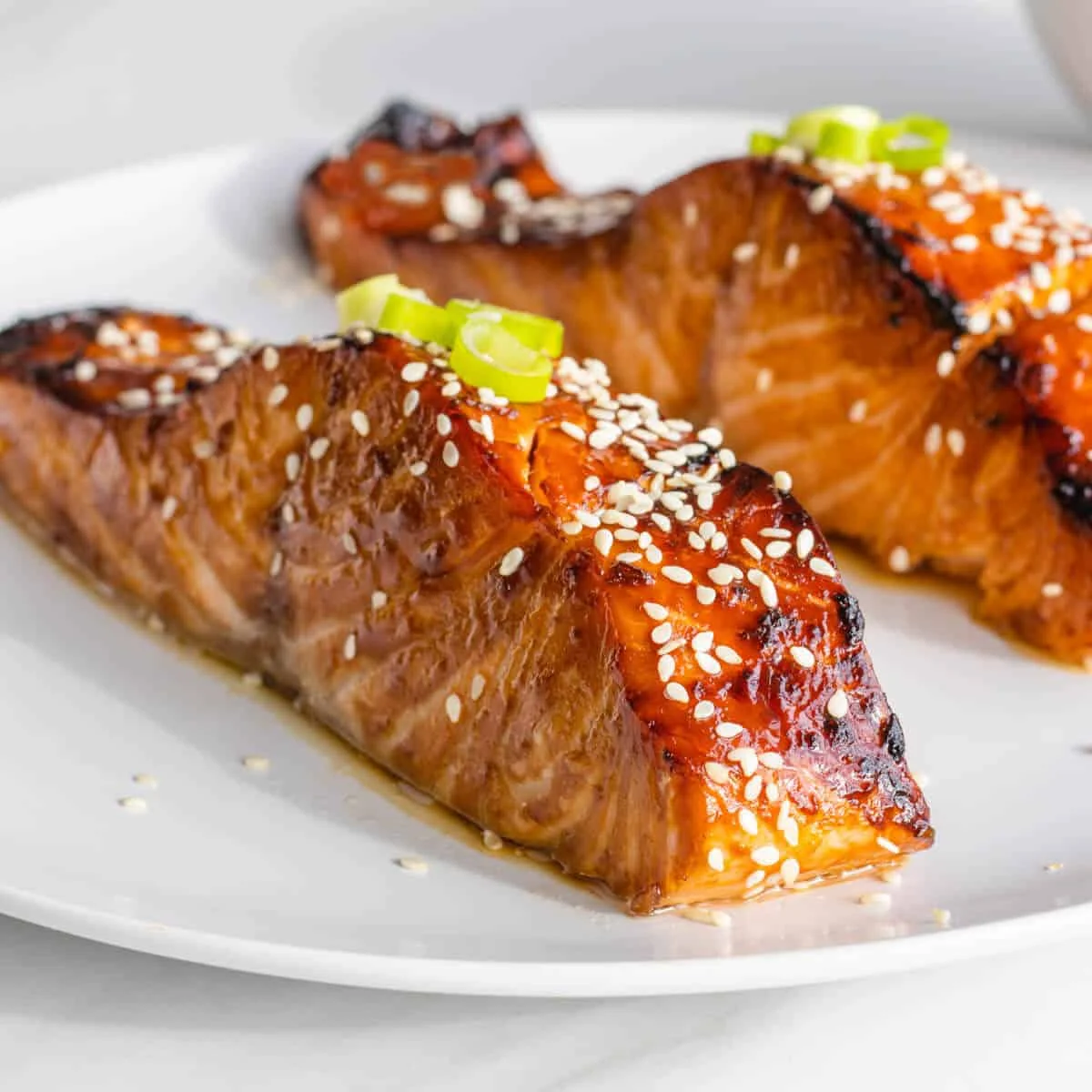
Salmon fillets are marinated in a homemade teriyaki sauce, then cooked until glazed and tender. Make it in an air fryer, oven or frying pan, and finish with sesame seeds and spring onion.
Ingredients
- 2 mediumsalmon fillets
- 60 ml (¼ cup)soy sauce, preferably reduced-salt
- 60 ml (¼ cup)pure maple syrup
- 60 ml (¼ cup)water
- 1 tsprice wine vinegar
- ½ tspsesame oil
- 2garlic cloves
- to tasteginger
- 2 tspcornflour
- 2 tspwater
- to tastesesame seeds
- to tastespring onion
Instructions
- 1
Mix the sauce
Put the soy sauce, maple syrup and 60 ml (¼ cup) water in a small saucepan. Grate in the garlic and as much ginger as you like, then stir in the rice wine vinegar and sesame oil.
- 2
Simmer gently
Set the pan over a low heat and let the sauce simmer gently for about 5 minutes.
- 3
Thicken the sauce
In a small ramekin, mix the cornflour with 2 tsp water to make a slurry. Stir it into the saucepan to thicken the sauce.
- 4
Cool the sauce
Take the pan off the heat and leave the sauce to cool in a bowl or jar.
- 5
Marinate the salmon
Pat the salmon dry and put it in a container or zip-lock bag. Spoon a few tablespoons of teriyaki sauce over the fillets and turn them to coat. Marinate in the fridge for a few hours, or for 10–15 minutes if short on time. Take the salmon out of the fridge 10–15 minutes before cooking.
- 6
Air fryer method
Preheat the air fryer to 180°C (350°F). Spray the basket base with oil spray and place the salmon skin side down. Brush on extra teriyaki sauce from the marinade and cook for 10 minutes for fully cooked salmon, or 7–8 minutes for medium rare.
- 7
Oven method
Preheat the oven to 180°C (350°F). Line a baking tray with baking paper and place the salmon skin side down. Brush on extra teriyaki sauce from the marinade and cook for 15 minutes for fully cooked salmon, or 10–12 minutes for medium rare.
- 8
Pan-fry method
Heat oil in a frying pan over a medium heat. Put the salmon in skin side down and hold each fillet down with a spatula for about 30 seconds to help prevent it curling. Brush on extra teriyaki sauce from the marinade and cook for about 5–7 minutes, until the fish looks cooked halfway up its sides. Carefully flip each fillet and cook for a further 3–4 minutes for fully cooked salmon. For medium rare, cook for 4–5 minutes skin side down and 2–3 minutes on the second side.
- 9
Garnish and serve
Scatter over sesame seeds and spring onion and serve with rice. Add extra sauce on top if you like.
What is teriyaki salmon?
Teriyaki is a Japanese cooking style associated with a glossy, savoury-sweet coating. This version uses a quick homemade sauce of soy, maple syrup, garlic, ginger and rice wine vinegar.
Thickening the sauce with a little cornflour helps it cling to the salmon. The recipe gives you a choice of air fryer, oven or frying pan, so you can use the method that suits your kitchen.
Nutrition and macros by portion
The nutrition label shows one serving as written: 265 calories, 34g protein, 5g carbs, 11g fat.
| Portion | Adjustment | kcal | Protein | Carbs | Fat |
|---|---|---|---|---|---|
| Lighter | Less maple syrup | 186 kcal | 24g | 4g | 8g |
| This serving | As written | 265 kcal | 34g | 5g | 11g |
| Hungry | Add more rice | 398 kcal | 51g | 8g | 17g |
The salmon provides most of the protein and fat, while the maple syrup and cornflour contribute carbohydrates. For a balanced plate, serve a moderate portion of rice alongside vegetables such as steamed greens.
The teriyaki sauce
Sweet and savoury: maple syrup balances the soy sauce, while rice wine vinegar brings a gentle tang. Reduced-salt soy sauce is the preferred choice in the recipe.
Fresh aromatics: grate in the garlic and add ginger to taste. Simmering them briefly lets their flavour infuse the liquid without making a long-cooked sauce.
Getting the sauce to cling
Cornflour slurry: mix the cornflour with the separate 2 tsp water before adding it to the pan. This helps it blend in smoothly rather than forming dry lumps.
Cool before marinating: take the thickened sauce off the heat and let it cool. Use a few tablespoons to coat the fish, keeping the rest for serving if you want extra sauce.
Marinating the salmon
For more flavour: leave the coated fillets in the fridge for a few hours. If time is tight, the recipe allows a shorter 10–15-minute marinate.
Before cooking: take the salmon out of the fridge for 10–15 minutes. Patting the fillets dry before adding the marinade also helps the sauce coat them evenly.
Choosing a cooking method
Air fryer: cook skin side down at 180°C (350°F) for 10 minutes for fully cooked salmon, or 7–8 minutes for medium rare.
Oven: bake skin side down at 180°C (350°F) for 15 minutes for fully cooked salmon, or 10–12 minutes for medium rare.
Frying pan: start skin side down and press the fillets for about 30 seconds to limit curling. Cook for about 5–7 minutes before flipping, then follow the recipe’s timings for your preferred doneness.
Checking doneness
Visual cue: when pan-frying, the recipe suggests watching for the fish to look cooked halfway up its sides before turning it. This gives you a useful guide to when the first side has had enough time.
Timing: the listed times are guides for fully cooked or medium-rare salmon, and can vary with fillet thickness and equipment. Check the fish as it cooks rather than relying on the clock alone.
Serving suggestions
Serve the salmon with rice, as suggested, to make a simple meal. Spoon over extra teriyaki sauce if you prefer a saucier finish.
Sesame seeds and sliced spring onion add a final savoury, fresh note. You can serve them over the fish just before bringing it to the table.
Recipe notes & tips
- Use reduced-salt soy sauce if you prefer a less salty-tasting glaze.
- Mix the cornflour with water before adding it to the hot sauce.
- Let the sauce cool before using it to marinate the salmon.
- Keep the salmon skin side down when you start cooking.
- Take the fish out of the fridge 10–15 minutes before cooking, as directed.
- Add sesame seeds and spring onion just before serving.
Variations
- Adjust the ginger: add more or less to suit your preference.
- Use the air fryer: cook at 180°C (350°F) for a quick option.
- Bake the fillets: use the oven method if you prefer not to pan-fry.
- Pan-fry the salmon: use the frying-pan method for a browned skin-side start.
- Serve extra sauce: spoon more of the cooled teriyaki sauce over the fish at the table.
Common mistakes to avoid
- Adding cornflour dry: mix it with the 2 tsp water first to make a smooth slurry.
- Marinating in hot sauce: let the sauce cool before coating the salmon.
- Skipping the skin-side start: place the fillets skin side down as specified for each method.
- Letting pan-fried fillets curl: hold them down with a spatula for about 30 seconds at the start.
- Using the same timing for every level of doneness: follow the separate timings for fully cooked or medium-rare salmon.
How to store
Refrigerate cooked salmon in a covered container and eat within 2 days. Reheat gently until hot, taking care not to overcook it; store leftover sauce separately if possible.
Frequently asked questions
Can I marinate the salmon for only 10 minutes?
Yes. The recipe recommends marinating for a few hours if you have time, but says 10–15 minutes is still fine.
Can I make the teriyaki sauce ahead?
Yes. Cool it in a bowl or jar after thickening, then keep it covered in the fridge until needed.
How long should I cook the salmon?
At 180°C (350°F), the air fryer timing is 10 minutes for fully cooked salmon or 7–8 minutes for medium rare. In the oven, allow 15 minutes for fully cooked salmon or 10–12 minutes for medium rare; pan-frying has its own timings in the method.
Do I need to remove the salmon skin?
No. The recipe cooks the fillets skin side down, so leave the skin on if it is already attached.
What can I serve with teriyaki salmon?
Serve it with rice, as suggested, and finish with sesame seeds and spring onion.
Can I use reduced-salt soy sauce?
Yes. Reduced-salt soy sauce is the preferred option in this recipe.
Cook it from the original
This recipe comes from cookingwithayeh.com. Their page has the author’s own photos, notes and tips — the best place to cook it from.
Open the recipe on cookingwithayeh.com