
{Oven-Baked} Ranch Chicken Tenders
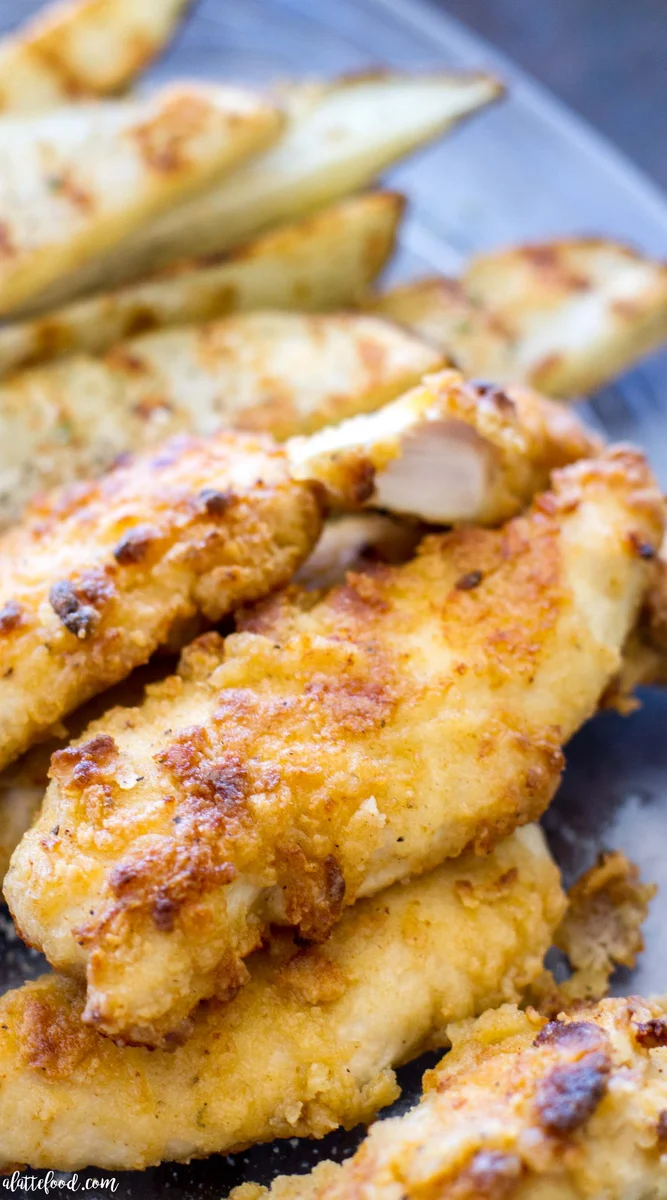
These oven-baked chicken tenders are marinated in ranch dressing, coated in a seasoned baking mix and baked until golden. They bring the familiar crunch and savoury flavour of tenders without deep-frying, making them an easy crowd-pleaser.
Ingredients
- 12chicken tenders
- 240 ml (1 cup)ranch dressing
- 15 ml (1 tablespoon)milk
- 120 g (1 cup)Bisquick or another complete baking mix
- ½ teaspoonsmoked paprika
- ½ teaspoonsalt
- ½ teaspoonblack pepper
- 60 ml (4 tablespoons)olive oil
Instructions
- 1
Marinate the chicken
Pour the ranch dressing and milk into a large resealable bag. Add all 12 chicken tenders, press out the excess air and seal the bag. Shake or massage it until the chicken is coated, then leave to marinate for 15–30 minutes.
- 2
Heat the oven
Heat the oven to 245°C (475°F). Line a large 23 × 33 cm or 23 × 28 cm baking dish with foil and drizzle 30 ml (2 tablespoons) of oil over the base.
- 3
Coat the chicken
Put the baking mix, smoked paprika, salt and black pepper in a large resealable bag. Add the marinated tenders, seal the bag and shake until the chicken is coated.
- 4
Arrange and drizzle
Lay the chicken flat in the prepared dish, spacing the tenders so they do not touch. Drizzle the remaining 30 ml (2 tablespoons) of oil over the tops.
- 5
Bake and turn
Bake for 8–10 minutes, or until the undersides are golden brown. Carefully turn the tenders over and bake for a further 9–10 minutes.
- 6
Serve with sauce
Serve with extra ranch dressing, barbecue sauce or another sauce of your choice.
- 7
Enjoy the tenders
Enjoy the chicken tenders while hot.
What are ranch chicken tenders?
Chicken tenders are strips of chicken breast, often breaded and cooked until crisp. This American-style version borrows its tangy, herby flavour from ranch dressing, which also coats the chicken before baking.
A complete baking mix gives the coating a quick, even base, while smoked paprika adds a gentle smoky note. Baking the tenders on an oiled tray helps the outside brown without deep-frying.
Nutrition and macros by portion
The nutrition label shows one serving as written: 630 calories, 36g protein, 31g carbs, 40g fat.
| Portion | Adjustment | kcal | Protein | Carbs | Fat |
|---|---|---|---|---|---|
| Lighter | Use less oil | 441 kcal | 25g | 22g | 28g |
| This serving | As written | 630 kcal | 36g | 31g | 40g |
| Hungry | Add a larger side | 945 kcal | 54g | 47g | 60g |
The chicken provides most of the protein, while the baking mix contributes carbohydrates. Ranch dressing and olive oil account for much of the fat, and the dressing, mix and added salt contribute sodium. Balance the plate with vegetables or salad and a moderate portion of potatoes or bread.
Why marinate in ranch?
Ranch dressing: its creamy, seasoned flavour gets onto the chicken during the short marinade. Mixing it with milk makes it easier to coat the tenders evenly.
Marinating time: 15–30 minutes is all the method allows. Keep the bag sealed while the chicken rests, and avoid leaving it at room temperature longer than necessary.
Getting an even coating
Baking mix: add the paprika, salt and pepper to the mix before adding the chicken. Shaking everything together in a bag helps the coating reach the sides of each tender.
Spacing: arrange the coated pieces in a single layer with a little room between them. Crowded chicken tends to steam rather than brown evenly.
Browning in a hot oven
Hot tray: the oven is set to 245°C, so have the lined dish ready as it heats. The oil under the chicken helps brown the underside, while the second drizzle of oil moistens the coating on top.
Turn carefully: after 8–10 minutes, check for a golden underside before turning. Bake for another 9–10 minutes; the exact time can vary with the thickness of the tenders.
Checking when they are done
Colour: golden-brown coating is the cue given for turning the chicken, but colour alone cannot confirm that the centre is cooked through. Check the thickest part with a food thermometer and follow the recommended safe internal temperature for chicken.
Texture: handle the tenders gently when turning so the coating stays in place. Let them rest briefly after baking if you want the crust to settle before serving.
Sauces and sides
Dips: extra ranch keeps the flavour consistent, while barbecue sauce offers a sweet, smoky contrast. Serve the sauces separately so the coating stays crisp until each tender is dipped.
Sides: pair the chicken with a green salad, steamed vegetables or corn, and add potatoes or bread for a more substantial meal.
Recipe notes & tips
- Use tenders of similar thickness so they cook at roughly the same rate.
- Drain excess marinade from each tender before adding it to the coating bag.
- Shake the coating bag in batches if it becomes difficult to move the chicken around.
- Leave space between the tenders so hot air can circulate around them.
- Use a thin spatula to turn the chicken without scraping away the coating.
- Serve the dipping sauces on the side to help keep the crust crisp.
Variations
- Extra herbs: add dried parsley or dill to the baking mix for a more herbal flavour.
- More heat: add a pinch of cayenne to the coating for a spicier finish.
- Cheesy coating: mix finely grated Parmesan into the baking mix before coating the chicken.
- Gluten-free option: use a gluten-free complete baking mix suitable for a savoury coating.
- Different dip: serve with honey mustard or a spicy mayonnaise instead of ranch.
Common mistakes to avoid
- Skipping the marinade: the coating may not cling as well; let the chicken sit in the ranch mixture for 15–30 minutes.
- Crowding the dish: the tenders can steam instead of brown; use a large dish and leave gaps between them.
- Uneven tenders: thinner pieces may cook faster; group pieces of similar thickness together and check them as they bake.
- Turning too early: the coating may stick or tear; wait until the underside is golden before flipping.
- Relying only on colour: a browned exterior does not guarantee a cooked centre; check the thickest tender with a thermometer.
How to store
Refrigerate leftovers in an airtight container for up to 3 days. Reheat in a hot oven until warmed through; this helps the coating regain some crispness. Avoid leaving cooked chicken at room temperature for more than 2 hours.
Frequently asked questions
Can I marinate the chicken for longer?
The recipe specifies 15–30 minutes. If preparing ahead, keep the chicken covered in the refrigerator and do not extend the time unnecessarily, as the dressing can make the surface soft.
Can I use chicken breast instead of tenders?
Yes. Cut chicken breast into strips of similar thickness so they cook evenly, and check the thickest piece for doneness.
How can I tell when the chicken is cooked?
The coating should be browned, but check the thickest part with a food thermometer rather than relying on colour alone. Use the recommended safe internal temperature for chicken.
Can I prepare the coating ahead?
You can mix the baking mix and seasonings in advance and keep them sealed in a dry container. Coat the chicken shortly before baking so the mixture does not become damp.
What can I serve with these tenders?
Try salad or vegetables alongside potatoes, chips or bread. Ranch and barbecue sauce both work well as dips.
Cook it from the original
This recipe comes from alattefood.com. Their page has the author’s own photos, notes and tips — the best place to cook it from.
Open the recipe on alattefood.com