
Vanilla Macaron Recipe
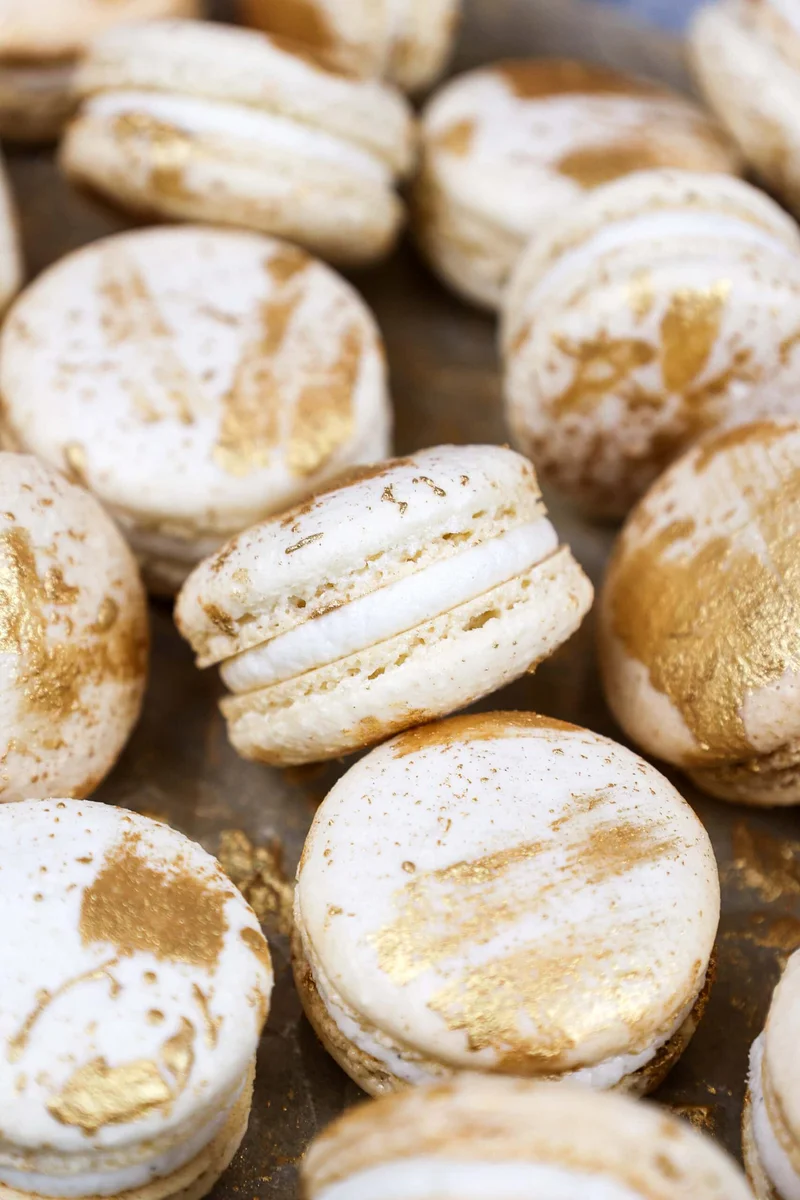
These French vanilla macarons pair crisp, delicate almond shells with a smooth vanilla buttercream filling. They take care and precision, but the step-by-step method helps you judge the meringue, batter and resting stage as you go.
Ingredients
- 70 gsuperfine blanched almond flour
- 63 gicing sugar
- 55 gaged egg whites, at room temperature
- a pinch, optionalcream of tartar
- 55 gcaster sugar
- 56 gunsalted butter, at room temperature
- 4 gvanilla extract or vanilla bean paste
- 1 gfine salt
- 125 gicing sugar
- 10 gdouble cream, at room temperature
- to tasteedible gold paint
Instructions
- 1
Sift dry ingredients
Sift 70 g almond flour and 63 g icing sugar into a large bowl, then set aside.
- 2
Whisk egg whites
Put 55 g aged egg whites in the bowl of a stand mixer fitted with a whisk. Mix on medium-low until small bubbles cover the surface. Add a pinch of cream of tartar, if using, and whisk until soft peaks form.
- 3
Whip the meringue
Add 55 g caster sugar and mix on medium for 30 seconds. Increase to medium-high and whisk until the peaks are stiff and glossy, about 4–6 minutes on speed 6 of a KitchenAid.
- 4
Fold the batter
Fold the dry ingredients into the meringue with a circular motion until the batter falls from the spatula in a thick ribbon. Take care not to overmix.
- 5
Pipe the shells
Transfer the batter to a piping bag fitted with a medium round tip. Pipe rounds about 3 cm across onto prepared baking sheets, leaving about 2.5 cm between them.
- 6
Release air bubbles
Tap the baking sheets firmly on the worktop a few times. Pop any remaining bubbles that rise to the surface with a toothpick.
- 7
Rest the shells
Leave the piped macarons to rest for 30 minutes, until a matte skin has formed.
- 8
Heat the oven
While the shells rest, preheat the oven to 157°C.
- 9
Bake the macarons
Bake one tray at a time on the middle shelf for 16–18 minutes, rotating the tray halfway through. When you rotate it, cover the shells loosely with foil to help prevent browning.
- 10
Cool the shells
Remove the tray from the oven and let the shells cool on it for about 15 minutes. Gently lift them off the baking mat.
- 11
Decorate with gold
If desired, use a kitchen paintbrush and a fork to splatter a little edible gold paint over the shells.
- 12
Beat the butter
For the buttercream, beat 56 g room-temperature butter with a whisk attachment on medium for 1 minute, until smooth and paler in colour.
- 13
Add vanilla and salt
Mix in 4 g vanilla extract or vanilla bean paste and 1 g salt on low speed.
- 14
Mix in sugar
Gradually mix in 125 g icing sugar and 10 g double cream on low speed.
- 15
Finish the buttercream
Continue mixing on low for a couple of minutes, until everything is incorporated and the buttercream reaches the consistency you want.
- 16
Adjust the consistency
If the buttercream is too thick, add more cream or milk 1 teaspoon at a time. If it is too thin, add more icing sugar 1 tablespoon at a time.
- 17
Prepare the piping bag
Spoon the buttercream into a piping bag fitted with a round tip, or snip the end to make an opening about 1 cm wide. Set aside.
- 18
Fill the macarons
Pipe a dollop of buttercream onto the flat side of one shell. Gently press a second shell on top to make a sandwich.
- 19
Chill and serve
Put the finished macarons in an airtight container and chill overnight. Bring them to room temperature before serving.
What are vanilla macarons?
Macarons are French sandwich biscuits made from almond flour and meringue, with a smooth shell, a ruffled edge and a sweet filling. This version uses vanilla buttercream between the shells and keeps the flavours simple, so the almond and vanilla both come through.
The method relies on a carefully whipped meringue and a controlled fold to create shells that hold their shape while baking.
Nutrition and macros by portion
The nutrition label shows one serving as written: 139 calories, 3g protein, 17g carbs, 7g fat.
| Portion | Adjustment | kcal | Protein | Carbs | Fat |
|---|---|---|---|---|---|
| Lighter | Use less buttercream filling | 97 kcal | 2g | 12g | 5g |
| This serving | As written | 139 kcal | 3g | 17g | 7g |
| Hungry | Serve an extra macaron | 209 kcal | 5g | 26g | 11g |
The almond flour, icing sugar and caster sugar provide most of the carbohydrates, while the butter and cream supply most of the fat. Egg whites and almond flour contribute protein. Serve a macaron with fruit or alongside a meal with a source of protein if you want a more balanced plate.
The ingredients that matter
Almond flour: Use finely ground, blanched flour and sift it with the icing sugar to remove lumps. Coarse pieces can make the shells uneven.
Egg whites: The recipe calls for aged whites at room temperature. Measure them by weight for consistency, and make sure the mixing bowl is clean before whipping.
Vanilla: Extract or vanilla bean paste works in the buttercream. The recipe also allows either option for the measured vanilla, so use the same one you have to hand.
Getting the batter right
Meringue: Start at medium-low until the whites are foamy, then add the optional cream of tartar and whip to soft peaks. After the sugar goes in, continue until the peaks are stiff and glossy.
Folding: Use a circular motion and stop when the batter falls from the spatula in a thick ribbon. Overmixing can leave it too loose to pipe neatly.
Resting and baking the shells
The 30-minute rest gives the piped surfaces time to become matte and form a skin. The shells are ready for the oven when they no longer look wet on top.
Bake one tray at a time on the middle shelf at 157°C for 16–18 minutes, rotating halfway through. The foil tent at the rotation stage helps keep the shells from browning.
Making smooth buttercream
Beat the butter until it is smooth and paler before adding the vanilla and salt. Mix the icing sugar and cream in gradually on low speed to reduce mess.
The finished buttercream should be pipeable. Adjust it in small increments, adding cream or milk if it is too thick, or icing sugar if it is too thin.
Filling and serving
Pipe a small dollop onto the flat side of a shell, then press a second shell on gently so the filling reaches the edges without cracking the tops. Gold paint is an optional finishing touch.
The assembled macarons are chilled overnight, then brought back to room temperature for serving. Their sweet, delicate texture pairs well with coffee or tea.
Recipe notes & tips
- Weigh the ingredients carefully, especially the egg whites and sugars.
- Sift the almond flour and icing sugar together before folding.
- Stop whipping only when the meringue forms stiff, glossy peaks.
- Tap the trays firmly and check the shells for bubbles before resting.
- Bake one tray at a time and rotate it halfway through.
- Let the shells cool fully on the tray before removing them from the mat.
Variations
- Skip the gold: Leave off the edible paint for a plain vanilla finish.
- Use vanilla paste: Choose vanilla bean paste for visible flecks in the buttercream.
- Change the colour: Tint the shells with food colouring if desired, keeping the batter consistency in mind.
- Add citrus: Mix a little finely grated lemon zest into the buttercream for a fresh variation.
- Change the filling: Use another firm buttercream flavour in place of vanilla.
Common mistakes to avoid
- Lumpy dry mix: Sift the almond flour and icing sugar together before using them.
- Soft meringue: Continue whisking until the peaks are stiff and glossy before folding.
- Overmixed batter: Fold only until it falls from the spatula in a thick ribbon.
- Unpopped bubbles: Tap the tray and prick bubbles with a toothpick before resting.
- Browning shells: Cover the tray loosely with foil when rotating it halfway through baking.
- Cracked shells: Cool them on the tray for about 15 minutes before lifting them from the mat.
How to store
Keep the assembled macarons in an airtight container in the fridge, as directed, and chill them overnight. Bring them to room temperature before serving.
Frequently asked questions
How do I know when the meringue is ready?
It should be glossy and hold stiff peaks when the whisk is lifted. The recipe gives about 4–6 minutes on KitchenAid speed 6 as a guide.
How long should the shells rest?
Rest them for 30 minutes. Their surfaces should look matte once a skin has formed.
Can I skip the cream of tartar?
Yes. It is marked as optional in the ingredient list, so you can make the recipe without it.
Why does the recipe bake one tray at a time?
The method specifies one tray on the middle shelf at a time, which lets you follow its baking and rotation instructions for each batch.
When should I fill the shells?
Let them cool on the tray for about 15 minutes, then remove them gently from the mat before adding the buttercream.
Can I make the buttercream thicker or thinner?
Yes. If it is too thick, add cream or milk 1 teaspoon at a time; if too thin, add icing sugar 1 tablespoon at a time.
Cook it from the original
This recipe comes from chelsweets.com. Their page has the author’s own photos, notes and tips — the best place to cook it from.
Open the recipe on chelsweets.com