
Quick Puff Pastry
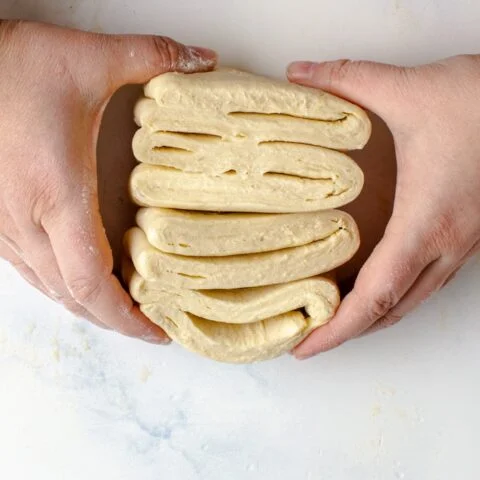
Quick puff pastry, also called rough puff, uses a simple folding method to create buttery layers without the lengthy process of traditional puff pastry. Make it for pinwheels, hand pies, galettes or other pastries that benefit from a crisp, flaky crust.
Ingredients
- 240 gplain flour
- ½ teaspoonsalt
- 225 gcold unsalted butter, cubed
- 120–140 mlice-cold water
Instructions
- 1
Mix flour and salt
Whisk the flour and salt together in a large mixing bowl.
- 2
Add the butter
Add the cold cubed butter and toss it through the flour.
- 3
Flatten the butter
Use your fingertips to press each piece of butter flat. Keep the pieces large rather than rubbing them into the flour as you would for a pie crust.
- 4
Add the water
Once the butter is flattened, add the ice-cold water a few tablespoons at a time, tossing it through the mixture with your hands. Continue until most of the flour is moistened and large clumps begin to form.
- 5
Chill the dough
Press the mixture together on the work surface into a rectangle and wrap it in cling film. Refrigerate for at least 30 minutes and up to 2 days.
- 6
Roll into a rectangle
After chilling, flour the work surface and roll the dough into a narrow rectangle about 5 mm thick.
- 7
Fold the dough
Fold the dough into thirds, then turn it 90 degrees to the left. Roll it out and fold it three more times, turning it 90 degrees in the same direction between folds.
- 8
Chill before use
Wrap the dough in cling film and refrigerate before using; 1 hour is ideal. The dough can be refrigerated for up to 48 hours in total across this chill and the first chilling period.
- 9
Freeze for later
Wrap the dough well in cling film and freeze for up to 2 months. Defrost it overnight in the refrigerator before using.
What is quick puff pastry?
Quick puff pastry, often called rough puff or blitz puff, is a shortcut to layered pastry. Instead of enclosing a block of butter in dough, it keeps visible pieces of butter in the mixture and builds layers through repeated rolling and folding.
This version is suited to home baking when you want a flaky base without making traditional puff pastry. It will not rise quite as high, but works well for shaped pastries, hand pies and pie or galette crusts.
Nutrition and macros by portion
The nutrition label shows one serving as written: 1240 calories, 13g protein, 92g carbs, 93g fat.
| Portion | Adjustment | kcal | Protein | Carbs | Fat |
|---|---|---|---|---|---|
| Lighter | Use a smaller pastry portion | 868 kcal | 9g | 64g | 65g |
| This serving | As written | 1240 kcal | 13g | 92g | 93g |
| Hungry | Make a larger pastry portion | 1860 kcal | 20g | 138g | 140g |
The flour provides most of the carbohydrates, while the butter contributes most of the fat and much of the energy. There is a modest amount of protein from the flour, and the salt is the main source of sodium. Since this is pastry dough, serve it alongside vegetables and a protein-rich filling or accompaniment to balance the plate.
Keep the butter in pieces
Cold butter: flatten each cube with your fingertips, but do not rub it fully into the flour. Large pieces are important because they form pockets between the layers as the pastry bakes.
Cold water: add it gradually so the flour can come together without making the dough wet or sticky. You may not need the full amount.
Bring the dough together gently
Clumps first: toss the water through the mixture until it is mostly moistened and forming large clumps. Press those clumps together on the work surface rather than kneading them smooth.
A slightly uneven-looking dough is fine at this stage. Avoid extra handling, which can soften the butter and make the finished pastry less distinct in its layers.
Make even folds
Rectangle: roll the chilled dough into a narrow rectangle about 5 mm thick, keeping its shape as even as you can. Fold it into thirds, like a letter.
Turns: rotate the dough 90 degrees to the left after each fold, then roll and fold three more times. Consistent turns help distribute the butter through the dough.
Chilling is part of the method
First chill: refrigerate the pressed-together dough for at least 30 minutes before rolling. This gives the dough time to firm up after mixing.
Final chill: after folding, refrigerate it for ideally 1 hour before rolling it out for a recipe. Keep the combined refrigeration time within 48 hours, as stated in the method.
What to look for
Before folding: the dough should hold together in large clumps when pressed, with pieces of butter still visible. If it is crumbly, add a little more of the measured water.
Before baking: keep the pastry cold and follow the temperature and baking time of the recipe you are using it in. The dough itself is a base recipe and does not specify a baking temperature.
Ways to use it
Savoury bakes: use the pastry for hand pies, a galette crust or other filled pastries. Pair a savoury filling with a green salad or cooked vegetables for a more complete meal.
Sweet bakes: shape it into pinwheels or use it for layered pastries such as napoleons. Add fillings or toppings according to the recipe you are making.
Recipe notes & tips
- Chill the butter and water thoroughly before mixing.
- Use your fingertips to flatten the butter without blending it into the flour.
- Add the water gradually and stop once the mixture forms large clumps.
- Flour the work surface lightly so the dough does not stick during rolling.
- Keep the turns in the same direction for all four folds.
- If the dough becomes soft while rolling, refrigerate it until firm again.
Variations
- Hand pies: cut the rolled pastry into rounds or rectangles and fill according to your preferred hand-pie recipe.
- Pinwheels: spread a chosen filling over the pastry, roll it up and slice into rounds.
- Galette base: roll the pastry into a broad circle and fold the edges around your filling.
- Napoleon layers: cut the pastry into even sheets and bake them using the instructions for your chosen Napoleon recipe.
Common mistakes to avoid
- Rubbing in the butter: the pastry loses its distinct buttery pockets; flatten the cubes instead.
- Adding water all at once: the dough can become too wet; add it a few tablespoons at a time.
- Kneading until smooth: extra handling can soften the butter; press the clumps together gently.
- Skipping the first chill: warm dough is harder to roll; refrigerate it for at least 30 minutes.
- Turning inconsistently: the folds become less even; rotate the dough 90 degrees to the left each time.
How to store
Wrap the dough well and refrigerate it for up to 48 hours in total, including the first chill. To keep it longer, freeze it for up to 2 months and defrost overnight in the refrigerator before use. This recipe is uncooked pastry dough, so bake it according to the recipe it is used in.
Frequently asked questions
How cold should the butter and water be?
Use cold butter straight from the refrigerator and ice-cold water. Keeping them cold helps the butter remain in pieces while you mix and fold.
What if the dough still looks crumbly?
Add a little more of the measured ice-cold water and toss it through. Stop when the flour is mostly moistened and the mixture forms large clumps.
Can I make the dough ahead?
Yes. Keep it wrapped in the refrigerator for up to 48 hours in total, counting both chilling periods.
Can I freeze quick puff pastry?
Yes. Wrap it well and freeze for up to 2 months. Defrost it overnight in the refrigerator before rolling.
Will it puff as much as traditional puff pastry?
No; the description notes that quick puff pastry does not rise quite as high as traditional puff pastry. It still develops flaky layers when baked.
What can I make with this pastry?
Use it for pinwheels, hand pies, napoleons, or as a pie or galette crust. Follow the baking instructions for the dish you choose.
Cook it from the original
This recipe comes from bakerbettie.com. Their page has the author’s own photos, notes and tips — the best place to cook it from.
Open the recipe on bakerbettie.com