
Chocolate Chip Scones
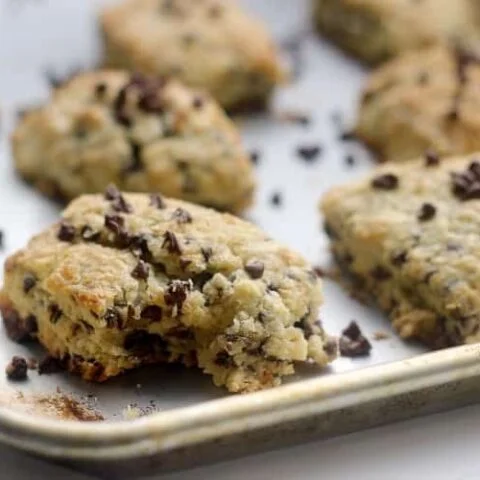
These chocolate chip scones are tender inside with flaky layers, mini chocolate chips and a crisp sugar topping. Keep the butter and cream cold, and they make a satisfying bake for breakfast or an afternoon treat.
Ingredients
- 240 g (2 cups)plain flour
- 100 g (½ cup)granulated sugar
- 10 g (1 tablespoon)baking powder
- ½ teaspoon (2.5 ml)kosher salt
- 113 g (½ cup; 1 stick)very cold unsalted butter, cut into small cubes
- 175 g (1 cup)mini chocolate chips
- 1 teaspoon (5 ml)vanilla extract
- 117 g (½ cup; 120 ml)cold double cream
- 1 largecold egg
- A few tablespoonsadditional double cream, for brushing
- A few tablespoonsturbinado or granulated sugar, for dusting
Instructions
- 1
Heat the oven
Set a rack in the centre of the oven and preheat it to 220 °C (425 °F), allowing it to become fully hot before baking.
- 2
Line the tray
Cover a baking tray with baking parchment or a silicone baking mat.
- 3
Chill the butter
Cut 113 g (½ cup) butter into small pieces and return it to the fridge to keep cold. Measure the remaining ingredients.
- 4
Mix dry ingredients
Whisk together the 240 g (2 cups) flour, 100 g (½ cup) sugar, 10 g (1 tablespoon) baking powder and ½ teaspoon salt in a large bowl.
- 5
Cut in butter
Add the cold butter and work it into the flour mixture with a pastry blender or fork, pressing the butter as you move around the bowl. Stop when most pieces are pea-sized, with some about the size of half a walnut.
- 6
Add chocolate chips
Toss the 175 g (1 cup) mini chocolate chips through the flour and butter mixture.
- 7
Whisk wet ingredients
Lightly whisk together the 1 teaspoon vanilla, 117 g (½ cup) cold double cream and 1 large egg.
- 8
Combine the dough
Pour the wet mixture into the dry ingredients and fold with a silicone spatula just until the liquid is absorbed. The mixture will look crumbly at this stage.
- 9
Bring dough together
Turn the dough onto a lightly floured work surface and dust the top with flour. Press the crumbs together with some pressure until they form one mass.
- 10
Shape the rectangle
Press the dough into a rectangle about 2.5 cm (1 inch) thick.
- 11
Fold into layers
Use a bench knife or metal spatula to fold the dough in half, then turn it 90 degrees. Pat it out and fold again, for 6 folds in total. Work gently, pressing any crumbling dough back together, and dust with more flour as needed.
- 12
Cut and top
Pat the dough into a circle about 18 cm (7 inches) wide and 4 cm (1½ inches) thick. Cut it into 8 triangles and transfer them to the lined tray. Brush lightly with double cream and sprinkle generously with turbinado or granulated sugar.
- 13
Chill if desired
Optionally, place the tray in the freezer for 10 minutes before baking.
- 14
Bake until golden
Bake at 220 °C (425 °F) for 14–18 minutes, until golden brown and firm when gently pressed.
- 15
Cool the scones
Transfer the scones to a cooling rack.
- 16
Store or freeze
Once completely cool, wrap leftovers in foil or cling film and keep at room temperature for up to 2 days. Alternatively, freeze the scones unbaked and bake from frozen at 220 °C (425 °F) for 18–22 minutes, until cooked through.
What are chocolate chip scones?
Scones are a British bake, traditionally served with tea, and can be either plain or sweetened. This version adds mini chocolate chips to a lightly sweetened dough and finishes each wedge with crunchy sugar.
Cold butter and a series of gentle folds help create a tender, layered crumb, while the chocolate brings sweetness to each bite.
Nutrition and macros by portion
The nutrition label shows one serving as written: 430 calories, 8g protein, 57g carbs, 21g fat.
| Portion | Adjustment | kcal | Protein | Carbs | Fat |
|---|---|---|---|---|---|
| Lighter | Smaller scone portion | 301 kcal | 5g | 40g | 15g |
| This serving | As written | 430 kcal | 8g | 57g | 21g |
| Hungry | Serve two scones | 645 kcal | 11g | 86g | 32g |
Most of the carbohydrates come from the flour, sugar and chocolate chips; butter and double cream contribute much of the fat, while the egg, flour and dairy provide some protein. Pair a scone with fruit or plain yoghurt for a more balanced plate.
Keep the butter cold
Cold butter: small pieces stay distinct as they are worked into the flour, helping the baked scones develop a flaky texture. If it softens while you measure the other ingredients, return it to the fridge.
Cold cream and egg: these help keep the dough cool as you mix it. Measure them shortly before adding them.
Handle the dough gently
Crumbly mixture: after adding the wet ingredients, the dough may not look cohesive in the bowl. That is expected; press it together on the work surface rather than adding extra liquid.
Six folds: folding and turning the dough builds layers. Use a light touch and pat loose bits back into place instead of kneading.
Shape even wedges
Thickness: aim for a circle about 18 cm wide and 4 cm thick before cutting. Keeping the dough at an even thickness helps the wedges bake at a similar rate.
Cutting: divide the circle into 8 triangles with a sharp knife or bench knife, then move them to the lined tray without compressing their sides.
Look for colour and firmness
Baking cues: the scones are ready after 14–18 minutes at 220 °C when their tops are golden and they feel firm under a gentle touch. Check towards the earlier end of the range, as ovens can vary.
Cooling: transfer them to a rack after baking so the bases do not remain in contact with the hot tray.
Serve them simply
These scones are especially good while fresh, with tea or coffee. For a more substantial plate, pair one with plain yoghurt or fruit.
The tops already have a sugar coating, so serve any extra spread on the side rather than adding more sweetness to the dough.
Recipe notes & tips
- Give the oven enough time to reach 220 °C before the tray goes in.
- Keep the butter in the fridge until you are ready to work it into the flour.
- Use a pastry blender or fork to leave some larger butter pieces in the mixture.
- Press the crumbly dough together on the counter instead of trying to make it smooth in the bowl.
- Use a little flour on your hands and work surface if the dough sticks during folding.
- Freeze the shaped scones for 10 minutes if you want to help them hold their shape in the oven.
Variations
- Dark chocolate: use mini dark chocolate chips for a less sweet, more cocoa-forward bite.
- Orange zest: add finely grated orange zest to the dry ingredients for a citrus note.
- Chopped chocolate: replace the mini chips with finely chopped chocolate, keeping the same quantity.
- Turbinado topping: use turbinado sugar on top for a coarser, crunchier finish.
- Plain scones: leave out the chocolate chips for a simpler sweet scone.
Common mistakes to avoid
- Soft butter: warm butter blends into the flour and reduces flakiness; chill it again before mixing.
- Overmixing: too much handling can make the scones tough; stop mixing as soon as the liquid is absorbed.
- Adding extra liquid: the dough is meant to look crumbly at first; press it together on the counter before deciding it needs anything more.
- Skipping the folds: folding helps create layers; complete all 6 turns gently.
- Crowding the tray: leave space between the wedges so they can bake evenly.
- Underheating the oven: a not-yet-hot oven can let the scones spread; wait until it has fully preheated.
How to store
Once completely cooled, wrap the scones in foil or cling film and store at room temperature for up to 2 days. The unbaked scones can be frozen and baked from frozen at 220 °C (425 °F) for 18–22 minutes, until cooked through.
Frequently asked questions
Why is the dough so crumbly?
It is expected to look crumbly after the wet ingredients are mixed in. Press it together on a lightly floured work surface until it forms one mass.
Can I make these without a pastry blender?
Yes. Use the tines of a fork to press the butter into the flour mixture, leaving most pieces pea-sized and a few larger.
Do I have to chill the shaped scones?
No, chilling for 10 minutes is optional. It can help the scones hold their shape while the oven finishes heating.
How do I know when the scones are done?
They should be golden brown and feel firm when gently pressed. The stated baking time is 14–18 minutes at 220 °C.
Can I freeze the scones before baking?
Yes. Freeze them unbaked and bake from frozen at 220 °C (425 °F) for 18–22 minutes, until cooked through.
How long do leftover scones keep?
Keep them completely cooled and wrapped at room temperature for up to 2 days.
Cook it from the original
This recipe comes from bakerbettie.com. Their page has the author’s own photos, notes and tips — the best place to cook it from.
Open the recipe on bakerbettie.com