
Crispy Chicken Cordon Bleu Roulade
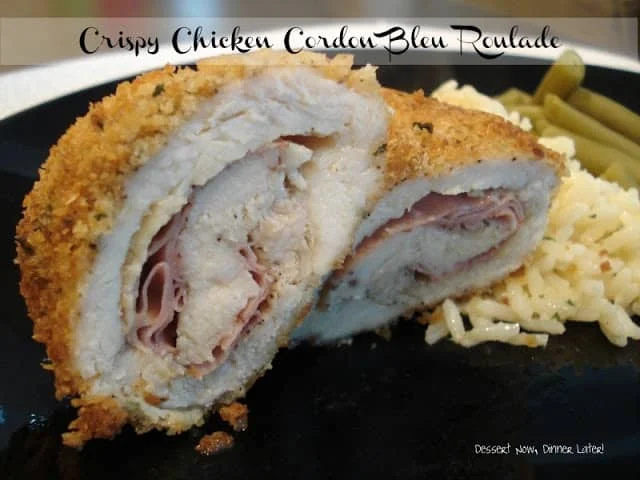
Chicken cordon bleu roulade wraps ham and Muenster cheese inside seasoned chicken, then coats it in breadcrumbs for a crisp finish. A quick pan-sear colours the crumb coating before the oven cooks the chicken through.
Ingredients
- 4chicken breasts, butterflied and pounded to 6 mm (¼ inch) thick
- 57–113 g (2–4 oz)deli ham slices
- 4–8slices of Muenster cheese
- 60 g (½ cup)plain flour
- 1–2eggs
- 30 g (½ cup)panko breadcrumbs
- 55 g (½ cup)Italian-style breadcrumbs
- to tastesalt and pepper
- a small amount, enough to cover the pan base to a depth of about 3 mm (⅛ inch)rapeseed oil
Instructions
- 1
Season the chicken
Once the chicken breasts are butterflied and pounded to 6 mm (¼ inch) thick, season both sides with salt and pepper.
- 2
Fill and roll
Lay ham and cheese over each breast, then roll it up tightly. Use as much filling as you like, but tuck it inside so the cheese is less likely to escape during baking.
- 3
Set up coating
Arrange three plates: put the flour on one, whisk the eggs on another, and mix both types of breadcrumbs on the third.
- 4
Coat the roulades
Coat each rolled breast in flour, then the egg, then the breadcrumb mixture. Set it aside and repeat, making sure the chicken is covered all over.
- 5
Prepare the tray
Line a baking sheet with foil and set a cooling rack on top of the foil.
- 6
Sear the coating
Heat enough oil in a large sauté pan to cover its base to a depth of about 3 mm (⅛ inch). When hot, use tongs to sear each side of each roulade for 30 seconds to 1 minute, just until the crumbs brown rather than cooking the chicken through. Sear the seam first to help keep the filling in, along with the top and ends.
- 7
Arrange on rack
As each roulade is browned, place it on the prepared rack in the baking sheet.
- 8
Bake and rest
Bake at 220°C (425°F) for 20–25 minutes, checking with a thermometer until the thickest part reaches 74°C (165°F). Rest for 3–5 minutes before serving.
What is chicken cordon bleu roulade?
Cordon bleu is a dish of meat wrapped around ham and cheese, with a crisp coating. This roulade version rolls the filling inside flattened chicken breasts rather than enclosing it in a separate parcel.
The dish is associated with European cooking, though its exact origins are debated. Here, a short pan-sear colours the breadcrumbs, while baking cooks the chicken through without needing to fry the roulades completely.
Nutrition and macros by portion
The nutrition label shows one serving as written: 570 calories, 57g protein, 35g carbs, 23g fat.
| Portion | Adjustment | kcal | Protein | Carbs | Fat |
|---|---|---|---|---|---|
| Lighter | Use less cheese | 399 kcal | 40g | 25g | 16g |
| This serving | As written | 570 kcal | 57g | 35g | 23g |
| Hungry | Add a larger side | 855 kcal | 86g | 53g | 35g |
Chicken supplies most of the protein, while the flour and breadcrumbs contribute carbohydrates. The cheese, ham and oil add much of the fat, and the ham and cheese also contribute sodium. Pair a roulade with plenty of vegetables and a modest portion of potato or another starchy side to balance the plate.
Choosing the filling
Ham: deli slices are easy to layer over the chicken. The listed quantity is a guide, so distribute it evenly without piling it so high that the roulades are hard to close.
Muenster: its mild flavour works well with ham and chicken. Keep the slices tucked within the edges to help limit cheese escaping as it melts.
Rolling and coating
Even thickness: pound the butterflied breasts to about 6 mm (¼ inch) so they roll more evenly and cook at a similar rate.
Secure seam: roll tightly and tuck in the filling, then start searing with the seam facing down. Coat every exposed surface with flour, egg and crumbs so the crust is even.
Getting a crisp crust
Two crumbs: panko adds a coarse, airy texture, while Italian-style breadcrumbs bring a finer layer. Mixing them gives the coating a varied crunch.
Brief sear: brown each side for only 30 seconds to 1 minute. The aim is to colour the crumbs before baking, not to cook the chicken in the pan.
Checking doneness
Use a thermometer in the thickest part of a roulade and look for 74°C (165°F). Check without touching the probe to the filling, which can give a misleading reading.
The method allows 20–25 minutes in the oven, but thickness and oven performance can affect timing. Rest the cooked roulades for 3–5 minutes before serving.
What to serve alongside
Serve with a green salad or steamed green vegetables to add freshness alongside the rich cheese and crumb coating.
For a more substantial plate, add roasted potatoes or a simple grain. Keep the sides ready before the roulades come out of the oven so they can be served after their short rest.
Recipe notes & tips
- Pound the chicken to an even thickness so it rolls and bakes more uniformly.
- Keep the ham and cheese away from the edges to make the roulades easier to seal.
- Use tongs to turn the roulades gently so the crumb coating stays in place.
- Sear the seam first to help hold the filling inside.
- Check the temperature in the thickest part of each roulade rather than relying on colour alone.
Variations
- Change the cheese: use another sliced cheese that melts well, keeping it tucked inside the chicken.
- Add herbs: mix dried herbs into the breadcrumbs for an aromatic crust.
- Use Dijon mustard: spread a thin layer inside before adding the ham and cheese for a sharper flavour.
- Try smoked ham: swap in smoked deli ham for a more pronounced savoury note.
- Make smaller roulades: divide the chicken into smaller portions and check each one for doneness.
Common mistakes to avoid
- Overfilling the chicken: too much ham or cheese makes rolling difficult; leave a clear border around the edges.
- Uneven pounding: thick patches cook more slowly; flatten the breast to a consistent 6 mm (¼ inch).
- Skipping the seam: an unsealed seam can open during cooking; place it down first in the pan.
- Searing for too long: the chicken can start cooking through before it reaches the oven; stop once the crumbs are browned.
- Guessing doneness: the outside can look ready before the centre is cooked; check for 74°C (165°F) with a thermometer.
How to store
Refrigerate leftovers in a covered container for up to 3 days. Reheat in an oven until piping hot; an oven or air fryer will help the coating stay crisper than a microwave.
Frequently asked questions
Can I prepare the roulades ahead?
You can roll and coat them ahead, then keep them covered in the refrigerator until ready to cook. For best results, sear and bake shortly before serving.
Can I use another type of cheese?
Yes. Choose a sliced cheese that melts well, and keep it inside the chicken so it is less likely to leak out.
How do I know when the chicken is cooked?
Check the thickest part of a roulade with a food thermometer; it should reach 74°C (165°F).
Why is the coating coming off?
The chicken may not be fully coated, or it may have been turned roughly. Cover every surface in flour, egg and crumbs, then handle it gently with tongs.
Can I skip the pan-searing?
The recipe uses the pan to brown the crumbs before baking. Skipping that step will change the colour and crispness of the coating.
Can I freeze leftovers?
You can freeze cooked roulades in an airtight container, though the coating may soften after thawing. Defrost in the refrigerator and reheat in the oven until piping hot.
Cook it from the original
This recipe comes from dessertnowdinnerlater.com. Their page has the author’s own photos, notes and tips — the best place to cook it from.
Open the recipe on dessertnowdinnerlater.com