
Summer Vegetable Parmesan Bake
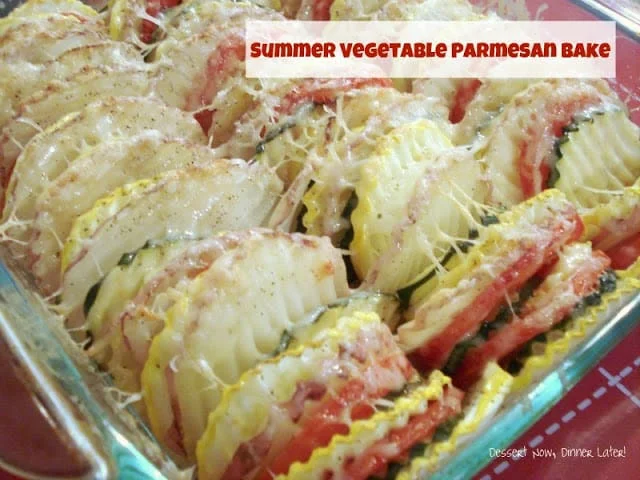
This summer vegetable bake layers thinly sliced squash, potato and tomatoes over softened onion, then finishes with Italian dressing and browned Parmesan. It makes a colourful side dish that can be prepared in one baking dish.
Ingredients
- A small amountOlive oil
- 1/2 mediumWhite onion, diced small
- 1 tsp (5 ml)Garlic
- 1 mediumYellow squash
- 1 mediumCourgette
- 1 mediumRed potato
- 2Roma tomatoes
- 60 ml (4 tbsp)Light Italian dressing
- About 100 g (1 cup)Parmesan cheese
- To tasteSalt and pepper
Instructions
- 1
Soften the onion
Preheat the oven to 200°C (400°F). Heat a small amount of oil in a sauté pan over medium heat, then add the onion and garlic. Cook for 5 minutes, or until softened.
- 2
Prepare the dish
Grease a 23 x 23 cm (9 x 9 inch) square baking dish and spread the softened onion across the bottom.
- 3
Slice and layer
Thinly slice the yellow squash, courgette, red potato and Roma tomatoes by hand or with a mandoline. Arrange them in alternating layers over the onion.
- 4
Season the vegetables
Season the tops of the vegetables with salt and pepper, then drizzle the Italian dressing evenly over them.
- 5
Bake with Parmesan
Cover the dish with foil and bake for 30 minutes. Remove it from the oven, take off the foil and scatter the Parmesan over the top. Bake uncovered for a further 15–20 minutes, until the cheese is browned.
What is a summer vegetable Parmesan bake?
This is a layered vegetable casserole, with squash, potato and tomatoes baked over a base of softened onion. It draws on the familiar combination of Mediterranean-style vegetables, herbs and cheese, though the recipe itself does not specify a regional origin.
Alternating the slices gives the dish its colourful top, while Italian dressing adds seasoning and Parmesan browns over the vegetables. The covered first bake helps the layers cook before the cheese is added.
Nutrition and macros by portion
The nutrition label shows one serving as written: 155 calories, 7g protein, 15g carbs, 8g fat.
| Portion | Adjustment | kcal | Protein | Carbs | Fat |
|---|---|---|---|---|---|
| Lighter | Use less Parmesan | 109 kcal | 5g | 11g | 6g |
| This serving | As written | 155 kcal | 7g | 15g | 8g |
| Hungry | Serve with bread | 233 kcal | 11g | 23g | 12g |
The potato provides most of the carbohydrates, while the olive oil, dressing and Parmesan contribute much of the fat; the cheese also supplies most of the protein. Pair a portion with a protein-rich main such as beans, fish or chicken, and add a fresh salad for a more balanced plate.
Choose and slice the vegetables
Even slices: Cut the vegetables thinly and to a similar thickness so they cook at roughly the same rate. A mandoline can help, but a sharp knife works too.
Firm potato: Slice the red potato thinly, as it may take longer to soften than the squash and tomatoes. Keep the slices together until you are ready to layer them.
Build the flavour base
Onion and garlic: Cook them for the full 5 minutes, or until softened, before spreading them in the dish. This gives the bake a savoury base without leaving the onion raw.
Italian dressing: Drizzle it over the assembled layers rather than pouring it all in one spot, so the flavour is distributed across the vegetables.
Cover first, brown later
Foil stage: Keep the dish covered for the first 30 minutes. This allows the vegetables to cook before the cheese is exposed to the oven's direct heat.
Cheese stage: Add the Parmesan after uncovering, then bake for 15–20 minutes. Look for browned cheese and vegetables that yield easily when pierced with a knife.
Layer for even cooking
Alternating slices: Arrange the squash, courgette, potato and tomatoes in repeated layers rather than clustering each type together. This makes the top look varied and helps distribute the different textures.
Dish depth: Keep the layers within the baking dish rather than piling them high above its rim. If slices overlap, arrange them neatly so they are still exposed to the dressing.
Serve it alongside
This bake works as a vegetable side with roast chicken, grilled fish or a simple bean dish. For a more filling meal, serve it with bread or a grain such as rice.
Let it stand briefly after baking so the layers settle before serving. A fresh green salad can add a crisp contrast to the soft baked vegetables.
Recipe notes & tips
- Slice the vegetables to a similar thickness so they cook evenly.
- Spread the onion mixture across the whole base of the dish.
- Drizzle the dressing over the assembled layers rather than in one place.
- Check the potato with a knife before taking the dish out of the oven.
- Keep an eye on the cheese during the final bake, as browning time can vary.
Variations
- Add fresh herbs: Scatter chopped basil or thyme over the vegetables before baking.
- Use another cheese: Replace some of the Parmesan with grated mozzarella for a softer, stretchy topping.
- Add red pepper: Layer thin slices of red pepper among the other vegetables.
- Make it more substantial: Add a layer of cooked white beans beneath the vegetables.
- Adjust the dressing: Use a little less dressing and finish with a squeeze of lemon after baking.
Common mistakes to avoid
- Thick slices: They may remain firm when the cheese has browned; slice the potato and vegetables thinly.
- Uneven layering: Clumps of one vegetable can cook differently; alternate the slices across the dish.
- Skipping the foil: The top may brown before the vegetables soften; cover the dish for the first 30 minutes.
- Adding Parmesan too early: It can overbrown during the longer bake; add it after removing the foil.
- Relying only on the timer: Vegetable thickness affects doneness; test the potato with a knife before serving.
How to store
Cool leftovers, cover and refrigerate for up to 3 days. Reheat in an oven at about 180°C until hot throughout, or microwave individual portions; the topping may soften when reheated.
Frequently asked questions
Can I prepare the vegetables ahead?
You can slice them shortly ahead and keep them covered in the fridge. For the best texture, assemble and bake the dish soon after slicing.
How thin should I slice the vegetables?
Slice them thinly and as evenly as you can. Consistent slices help the potato and softer vegetables cook at a similar pace.
How do I know when the bake is ready?
The Parmesan should be browned, and a knife should pass easily through the potato. If the cheese is ready before the potato is tender, cover the dish again and continue baking.
Can I use a different baking dish?
A dish of similar capacity should work, but a different shape or depth may affect how the layers cook. Keep the vegetables in a fairly even layer and check for tenderness.
Can I make this without a mandoline?
Yes. Use a sharp knife to cut the vegetables into thin, even slices, taking care as you work.
Cook it from the original
This recipe comes from dessertnowdinnerlater.com. Their page has the author’s own photos, notes and tips — the best place to cook it from.
Open the recipe on dessertnowdinnerlater.com