
Roasted Beets
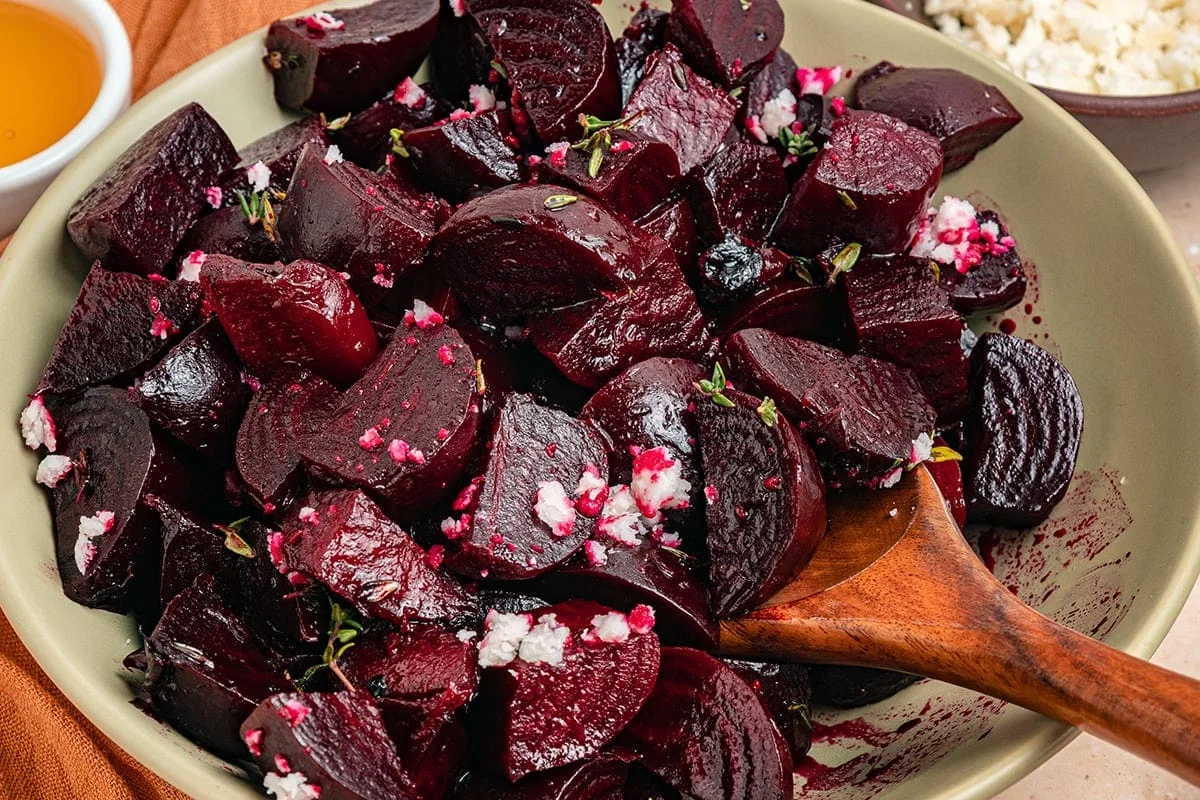
Whole or halved beets roast in a foil packet with olive oil, butter, garlic and thyme, then get a glossy honey, lemon and cider vinegar glaze. It is a hands-off side dish that can be prepared ahead and finished in a pan just before serving.
Ingredients
- 900 g (2 lb)beets, tops removed and scrubbed clean
- 30 ml (2 tablespoons)olive oil
- 14 g (1 tablespoon)unsalted butter, cut into small pieces
- 6 g (1 teaspoon)kosher salt
- ½ teaspoonfreshly ground black pepper
- 2 sprigsfresh thyme
- 2 clovesgarlic, lightly smashed
- 14 g (1 tablespoon)butter
- 63–84 g (3–4 tablespoons)honey, depending on how sweet you want them
- 5 ml (1 teaspoon)fresh lemon juice
- 5 ml (1 teaspoon)apple cider vinegar
Instructions
- 1
Heat the oven
Preheat the oven to 200°C (400°F).
- 2
Season the beets
Halve any large beets and leave small or medium ones whole. Arrange them on a large sheet of heavy-duty aluminium foil. Add the olive oil, 14 g butter, salt, pepper, thyme sprigs and garlic, then toss to coat.
- 3
Wrap and roast
Seal the foil into a tight packet, leaving a little room for steam. Set it on a baking tray and roast for 35–50 minutes, until a fork passes easily into the beets.
- 4
Rest and peel
Leave the packet unopened for 10 minutes. Carefully open it, then rub away the skins with a paper towel or your hands once the beets are cool enough to handle.
- 5
Slice and glaze
Cut the beets into bite-sized slices or quarters and put them in a frying pan. Discard the thyme sprigs and garlic, then add the remaining butter, honey, lemon juice and apple cider vinegar.
- 6
Toss the beets
Toss over medium heat for 2–3 minutes, until the glaze clings to all the pieces.
- 7
Add the finishing touches
Before serving, finish with flaky sea salt, cracked black pepper and a few fresh thyme leaves.
What are roasted beets?
Beets are a familiar root vegetable in American home cooking, where roasting is a straightforward way to concentrate their earthy sweetness. This version cooks them in a sealed foil packet, then coats them in a quick sweet-and-tart glaze.
Foil: The packet traps steam and the oil, butter, garlic and thyme season the beets as they soften. A brief toss in the pan at the end turns the honey, lemon and vinegar into a coating rather than a separate dressing.
Nutrition and macros by portion
The nutrition label shows one serving as written: 105 calories, 2g protein, 14g carbs, 5g fat.
| Portion | Adjustment | kcal | Protein | Carbs | Fat |
|---|---|---|---|---|---|
| Lighter | Use less honey | 74 kcal | 1g | 10g | 4g |
| This serving | As written | 105 kcal | 2g | 14g | 5g |
| Hungry | Serve a larger portion | 158 kcal | 3g | 21g | 8g |
The beets provide most of the carbohydrates, while the olive oil and butter supply most of the fat; the beets contribute a small amount of protein. Pair a serving with a protein-rich main and another vegetable or grain for a more balanced plate.
Choosing and preparing beets
Size: Leave small and medium beets whole, but halve large ones so they cook more evenly. Scrub them well before roasting; peeling can wait until after they have softened.
Foil: Use a large, sturdy sheet and leave a little air space inside the sealed packet. That gives steam room to circulate while keeping the cooking juices contained.
Why the flavour works
Aromatics: Thyme and lightly smashed garlic infuse the roasting fat without overpowering the beets. Discard them before glazing, as their job is to flavour the cooking rather than form part of the finished coating.
Balance: Honey brings sweetness, while lemon juice and cider vinegar add a sharp note. Start with the lower amount of honey if you prefer a less sweet finish.
Check for tenderness
Fork test: Cooking time depends on the size of the beets, so begin checking around 35 minutes. They are ready when a fork enters easily; larger or especially firm beets may need the full 50 minutes.
Rest: Let the sealed packet stand for 10 minutes before opening. The beets continue to settle, and the rest makes them easier to handle when you remove the skins.
Peeling and cutting
Peel: Once cool enough to handle, rub the skins away with a paper towel or your hands. If they are still too hot, wait a little longer rather than gripping them tightly.
Cut: Slice or quarter the peeled beets into similar bite-sized pieces. Even pieces are easier to toss through the glaze and serve.
Finishing the glaze
Pan: Add the glaze ingredients to the sliced beets and toss over medium heat for 2–3 minutes. Keep the pieces moving so the glaze coats them without catching on the bottom of the pan.
Finish: Flaky salt, cracked black pepper and fresh thyme leaves go on just before serving. They add a fresh, savoury contrast to the sweet-tart coating.
What to serve alongside
These beets work as a side with roast chicken, pork or a simple grain dish. Their sweet, tangy glaze also pairs well with savoury mains and plain cooked greens.
For a fuller plate, serve them with a protein-rich main and another vegetable or grain. The glazed beets bring both sweetness and a substantial side portion.
Recipe notes & tips
- Choose beets of similar size so they reach tenderness at roughly the same time.
- Seal the foil well, but leave a little room inside for steam.
- Begin checking the beets for tenderness at 35 minutes, especially if they are small.
- Wait until the beets are cool enough to handle before rubbing off the skins.
- Toss continuously over medium heat while the glaze reduces and clings to the pieces.
- Add the flaky salt and fresh thyme leaves at the end for a more distinct finish.
Variations
- Less sweet: Use 63 g honey for a more restrained glaze.
- More tang: Add a little extra lemon juice or cider vinegar to the glaze.
- Herb change: Use another woody fresh herb in place of thyme.
- Peppery finish: Add extra cracked black pepper just before serving.
- Chunky cut: Quarter the beets instead of slicing them for larger pieces.
Common mistakes to avoid
- Uneven sizes: Large whole beets can take longer; halve them so they cook more evenly.
- Loose foil: A poorly sealed packet lets steam escape; crimp the edges closed while leaving a little space inside.
- Rushing the roast: Beets that resist a fork need more time; continue roasting until tender.
- Peeling too soon: Hot beets are harder to handle; let them cool until comfortable to touch.
- Overcooking the glaze: Leaving the pan unattended can make the honey catch; toss the beets continuously for 2–3 minutes over medium heat.
How to store
Refrigerate leftovers in an airtight container for up to 3 days. Reheat gently in a frying pan over a low-to-medium heat, stirring until warmed through.
Frequently asked questions
Do I need to peel the beets before roasting?
No. Roast them first, then rub off the skins once they are cool enough to handle.
How do I know when the beets are cooked?
A fork should slide into the thickest part easily. Start checking at 35 minutes; larger beets may take up to 50 minutes.
Can I prepare the beets ahead?
Yes. Roast, peel and cut them ahead, then refrigerate. Toss them with the glaze in a pan shortly before serving.
Can I use one type of beet for this recipe?
Yes, use the beets you have, keeping their sizes as consistent as possible. The timing will vary with their size and firmness.
Can I make the glaze less sweet?
Yes. Use 63 g honey, the lower end of the stated amount, and taste the finished glaze before serving.
Cook it from the original
This recipe comes from cookedandloved.com. Their page has the author’s own photos, notes and tips — the best place to cook it from.
Open the recipe on cookedandloved.com