
Cherry Tomato Pasta
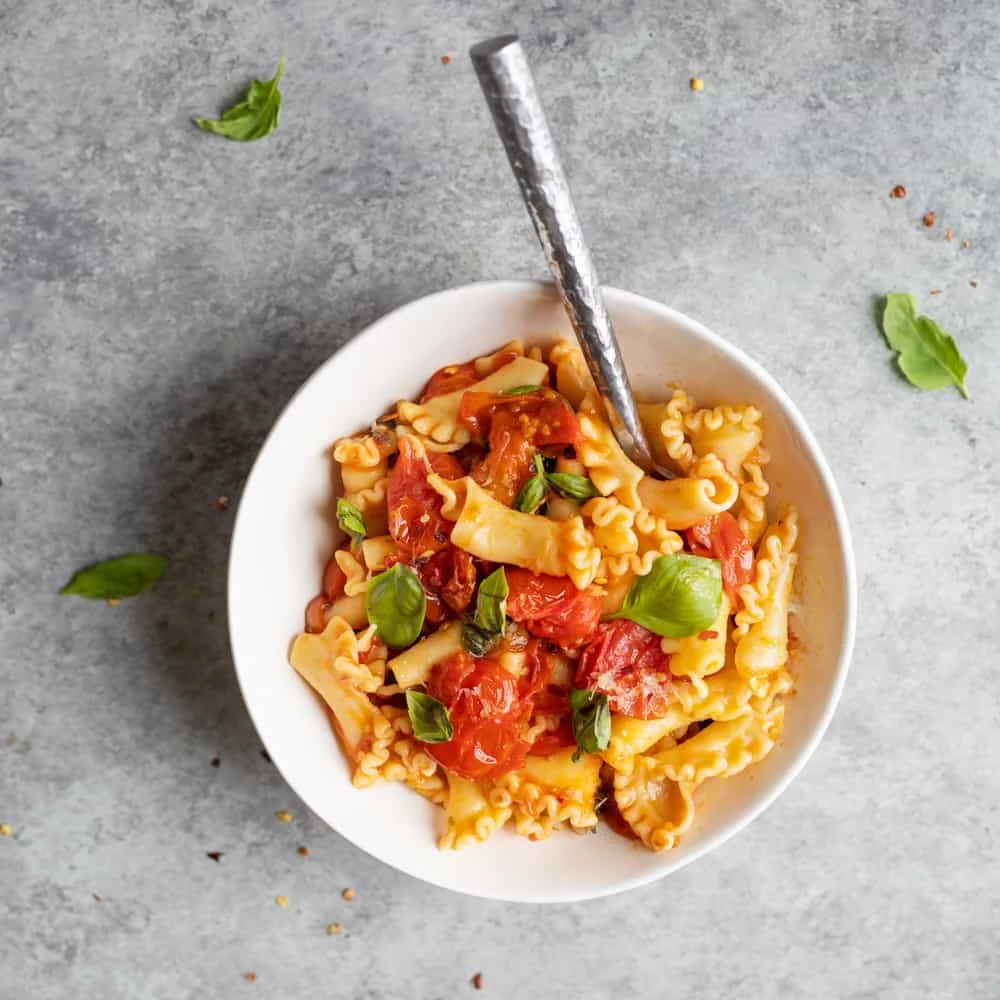
Cherry tomato pasta pairs noodles with a quick sauce of fresh tomatoes, olive oil, garlic and basil. It is a straightforward way to make a summery weeknight meal, with regular or vegan Parmesan as an optional finishing touch.
Ingredients
- 340 g (12 oz)pasta of your choice
- 80 ml (⅓ cup)olive oil
- 5 large clovesgarlic, chopped
- 1.25–2.5 ml (¼–½ teaspoon)red pepper flakes
- 900 g (2 lb)cherry tomatoes
- 15 g (1 loosely packed cup)basil leaves
- 5 ml (1 teaspoon)salt
- to tasteParmesan cheese, regular or vegan, as desired
Instructions
- 1
Cook the pasta
Bring a large pot of water to the boil. Cook the pasta according to the packet directions until just under al dente. Drain it, reserving 60 ml (¼ cup) of the pasta water.
- 2
Warm the oil
Heat the olive oil in a large frying pan over medium heat. Add the garlic and red pepper flakes, stirring for 30 seconds and taking care not to let the garlic burn. If it does burn, remove it and start again.
- 3
Burst the tomatoes
Add the tomatoes and salt. Cook for about 5 minutes, gently shaking the pan, until the tomatoes start releasing their juices and bursting. If needed, gently press some with the back of a wooden spoon to help them break open.
- 4
Thicken the sauce
Cook for another 10 minutes, stirring often, until the sauce begins to thicken and about half of the tomatoes have broken down.
- 5
Finish the pasta
Add the cooked pasta and 30 ml (2 tablespoons) of the reserved pasta water to the pan. Cook for another minute, until the pasta is al dente and the sauce clings to the noodles. If the sauce is too thick, add more pasta water as needed.
- 6
Add the basil
Take the pan off the heat and stir in the basil leaves and Parmesan, if using.
What is cherry tomato pasta?
Pasta has deep roots in Italian cooking, while this simple cherry tomato version suits the easy, fresh style of an American weeknight meal. Its sauce is made in the pan from tomatoes, olive oil and garlic rather than from a separate prepared sauce.
The method works because the tomatoes release their juices as they cook, creating a light sauce that gathers around the pasta. Basil and optional Parmesan finish the dish just before serving.
Nutrition and macros by portion
The nutrition label shows one serving as written: 523 calories, 14g protein, 74g carbs, 20g fat.
| Portion | Adjustment | kcal | Protein | Carbs | Fat |
|---|---|---|---|---|---|
| Lighter | Less pasta, more tomatoes | 366 kcal | 10g | 52g | 14g |
| This serving | As written | 523 kcal | 14g | 74g | 20g |
| Hungry | Larger pasta portion | 785 kcal | 21g | 111g | 30g |
Most of the carbohydrates come from the pasta, while olive oil supplies much of the fat. The pasta also provides some protein, with Parmesan contributing more if you add it. For a more balanced plate, serve a portion with a green salad or vegetables.
Choosing the ingredients
Tomatoes: Cherry tomatoes are small enough to soften and burst in the pan. Use ripe ones for a juicy sauce, and leave them whole as directed.
Pasta: The recipe works with your preferred pasta shape. Cooking it just shy of al dente gives it a final minute in the sauce without becoming too soft.
Finishing touches: Fresh basil brings a fragrant note, while regular or vegan Parmesan is optional. Adjust the red pepper flakes within the given range to suit your preferred heat.
Build the sauce gently
Garlic: Keep it moving in the warm oil for the brief 30-second step. It should become fragrant without browning or burning, which can make the sauce taste bitter.
Tomatoes: Give them about 5 minutes to start bursting, then another 10 minutes to cook down. Gentle pan-shaking and occasional stirring help them soften without breaking every tomato at once.
Use pasta water well
Reserve the water before draining the pasta; the recipe uses 30 ml (2 tablespoons) at first, with more available if needed. Add it with the pasta so the sauce can loosen and coat the noodles.
The sauce is ready to serve when it clings to the pasta rather than pooling thinly in the pan. Add any extra reserved water a little at a time if the mixture looks too thick.
Watch the pasta texture
Cook the pasta just under al dente before draining, following the timing on its packet. It finishes in the tomato sauce for one minute, so it should still have a little firmness when it goes into the pan.
Taste a noodle at the end to check its texture. The tomato sauce should coat it, and the pasta should be al dente rather than soft.
Serve it at its best
Stir in the basil and Parmesan, if using, after taking the pan off the heat. This keeps the finishing ingredients from spending extra time cooking in the sauce.
Serve while warm, on its own or alongside a simple green salad or cooked vegetables. Those sides add freshness and variety to the plate without changing the pasta method.
Recipe notes & tips
- Reserve the pasta water before draining, so it is ready when you finish the sauce.
- Keep the garlic moving in the oil and take care not to let it burn.
- Shake the pan gently as the tomatoes soften to help them cook evenly.
- Press only some of the tomatoes with the spoon so the sauce retains texture.
- Add extra pasta water gradually if the sauce needs loosening.
- Use vegan Parmesan, or leave out the cheese, to keep the dish vegan.
Variations
- Adjust the heat: Use the lower end of the red pepper flakes range for a milder sauce.
- Make it vegan: Choose vegan Parmesan or omit the cheese.
- Change the pasta: Use a different pasta shape of your choice.
- Add extra basil: Stir in more fresh basil at the end for a stronger herbal finish.
- Keep it cheeseless: Skip the Parmesan for a simpler tomato-and-basil finish.
Common mistakes to avoid
- Burning the garlic: Stir it for just 30 seconds over medium heat; if it burns, remove it and start again.
- Skipping the reserved water: Save 60 ml before draining so you can loosen the sauce as needed.
- Overcooking the pasta early: Drain it just under al dente because it cooks for another minute in the sauce.
- Expecting every tomato to disappear: Cook until about half have broken down, as directed, for a sauce with texture.
- Adding all the pasta water at once: Start with 30 ml and add more only if the sauce is too thick.
How to store
Refrigerate leftovers in a covered container and eat within 3–4 days. Reheat gently in a pan or microwave; add a small splash of water if the sauce has thickened.
Frequently asked questions
Can I use another kind of pasta?
Yes. The recipe calls for pasta of your choice, so use the shape you have and follow its packet timing.
How do I know when the sauce is ready?
After the additional 10 minutes of cooking, it should be starting to thicken, with about half of the tomatoes broken down.
Can I make this pasta vegan?
Yes. Use vegan Parmesan or leave out the cheese. The other listed ingredients are plant-based.
What should I do if the sauce is too thick?
Stir in more of the reserved pasta water as needed, adding it gradually until the sauce coats the noodles.
Can I make the sauce less spicy?
Use 1.25 ml (¼ teaspoon) of red pepper flakes, the lower amount in the recipe, or omit them if you prefer.
Can I prepare the tomatoes ahead?
The recipe cooks the tomatoes in the pan just before serving. For the freshest texture, make the sauce and finish the pasta when you plan to eat.
Cook it from the original
This recipe comes from delishknowledge.com. Their page has the author’s own photos, notes and tips — the best place to cook it from.
Open the recipe on delishknowledge.com