
Schweinshaxe (German Pork Knuckle)
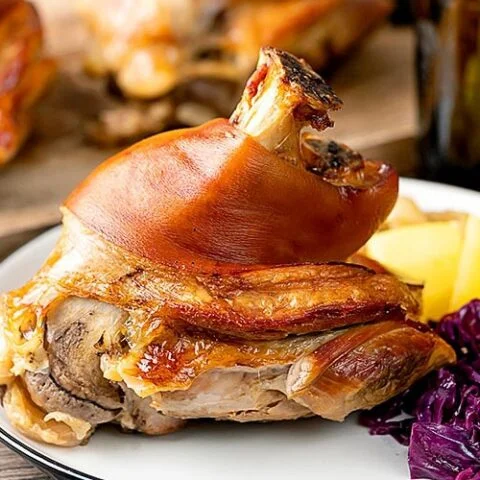
Schweinshaxe is German pork knuckle roasted until its skin is crisp and the meat is tender enough to pull apart. It makes a hearty centrepiece, especially with potatoes or dumplings and something sharp and tangy on the side.
Ingredients
- 3onions, sliced
- 4pork hocks (knuckles), as meaty as you can find
- 2garlic cloves, halved
- 30 ml (2 tbsp)salt, preferably coarse-grained
- 355 ml (12 oz)beer
Instructions
- 1
Preheat the oven
Heat the oven to 175°C (350°F).
- 2
Arrange the onions
Spread the sliced onions across the bottom of a 20 × 20 cm (8 × 8 inch) baking dish.
- 3
Season the hocks
Rub the skin of each pork hock with half a garlic clove, then add the garlic to the dish with the onions. Rub about 7.5 ml (½ tbsp) salt into the skin of each hock. Set the hocks on the onions with the meaty sides facing down.
- 4
Add the beer
Pour the beer around the hocks.
- 5
Roast until tender
Roast for 3 hours, until the skin is crisp and the meat is tender enough to fall apart. Check every hour to make sure the hocks have not tipped over and there is still moisture in the bottom of the dish. Add hot water if the dish looks as though it is scorching.
- 6
Serve the hocks
Traditionally, serve one hock per person with a fork and sharp knife. For an easier way to enjoy the crisp skin, you can eat with your hands.
- 7
Add the sides
Serve with boiled potatoes, potato dumplings or spaetzle, alongside braised red cabbage or sauerkraut. Include the onions from the baking dish.
What is Schweinshaxe?
Schweinshaxe is a Bavarian-style roast pork knuckle, often associated with beer-hall meals and Oktoberfest. The cut comes from the lower leg and is cooked with its skin on.
This version keeps the seasoning simple: salt, garlic, onions and beer. A long roast gives the skin time to crisp while the meat becomes very tender.
Nutrition and macros by portion
The nutrition label shows one serving as written: 274 calories, 0g protein, 0g carbs, 0g fat.
| Portion | Adjustment | kcal | Protein | Carbs | Fat |
|---|---|---|---|---|---|
| Lighter | Smaller hock, more cabbage | 192 kcal | 0g | 0g | 0g |
| This serving | As written | 274 kcal | 0g | 0g | 0g |
| Hungry | Add another potato side | 411 kcal | 0g | 0g | 0g |
The pork hock supplies most of the protein and fat, while the onions and beer contribute smaller amounts of carbohydrate. Pair a hock with cabbage and a moderate serving of potatoes or dumplings for a plate with a vegetable alongside its starchy side.
Choosing the pork hocks
Meaty hocks: Look for pieces with a generous amount of meat around the bone, as the recipe serves one hock per person.
Skin: Keep the skin intact and rub the salt over it evenly. The recipe relies on the skin being exposed to the oven as it roasts.
Building flavour in the dish
Onion and garlic: The onions form a bed beneath the hocks, while the garlic is rubbed over the skin before joining them in the dish.
Beer: Pour it around the meat rather than over the skin, so the skin can roast while the beer and onions sit below.
Getting crisp skin and tender meat
Salted skin: Rub the measured salt into the skin, dividing roughly 7.5 ml (½ tbsp) between each hock. Coarse-grained salt is the preferred choice in this recipe.
Doneness: The recipe’s cues are crisp skin and meat that falls apart easily. Check the dish hourly; if its base looks as though it is scorching, add hot water.
The long roast
Roast the hocks at 175°C (350°F) for 3 hours. Check that they are still sitting meaty-side down and that some moisture remains in the bottom of the dish.
The stated total time is 190 minutes, so allow for the oven to heat as well as the roasting time.
What to serve alongside
Potatoes: Boiled potatoes, potato dumplings or spaetzle make substantial accompaniments to the pork.
Cabbage: Braised red cabbage or sauerkraut provides a tangy contrast. Spoon the roasted onions from the dish onto the plates too.
Recipe notes & tips
- Choose the meatiest hocks available, as each one is intended to serve one person.
- Use coarse-grained salt if you have it, and rub it over the skin rather than the meat.
- Pour the beer around the hocks, keeping the skin out of the liquid.
- Check the hocks every hour to make sure they have not tipped over.
- Add hot water if the bottom of the baking dish looks as though it is scorching.
- Serve the onions from the baking dish with the pork.
Variations
- Change the beer: Use any beer, as the recipe does not specify a particular style.
- Choose potato dumplings: Serve the hocks with potato dumplings instead of boiled potatoes.
- Serve spaetzle: Use spaetzle as the starchy side.
- Add sauerkraut: Choose sauerkraut for a tangy cabbage accompaniment.
- Use braised red cabbage: Serve it alongside the hocks in place of sauerkraut.
Common mistakes to avoid
- Pouring beer over the skin: Pour it around the hocks so the skin can roast.
- Skipping the hourly checks: Check that the hocks have not tipped and that moisture remains in the dish.
- Letting the dish scorch: Add hot water if the bottom looks as though it is scorching.
- Leaving out the onions: Serve the onions from the baking dish with the pork.
- Expecting tender meat too soon: Roast for the full 3 hours and look for meat that falls apart easily.
How to store
Refrigerate leftover pork and onions in a covered container within 2 hours of serving and use within 3–4 days. Reheat until piping hot; the skin may lose some crispness after chilling.
Frequently asked questions
What temperature should the oven be?
Heat it to 175°C (350°F).
How long do the hocks roast?
Roast them for 3 hours, checking every hour. The skin should be crisp and the meat tender enough to fall apart.
Can I use any kind of beer?
Yes. The recipe says that any beer will do.
What should I do if the dish looks dry?
If the bottom of the dish seems to be scorching, add hot water.
What sides go well with Schweinshaxe?
Serve it with boiled potatoes, potato dumplings or spaetzle, plus braised red cabbage or sauerkraut. The roasted onions from the dish are part of the serving too.
Is each hock a serving?
The recipe serves four and describes serving one hock per person.
Cook it from the original
This recipe comes from curiouscuisiniere.com. Their page has the author’s own photos, notes and tips — the best place to cook it from.
Open the recipe on curiouscuisiniere.com