
Homemade Bratwurst
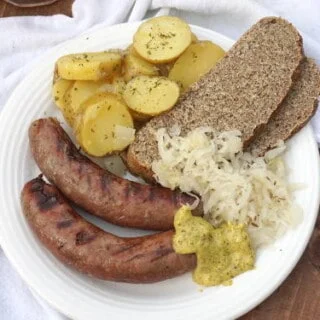
These homemade German-style bratwursts combine pork and beef with warm spices, milk and egg, then are stuffed into hog casings. Make them when you want to shape and season fresh sausages yourself, ready for the grill or a pan.
Ingredients
- 794 g (1 3/4 lb)boneless pork shoulder, cubed
- 113 g (1/4 lb)boneless beef shoulder or veal stew meat, cubed
- 60 g (1/2 cup)powdered milk
- 5 g (1 tsp)salt
- 2 g (1 tsp)ground nutmeg
- 1 g (1/2 tsp)ground black pepper
- 0.5 g (1/2 tsp)marjoram
- 0.5 g (1/4 tsp)ground mace
- 0.5 g (1/4 tsp)ground ginger
- 1egg
- 80 ml (1/3 cup)milk
- 1.2–1.5 m (4–5 feet)hog casing for fresh sausage, rinsed
Instructions
- 1
Grind the meat
Pass the pork and beef cubes through a meat grinder fitted with a fine grinding plate.
- 2
Season the meat
Put the ground meat in a large bowl. Add the powdered milk and seasonings, then work them through the meat with your hands.
- 3
Add egg and milk
Add the egg and milk, and mix by hand until the mixture is evenly moist.
- 4
Fill the casings
Set up your sausage stuffer and prepare the rinsed hog casings. Stuff the sausage mixture into the casings according to the stuffer's instructions.
- 5
Shape the links
When all the mixture has been used, twist the sausage into 8 links and tie off the end of the casing.
- 6
Chill if needed
Keep the prepared sausage in the refrigerator for up to one week before cooking.
- 7
Cook the sausages
Cook the bratwursts in your usual way for shop-bought sausages: on a grill over medium heat, in a frying pan or by boiling.
- 8
Separate to serve
Cook the sausages while the links are still connected, then separate them for serving.
What is bratwurst?
Bratwurst is a German sausage, and recipes vary in their meat and seasoning. This version combines pork and beef, with veal offered as an alternative to the beef.
The mixture is seasoned with nutmeg, marjoram, mace and ginger, then bound with egg and milk before being stuffed into hog casings. The recipe is adapted from Tonia Reinhard's The Complete Art and Science of Sausage Making.
Nutrition and macros by portion
The nutrition label shows one serving as written: 434 calories, 0g protein, 0g carbs, 29g fat.
| Portion | Adjustment | kcal | Protein | Carbs | Fat |
|---|---|---|---|---|---|
| Lighter | Smaller sausage portion | 304 kcal | 0g | 0g | 20g |
| This serving | As written | 434 kcal | 0g | 0g | 29g |
| Hungry | Larger sausage portion | 651 kcal | 0g | 0g | 44g |
The pork shoulder supplies most of the fat and energy, while the pork and beef or veal provide protein. The milk, powdered milk and egg add further nutrients, and the meat and dairy also contribute some carbohydrate. Balance a sausage portion with vegetables and a suitable serving of potatoes or bread.
The meat and seasoning
Pork shoulder: its fat helps keep the sausage juicy as it cooks, while cubing the meat makes it manageable for grinding.
Beef or veal: either choice adds a second meat to the blend. Use the same quantity whichever you choose.
Spices: nutmeg, marjoram, pepper, mace and ginger give the mixture its savoury, aromatic character. Measure them before mixing so they distribute evenly.
Getting the mixture right
Fine grind: use the fine plate specified in the method for a more even sausage mixture.
Mix by hand: work in the powdered milk and seasonings first, then add the egg and milk. Stop when the mixture looks evenly moist rather than leaving dry patches.
Stuffing and linking
Casings: rinse the hog casing and prepare it according to your stuffer's instructions. Feed the meat mixture into it steadily so the casing fills along its length.
Links: after stuffing, twist the sausage into 8 links and tie off the casing end. The recipe suggests cooking the links while they remain connected, then separating them at the table.
Cooking and doneness
Choose a medium-heat grill, a frying pan or boiling, as you would for shop-bought sausages. The method gives no cooking time, so use the cues and safe-handling guidance for your chosen cooking method.
Because these are fresh pork and beef sausages, cook them thoroughly before serving. Avoid relying on colour alone to judge whether the centres are cooked.
Serving ideas
Serve the cooked links with a starchy side such as potatoes or bread, and add a green vegetable or salad for contrast. Mustard or a sharp pickle can complement the savoury spices.
If serving the sausages in rolls, keep the accompaniments simple so the seasoning in the homemade links remains noticeable.
Recipe notes & tips
- Keep the meat cold while you work so it stays easier to grind and handle.
- Use a fine grinding plate, as specified in the method.
- Mix the seasonings into the meat before adding the egg and milk.
- Follow your stuffer's instructions when preparing and filling the casings.
- Cook the links connected as directed, then separate them for serving.
Variations
- Choose veal: replace the beef shoulder with the same quantity of veal stew meat.
- Pan-cook: cook the links in a frying pan, one of the methods suggested in the recipe.
- Grill: cook the links over medium heat for a grilled finish.
- Boil: use the boiling method mentioned in the recipe before serving.
Common mistakes to avoid
- Coarse grinding: use the fine grinding plate called for in the method.
- Uneven seasoning: mix the powdered milk and spices through the ground meat before adding the wet ingredients.
- Dry mixture: mix in the egg and milk until the meat is evenly moist.
- Overfilling casings: feed the mixture into the stuffer according to its instructions.
- Separating too soon: cook the sausages while linked, then separate them to serve.
How to store
The recipe says prepared, uncooked sausage can be refrigerated for up to one week before cooking. Keep it covered and chilled, and cook it thoroughly before eating.
Frequently asked questions
Can I use veal instead of beef?
Yes. The recipe allows boneless veal stew meat in place of the beef shoulder, using the same amount.
Do I need a meat grinder?
The method calls for grinding the meat through a fine plate. A suitable grinder is needed to follow it as written.
How many links does this make?
The recipe directs you to twist the sausage into 8 links.
Can I cook these in a frying pan?
Yes. The recipe lists a frying pan, a medium-heat grill or boiling as cooking options.
How long can the uncooked sausages stay in the fridge?
The recipe states up to one week. Keep them refrigerated until you are ready to cook.
Should I separate the links before cooking?
The recipe recommends cooking them while they are still connected, then separating them to serve.
Cook it from the original
This recipe comes from curiouscuisiniere.com. Their page has the author’s own photos, notes and tips — the best place to cook it from.
Open the recipe on curiouscuisiniere.com