
Classic Spanish Gazpacho
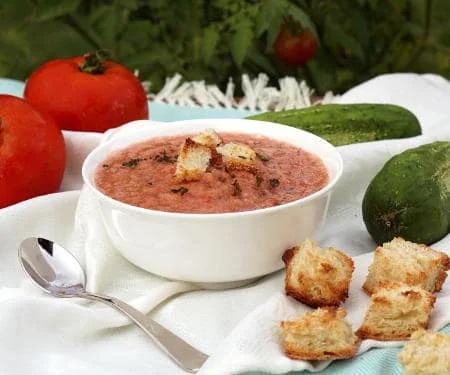
This chilled Spanish soup blends ripe tomatoes and crisp vegetables with olive oil and red wine vinegar. It takes only 15 minutes to prepare and is best served cool, with a little texture left in every spoonful.
Ingredients
- 15 ml (1 Tbsp)olive oil
- 15 ml (1 Tbsp)red wine vinegar
- 3Roma tomatoes, quartered
- 75 g (1/2 cup)cucumber, diced
- 2garlic cloves
- 1/4green pepper
- 1/4onion
- 1/4 tspsalt
Instructions
- 1
Blend the ingredients
Add all the ingredients to a blender and blend just until the mixture moves. Keep some texture in the soup by stopping before it becomes completely smooth.
- 2
Adjust the seasoning
Taste the soup and add salt or red wine vinegar to suit your preference.
What is Spanish gazpacho?
Gazpacho is a chilled Spanish soup traditionally made by blending vegetables, especially tomatoes, with seasonings. It is a refreshing way to serve ripe produce without cooking it.
This simple version combines tomato, cucumber, green pepper, onion and garlic, with olive oil for richness and vinegar for a sharp finish. A brief blend keeps it quick and leaves the soup pleasantly textured.
Nutrition and macros by portion
The nutrition label shows one serving as written: 52 calories, 2g protein, 7g carbs, 4g fat.
| Portion | Adjustment | kcal | Protein | Carbs | Fat |
|---|---|---|---|---|---|
| Lighter | Use less olive oil | 36 kcal | 1g | 5g | 3g |
| This serving | As written | 52 kcal | 2g | 7g | 4g |
| Hungry | Serve with hearty bread | 78 kcal | 2g | 11g | 6g |
The tomatoes and other vegetables provide most of the carbohydrates, while olive oil contributes most of the fat; the recipe contains only a modest amount of protein. Pair a serving with beans, eggs or another protein-rich side and some bread for a more balanced meal.
Choosing the ingredients
Ripe tomatoes: Roma tomatoes give the soup its main body and flavour. Choose ones that feel ripe and fragrant, since the vegetables are served raw.
Fresh vegetables: Cucumber, green pepper and onion bring crisp, savoury notes. The small quantities of pepper and onion add character without taking over the tomato flavour.
Seasoning: Olive oil softens the sharpness of the vegetables, while red wine vinegar lifts their flavour. The salt amount is a starting point, so taste before serving.
Blend for texture
Short blending: Start the blender and stop once the vegetables are moving and chopped to your liking. The method calls for some texture, rather than a fully smooth purée.
If the mixture struggles to move, pause and scrape down the sides before blending again. Avoid adding extra liquid unless needed, as it would change the recipe's proportions.
Taste before serving
Seasoning check: Taste after blending, then adjust the salt and vinegar a little at a time. Their balance can vary with the ripeness and sweetness of the tomatoes.
Chilling: The recipe does not specify a chilling time, but gazpacho is commonly served cold. If you chill it before serving, stir it well and taste once more.
How to serve it
Serve the soup in small bowls or glasses as a cool starter or light lunch. Its fresh, tangy flavour pairs well with bread or a simple sandwich.
For a more substantial plate, add a protein-rich side such as eggs or beans. Keep any accompaniments separate so the soup's texture stays distinct.
A quick, uncooked soup
There is no hob or oven work here: the vegetables go straight into the blender. Quartering the tomatoes and dicing the cucumber helps the ingredients blend more readily.
The short preparation time makes this a useful option when you have ripe tomatoes to use. The final texture depends on how long you blend, so check it as you go.
Recipe notes & tips
- Use ripe tomatoes for the fullest flavour.
- Quarter the tomatoes and dice the cucumber before adding them to the blender.
- Blend in short bursts so you can stop while the soup still has texture.
- Taste after blending, as the tomatoes' sweetness affects how much vinegar you may want.
- Stir the soup before serving if it has been chilled.
Variations
- Add herbs: Blend in a little fresh parsley for a green, aromatic note.
- Make it milder: Use less onion for a gentler savoury flavour.
- Increase the cucumber: Add more cucumber for a cooler, fresher taste.
- Add a garnish: Top each bowl with finely diced cucumber or tomato for extra texture.
- Serve with bread: Offer toasted bread on the side for a more filling meal.
Common mistakes to avoid
- Blending too long: The soup can lose its texture; stop once the vegetables are blended to your liking.
- Using underripe tomatoes: Their flavour can be subdued; choose ripe, fragrant tomatoes.
- Adding too much vinegar at once: It can overwhelm the vegetables; adjust it gradually after tasting.
- Skipping the final taste: Salt levels and tomato sweetness vary; check the seasoning before serving.
- Leaving it unstirred after chilling: The mixture may settle; stir it well before ladling.
How to store
Store leftover gazpacho in a covered container in the fridge and use within 2 days for the freshest flavour. Stir before serving; it is served cold, so reheating is not needed.
Frequently asked questions
Do I need to peel the tomatoes?
No peeling is specified, so blend the quartered tomatoes with their skins. The finished soup will retain some texture.
Should gazpacho be served cold?
It is traditionally served chilled. If you have time, refrigerate it before serving and stir it well.
Can I make this without a blender?
A blender is the method given for this recipe. Without one, a food processor may work, though the texture can differ.
How smooth should the soup be?
Blend only until the mixture moves and the vegetables are chopped to your liking. The recipe is intended to keep some texture.
Can I adjust the vinegar and salt?
Yes. Taste the blended soup and adjust both to your preference, adding them gradually.
What can I serve with gazpacho?
Bread makes a simple accompaniment. For a more substantial meal, serve it alongside eggs or beans.
Cook it from the original
This recipe comes from curiouscuisiniere.com. Their page has the author’s own photos, notes and tips — the best place to cook it from.
Open the recipe on curiouscuisiniere.com