
How to Make Jiaozi (Chinese Dumplings)
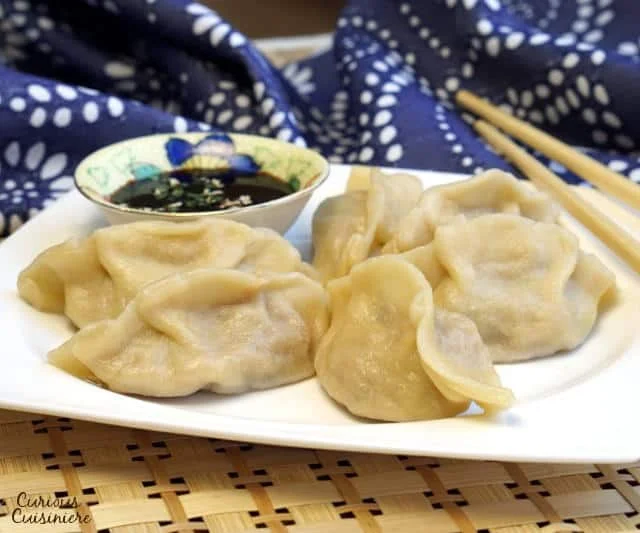
Jiaozi are Chinese dumplings made with a simple flour-and-water wrapper around a savoury filling. This recipe makes about 20 dumplings, which you can boil or pan-fry into potstickers and serve with a dipping sauce.
Ingredients
- 250 g (2 cups)unbleached plain flour
- 135 ml (½ cup plus 1 tablespoon)warm water
- 360 ml (1½ cups)filling (see recipe below)
Instructions
- 1
Mix the dough
Put the flour in a medium bowl. Gradually add the water, mixing with your hands as you go, until a firm dough forms.
- 2
Knead and rest
Knead the dough until smooth, for 8–10 minutes. Transfer it to a clean bowl, cover with a damp towel and leave in a warm place for 2 hours; it can rest for up to 5 hours if needed.
- 3
Divide the dough
Knead the rested dough again for 3–5 minutes, then divide it into two roughly equal pieces. Roll each piece into a rope about 2.5 cm in diameter and roughly 20 cm long. Set the ropes on a lightly floured surface, cover with a damp tea towel and leave for 30 minutes while you prepare the filling.
- 4
Shape the wrappers
Lightly flour the work surface. Cut one rope into pieces about 2 cm long and roll each piece into a ball. Keep the pieces you are not using covered, and roll each ball into a thin disc about 9 cm across.
- 5
Fill the wrappers
Hold a wrapper in one hand and put 1 tablespoon of filling in its centre. If the wrapper feels dry, moisten the edge of its upper half lightly with a damp finger.
- 6
Seal the dumplings
Fold the wrapper over the filling to make a half-moon and pinch the top together. Press the rest of the edges firmly closed, either with a plain seal or a ruffled one. Stand each dumpling seam-side up on a parchment-lined platter, and work quickly so the wrappers do not dry out. Freeze or cook the filled dumplings within 30 minutes.
- 7
Boil the dumplings
Bring a pot of water to the boil and add the dumplings. Stir gently until the water returns to the boil. Cook fresh dumplings for 1–2 minutes, or 1 minute longer than it takes them to float. Boil frozen dumplings for 4–5 minutes, until plump. Lift them out with a slotted spoon and serve straight away with soy sauce or another dipping sauce.
- 8
Pan-fry potstickers
Heat 1 tablespoon of oil in a lidded non-stick frying pan over medium-high heat. Add the dumplings seam-side up, close together but not touching, and sear for 1–2 minutes. Add 3 tablespoons of water, cover immediately and turn the heat to low. Steam until the water has evaporated and the wrappers look opaque and noodle-like; this takes 3–5 minutes for fresh dumplings or 6–7 minutes for frozen ones, and the filling should be heated through. Check the underside of one dumpling; if it is not golden, turn the heat to medium-high and cook until the bases are browned. Serve immediately with soy sauce or another dipping sauce.
- 9
Freeze for later
Arrange the filled, uncooked dumplings in one layer on a parchment-lined platter or baking sheet. Once frozen solid, transfer them to an airtight container. They keep in the freezer for up to 3 months.
What are jiaozi?
Jiaozi are Chinese dumplings made by wrapping a filling in dough and sealing the edges. They are commonly boiled, steamed or pan-fried, with the pan-fried version often called potstickers.
This version uses a homemade flour-and-water wrapper, then gives you two cooking options. The filling recipe is referenced but not included here, so use the filling specified by the original recipe.
Nutrition and macros by portion
The nutrition label shows one serving as written: 460 calories, 18g protein, 72g carbs, 9g fat.
| Portion | Adjustment | kcal | Protein | Carbs | Fat |
|---|---|---|---|---|---|
| Lighter | Smaller dumpling portion | 322 kcal | 13g | 50g | 6g |
| This serving | As written | 460 kcal | 18g | 72g | 9g |
| Hungry | Larger dumpling portion | 690 kcal | 27g | 108g | 14g |
The wrappers provide most of the carbohydrates, while the filling determines much of the protein and can also contribute fat and sodium. Pair a serving with vegetables or a light soup, and keep dipping sauce on the side so you can control how much you use.
A simple dough that needs time
Flour and warm water make a firm dough that can be rolled thin enough to wrap around the filling. Add the water gradually: the dough should come together without becoming sticky or slack.
The long rest is part of the method, not an optional shortcut. It gives the dough time to relax, making it easier to roll into discs.
Keep the wrappers covered
Small dough pieces can dry out while you shape the dumplings. Keep the unused pieces and rolled ropes under a damp tea towel, and roll one wrapper at a time.
If a wrapper’s edge feels dry, lightly dampen the upper half before folding. Use only a little water so the seam can still be pinched firmly closed.
Seal each dumpling firmly
Place the filling in the centre, leaving enough clear dough around the edge to make a secure seal. Pinch the top together first, then work along the rest of the curve.
A ruffled edge is optional; the important part is that the seam is tightly closed. A loose seam can open during boiling or steaming.
Choose boiled or pan-fried
Boiling is the more direct route: gently stir the water as it returns to the boil, then cook according to whether the dumplings are fresh or frozen. Fresh ones are ready shortly after floating; frozen ones need longer and should look plump.
Potstickers start with a brief sear, then cook covered with a small amount of water. Let the water evaporate before checking the bases, so they can finish crisping in the pan.
Serve while hot
Serve the dumplings as soon as they are cooked, with soy sauce or another dipping sauce. Their wrappers are at their best warm, and the pan-fried version loses its crisp base as it sits.
For a fuller meal, pair them with a simple vegetable side or a light soup. Keep the dip separate so everyone can season each bite to taste.
Recipe notes & tips
- Measure the water and add it gradually, since flour can absorb it differently.
- Keep unused dough and wrappers covered with a damp towel while shaping.
- Use roughly 1 tablespoon of filling per wrapper, as directed, to leave room for sealing.
- Pinch the seam firmly all the way around to help prevent filling from escaping.
- Cook filled dumplings within 30 minutes, or freeze them promptly.
- For potstickers, make sure the pan is covered as soon as you add the water.
Variations
- Ruffled edges: Pleat one side of the wrapper as you press it against the other side.
- Boiled jiaozi: Use the boiling method for a soft, tender wrapper.
- Crisp-bottomed potstickers: Sear the bases, steam with the lid on, then brown them uncovered.
- Dipping sauce: Serve with soy sauce or another dipping sauce of your choice.
- Frozen batch: Freeze the uncooked dumplings in a single layer before packing them away.
Common mistakes to avoid
- Adding all the water at once: Mix it in gradually so the dough comes together without becoming too wet.
- Leaving dough uncovered: Cover unused pieces so they do not dry out before shaping.
- Overfilling wrappers: Use about 1 tablespoon of filling and leave a clear edge for sealing.
- Leaving seams loose: Pinch the full edge tightly so the filling stays inside during cooking.
- Crowding the potstickers: Leave a little space between them so they can cook evenly.
- Skipping the rest: Allow the dough its 2-hour rest, or up to 5 hours, to make rolling easier.
How to store
Freeze uncooked dumplings in a single layer until solid, then transfer them to an airtight container and keep for up to 3 months. Cook them from frozen using the times in the method. Cooked dumplings are best eaten immediately; refrigerate leftovers promptly and reheat until piping hot.
Frequently asked questions
Can I cook the dumplings from frozen?
Yes. Boil frozen dumplings for 4–5 minutes, until plump. For potstickers, steam them for 6–7 minutes before checking that the bases are golden.
How do I know when boiled jiaozi are ready?
Fresh dumplings cook for 1–2 minutes, or 1 minute longer than it takes them to float. Frozen dumplings take 4–5 minutes and should look swollen.
Why does the dough need to rest?
Resting gives the dough time to relax, which makes it easier to roll thinly. Keep it covered with a damp towel while it rests.
Can I make the dumplings ahead?
Yes. Freeze them uncooked in a single layer, then move them to an airtight container once solid. They keep for up to 3 months.
What if the wrapper edges will not stick?
Lightly moisten the upper half of the edge with a damp finger, then pinch firmly around the seam. Avoid making the wrapper very wet.
What can I serve with jiaozi?
Serve them with soy sauce or another dipping sauce. Vegetables or a light soup make an easy accompaniment.
Cook it from the original
This recipe comes from curiouscuisiniere.com. Their page has the author’s own photos, notes and tips — the best place to cook it from.
Open the recipe on curiouscuisiniere.com