
Low Butter Healthy Croissants
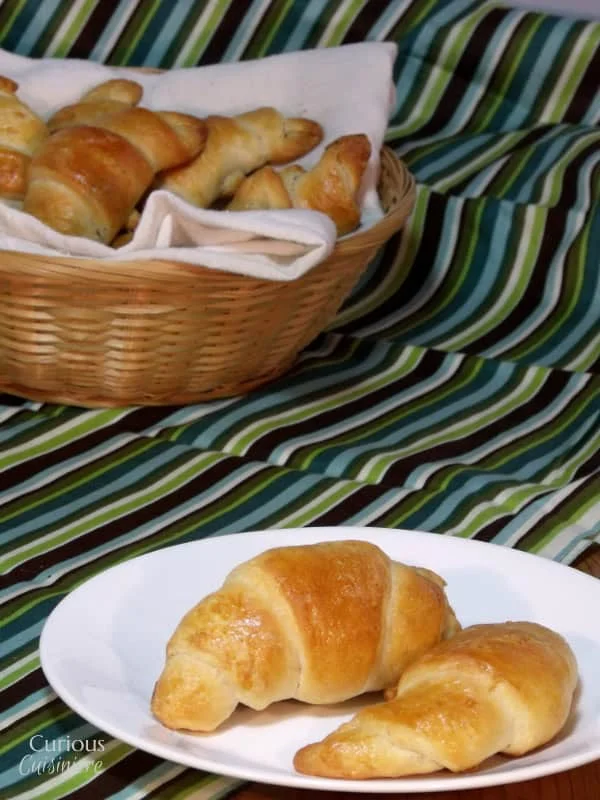
These French-style croissants use less butter than a traditional laminated pastry but still bake up layered, crisp and golden. They take time to rise and shape, making them a rewarding choice for a homemade breakfast or brunch.
Ingredients
- 90 ml (6 Tbsp)milk
- 4 g (1 tsp)sugar
- 2.5 g (1/2 tsp)salt
- 30 ml (2 Tbsp), warmed to 41°C (105°F)water
- 3.5 g (1 1/4 tsp)active dry yeast
- 125–156 g (1–1 1/4 cups)unbleached plain flour
- 28 g (2 Tbsp), softenedsalted butter
- 1 egg yolk, lightly beaten with 10 ml (2 tsp) cold wateregg yolk and cold water, for the glaze
Instructions
- 1
Scald the milk
Heat the milk in a small saucepan over high heat until it begins to steam, taking it off the heat before it boils. Stir in the sugar and salt until dissolved, then set aside to cool.
- 2
Mix the dough
Pour the warm water into a mixing bowl, sprinkle in the yeast and stir to dissolve. Add the cooled milk mixture, then gradually mix in the flour until a soft dough forms.
- 3
Knead the dough
Turn the dough out onto a lightly floured board and knead for about 5 minutes, until smooth and elastic.
- 4
Let it rise
Put the dough in a greased bowl, cover it with a damp towel and leave it to rise until doubled in size, about 1 hour.
- 5
Roll the dough
Punch down the risen dough and roll it on a lightly floured surface into a 15 x 20 cm (6 x 8 inch) rectangle.
- 6
Fold in butter
Gently spread 1 tablespoon of softened butter over the bottom two-thirds of the dough. Fold the unbuttered top third down over half of the buttered area, then fold the bottom third up to make an even rectangle. Turn the dough a quarter turn and roll it with short, even strokes into another 15 x 20 cm (6 x 8 inch) rectangle. Spread the remaining tablespoon of butter over the bottom two-thirds and fold again. Roll and fold twice more without adding butter, turning the dough a quarter turn each time.
- 7
Roll a circle
Shape the dough into a ball, then roll it out into a 38 cm (15 inch) circle.
- 8
Cut the wedges
Cut the dough into 12 equal-sized wedges.
- 9
Shape croissants
Starting at the wide end of each wedge, gently stretch the two bottom tips outwards a little. Roll each wedge from the wide end towards its point.
- 10
Proof the croissants
Arrange the croissants point-side down on an ungreased baking sheet, spacing them 4 cm (1 1/2 inches) apart. Cover and leave to rise until nearly doubled in size, about 40 minutes.
- 11
Glaze and bake
Towards the end of the rise, preheat the oven to 190°C (375°F). Gently brush each croissant with the egg yolk and water glaze, then bake for 10–15 minutes, until well browned.
- 12
Cool on a rack
Transfer the croissants to a wire rack and leave them to cool.
What are croissants?
Croissants are crescent-shaped French pastries known for their crisp exterior and layered interior. Their familiar form is associated with French baking, while their pastry-making tradition has roots in earlier European crescent-shaped breads.
This version uses a yeasted dough folded with a modest amount of butter rather than the large butter block used in classic croissant lamination. Repeated rolling and folding still give the dough a layered structure.
Nutrition and macros by portion
The nutrition label shows one serving as written: 70 calories, 2g protein, 9g carbs, 2g fat.
| Portion | Adjustment | kcal | Protein | Carbs | Fat |
|---|---|---|---|---|---|
| Lighter | Serve with fresh fruit | 49 kcal | 1g | 6g | 2g |
| This serving | As written | 70 kcal | 2g | 9g | 2g |
| Hungry | Serve two croissants | 105 kcal | 3g | 14g | 4g |
Most of the carbohydrates come from the flour, while the butter and egg yolk provide most of the fat. The flour, milk and egg yolk contribute protein, though each croissant is a modest portion. Serve one with fruit and yoghurt, or add eggs for a more balanced plate.
Why the dough needs time
First rise: letting the dough double gives the yeast time to create an airy base before the butter-folding and shaping.
Final rise: the shaped croissants should look noticeably puffed and nearly doubled before baking. Allowing this rise helps keep the finished pastry from turning dense.
Getting the folds right
Butter layer: spread the softened butter gently over the bottom two-thirds so the dough stays intact and the top third remains available for the first fold.
Even turns: rotate the dough a quarter turn each time and roll with short, steady strokes. If it springs back, pause briefly before continuing rather than forcing it.
Shaping the wedges
Wide end: stretch the bottom corners of each wedge slightly outwards before rolling; this helps create the croissant shape.
Point underneath: place each roll with its tip tucked beneath it on the tray. This helps the shape stay in place as the dough rises and bakes.
How to judge doneness
Before baking, look for croissants that are plump and close to twice their original size. They should still hold their shape rather than spreading flat.
In the oven, use the recipe's 10–15 minute window as a guide and look for a well-browned surface. Move them to a wire rack after baking so the bottoms do not sit against a hot tray.
Serving ideas
Serve the croissants warm or at room temperature with fruit, yoghurt or eggs for breakfast. Their mild, buttery flavour also works well with a little jam or honey.
For a savoury plate, add sliced tomato, a green salad or scrambled eggs. These additions make the meal more substantial without changing the croissants themselves.
Recipe notes & tips
- Let the scalded milk cool before adding it to the yeast mixture.
- Add the flour gradually and stop when a soft dough forms; the recipe gives a range because flour absorption can vary.
- Use a light touch when spreading butter so you do not tear the dough.
- Keep the folds as even as possible to create consistent layers.
- Leave enough space between the croissants so they can expand during their final rise.
- Start checking for a well-browned finish at the 10-minute mark.
Variations
- Sweet finish: serve the baked croissants with jam or honey.
- Savoury filling: split cooled croissants and add cheese or sliced tomato.
- Seeded tops: sprinkle seeds over the glaze before baking.
- Smaller pastries: cut the dough into more wedges and check them earlier in the oven.
- Plain flour: use standard plain flour if unbleached flour is unavailable.
Common mistakes to avoid
- Adding hot milk: it can interfere with the yeast; cool the milk mixture before combining.
- Using too much flour: this can make the dough firm; add it gradually and stop when the dough is soft.
- Tearing the dough: butter can break through the layers; spread it gently with a knife.
- Skipping the quarter-turns: the folds become less even; rotate the dough after each rolling.
- Under-proofing: the croissants may bake up dense; wait until they are nearly doubled.
- Baking by time alone: colour can vary; take them out when well browned within the 10–15 minute range.
How to store
Once cool, store the croissants in an airtight container at room temperature for up to 2 days. Reheat briefly in a warm oven to refresh the crisp exterior; avoid microwaving if you want to keep the pastry flaky.
Frequently asked questions
Can I make the dough ahead?
The method provided does not include an overnight rest. For best results, follow its rises and bake the croissants on the day you make the dough.
How warm should the water be?
The recipe specifies 41°C (105°F). Use warm, not hot, water so the yeast can be mixed in as directed.
Why is there a range for the flour?
The dough may take anywhere from 125 to 156 g (1 to 1 1/4 cups) to become soft. Add it gradually and use the dough's texture as your cue.
Can I use unsalted butter?
The recipe calls for salted butter. If you use unsalted butter, the croissants will have a less salty flavour.
How do I know the final rise is complete?
The croissants should look puffy and nearly doubled in size after about 40 minutes. If they still look small, give them more time before baking.
Can I freeze the baked croissants?
Yes. Freeze them once fully cool in a sealed freezer-safe container, then thaw and warm in the oven until refreshed.
Cook it from the original
This recipe comes from curiouscuisiniere.com. Their page has the author’s own photos, notes and tips — the best place to cook it from.
Open the recipe on curiouscuisiniere.com