
Yakisoba (Japanese Noodle Stir Fry)
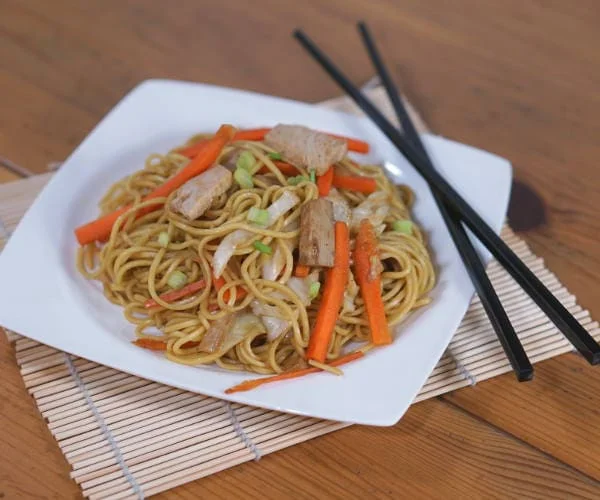
Yakisoba is a Japanese noodle stir-fry with a savoury, tangy sauce, crisp-tender vegetables and cooked turkey. It comes together quickly and is an easy way to use leftover meat.
Ingredients
- 45 ml (3 Tbsp)Worcestershire sauce
- 30 ml (2 Tbsp)ketchup
- 30 ml (2 Tbsp)soy sauce
- 5 ml (1 tsp)brown sugar
- 170 g (6 oz)dry noodles: soba noodles, ramen, spaghetti or linguine
- 15 ml (1 Tbsp)peanut oil or sesame oil
- 2carrots, julienned
- 1onion, sliced
- 113 g (1/4 lb)cabbage, thinly sliced
- 140 g (1 cup)cooked turkey, diced
- 2green onions, sliced, for garnish
Instructions
- 1
Mix the sauce
Stir the Worcestershire sauce, ketchup, soy sauce and brown sugar together in a small bowl. Set the sauce aside.
- 2
Cook the noodles
Boil the noodles until al dente, following the packet instructions. Drain them, rinse with cold water and set aside.
- 3
Stir-fry the filling
Heat the oil in a wok or large frying pan over medium-high heat. Add the carrots and onion and stir-fry for 2–3 minutes, until bright and beginning to soften. Add the cabbage and cook for 1–2 minutes, then add the turkey and stir-fry until heated through. Add the drained noodles and cook until hot.
- 4
Toss with sauce
Pour the sauce into the wok and toss until it coats the noodles and other ingredients. Taste and adjust the seasoning to your preference.
- 5
Garnish and serve
Scatter the sliced green onions over the noodles to serve.
What is yakisoba?
Yakisoba is a Japanese stir-fried noodle dish, commonly made with noodles, vegetables and a savoury sauce. Its name refers to fried noodles, and the dish is associated with Japanese street-food cooking as well as quick home meals.
This version uses cooked turkey and a sauce made from Worcestershire sauce, ketchup, soy sauce and brown sugar. The mixture brings tang, salt and a little sweetness, while cabbage, carrot and onion add colour and texture.
Nutrition and macros by portion
The nutrition label shows one serving as written: 300 calories, 15g protein, 48g carbs, 5g fat.
| Portion | Adjustment | kcal | Protein | Carbs | Fat |
|---|---|---|---|---|---|
| Lighter | Use less oil | 210 kcal | 11g | 34g | 4g |
| This serving | As written | 300 kcal | 15g | 48g | 5g |
| Hungry | Serve a larger portion | 450 kcal | 23g | 72g | 8g |
The noodles provide most of the carbohydrates, while turkey contributes much of the protein. Oil supplies most of the added fat; the vegetables and sauce contribute smaller amounts of energy and sodium. Pair a serving with extra greens if you want more vegetables on the plate.
Choose and prepare the noodles
Noodle choice: the recipe allows soba, ramen, spaghetti or linguine, so use what you have. Cooking times vary, so follow the packet and stop when the noodles are al dente.
Cool rinse: rinsing after draining cools the noodles and helps keep them from cooking further before they go into the wok. Drain them well so excess water does not dilute the sauce.
Get the vegetables ready
Even cuts: julienne the carrots and slice the onion and cabbage before heating the pan. Thin, even pieces cook quickly and are easier to toss through the noodles.
Work in order: carrots and onion go in first, followed by cabbage. This gives the firmer vegetables a head start while helping the cabbage keep some bite.
Keep the stir-fry lively
Hot pan: use a wok or a large frying pan and heat the oil before adding the vegetables. Keep the ingredients moving so they cook quickly rather than sitting in their own moisture.
Add the noodles last: once the turkey is hot, toss in the drained noodles and stir until warmed through. A large pan makes it easier to coat everything without crushing the vegetables.
Use cooked turkey safely
Leftovers: the turkey is already cooked, so dice it into bite-sized pieces and add it after the vegetables have started to soften. Stir-fry until it is heated through.
Other meat: cooked pork or chicken can be used in place of the turkey, as suggested for this recipe. Keep the pieces small so they warm quickly in the pan.
Serve it straight away
Timing: the vegetables should be bright and just tender, and the noodles and turkey hot when you finish cooking. Serve soon after tossing with the sauce for the best contrast between soft noodles and crisp-tender vegetables.
On the side: serve as a complete meal, or add a simple cucumber salad or steamed greens. The sliced green onions provide a fresh finish.
Recipe notes & tips
- Mix the sauce before you start stir-frying so it is ready to pour in.
- Drain the noodles thoroughly after rinsing them with cold water.
- Slice the vegetables before heating the wok to keep the cooking quick and orderly.
- Use a large pan so the noodles and vegetables can be tossed freely.
- Taste the finished noodles before serving, as the sauces vary in saltiness.
Variations
- Use chicken: swap the cooked turkey for an equal amount of diced cooked chicken.
- Use pork: add diced cooked pork instead of turkey for another leftover-friendly version.
- Change the noodles: use ramen, spaghetti or linguine if soba is unavailable.
- Choose sesame oil: use sesame oil for a different aromatic note.
- Add more vegetables: include other thinly sliced vegetables alongside the listed ones.
- Adjust the sauce: add a little more or less sauce to suit your taste.
Common mistakes to avoid
- Overcooking the noodles: cook only to al dente, as they will be heated again in the pan.
- Wet noodles: drain them well after rinsing so the sauce does not become watery.
- Crowded pan: use a large wok or frying pan so the ingredients can stir-fry rather than steam.
- Burning the vegetables: keep them moving over medium-high heat and follow the short cooking times.
- Adding cold turkey at the end: stir it in before the noodles and cook until heated through.
- Skipping the taste: sample the sauced noodles and adjust the seasoning before serving.
How to store
Refrigerate leftovers in a covered container for up to 3 days. Reheat in a frying pan over medium heat, stirring until hot throughout; add a small splash of water if the noodles seem dry.
Frequently asked questions
Can I use spaghetti instead of soba?
Yes. The recipe lists spaghetti and linguine as alternatives, as well as ramen. Cook whichever noodles you choose according to their packet instructions.
Can I use raw turkey?
This method is written for cooked turkey. Cook raw turkey separately until fully cooked before adding it to the stir-fry.
How do I stop the noodles sticking?
Rinse them with cold water after draining and let them drain well. Toss them into the pan once the turkey is hot, and keep the mixture moving.
Can I make yakisoba ahead?
It is best served freshly cooked, but you can prepare the sauce and slice the vegetables in advance. Store prepped ingredients separately in the fridge until cooking.
What can I use instead of turkey?
Use cooked pork or chicken, which also work well with the sauce and vegetables. Dice it small and heat it through in the pan.
Cook it from the original
This recipe comes from curiouscuisiniere.com. Their page has the author’s own photos, notes and tips — the best place to cook it from.
Open the recipe on curiouscuisiniere.com