
Vanilla Cream Cheese Custard
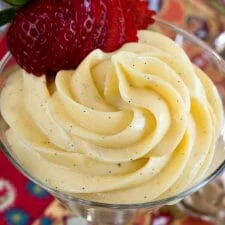
This American-style vanilla custard combines a smooth, thickened milk-and-egg base with softened cream cheese for a rich, creamy finish. It can be chilled in one bowl or piped into individual dishes for serving.
Ingredients
- 600 ml (2 1/2 cups), dividedwhole milk
- 6 largeegg yolks
- 133 g (2/3 cup), dividedgranulated sugar
- 40 g (1/3 cup)cornflour
- 1vanilla pod, split and scraped
- 113 g (4 oz), softenedcream cheese
- to garnish, optionalfresh strawberries
Instructions
- 1
Mix the base
In a medium bowl, whisk 120 ml (1/2 cup) of the milk with the egg yolks, 67 g (1/3 cup) of the sugar and the cornflour until evenly blended.
- 2
Warm the milk
In a small saucepan, heat the remaining 480 ml (2 cups) of milk with the remaining 67 g (1/3 cup) of sugar, the vanilla seeds and the pod. Bring to a simmer, then remove and discard the pod.
- 3
Temper the eggs
Whisk continuously as you slowly drizzle the hot milk into the egg mixture.
- 4
Thicken the custard
Pour the full mixture back into the saucepan and heat just until it thickens; this should happen quickly.
- 5
Add cream cheese
Turn the heat to low, add the softened cream cheese and whisk while cooking for about 1 minute, until the custard is thick and creamy.
- 6
Chill the custard
Transfer the custard to a large serving bowl or individual ramekins. Cover with cling film, pressing it onto the custard's surface to prevent a skin from forming. Refrigerate until completely cool.
- 7
Pipe and serve
Once chilled, spoon the custard into individual serving dishes, or transfer it to a large piping bag fitted with a star nozzle and pipe it into dishes or martini glasses. Garnish with fresh strawberries if desired.
What is vanilla cream cheese custard?
Custard is a familiar American dessert made by thickening milk with egg yolks and a starch. This version adds cream cheese, giving the chilled pudding a particularly rich, creamy texture.
Vanilla provides the main flavour, while the method builds a smooth base before the cream cheese is whisked in. Serve it simply from a bowl or pipe it into glasses for a more dressed-up presentation.
Nutrition and macros by portion
The nutrition label shows one serving as written: 219 calories, 5g protein, 27g carbs, 11g fat.
| Portion | Adjustment | kcal | Protein | Carbs | Fat |
|---|---|---|---|---|---|
| Lighter | Smaller custard serving | 153 kcal | 4g | 19g | 7g |
| This serving | As written | 219 kcal | 5g | 27g | 11g |
| Hungry | Larger custard serving | 329 kcal | 8g | 40g | 16g |
The sugar and cornflour supply most of the carbohydrates, while the milk, egg yolks and cream cheese contribute much of the fat; the yolks, milk and cream cheese also provide protein. Pair a serving with fresh strawberries for fruit alongside the rich custard.
The ingredients that matter
Whole milk: Its fat gives the custard a fuller mouthfeel. The recipe divides it so a portion can be whisked with the yolks and cornflour before the hot milk is added.
Vanilla pod: Scraping the seeds into the milk brings out the vanilla flavour, and briefly simmering the pod with them helps infuse the mixture. Remove the pod before combining the milk with the egg mixture.
Cream cheese: Softening it first makes it easier to whisk into the hot custard without leaving lumps. It also contributes to the dessert's richness.
Temper the egg mixture gradually
Slowly drizzling the hot milk into the yolks while whisking helps warm the eggs without letting them set in clumps. Keep the whisk moving throughout this step.
Once combined, return the mixture to the saucepan as directed. Stir and watch closely: the custard thickens quickly once it is back over the heat.
Look for a thick, smooth finish
The custard is ready for the cream cheese when it has visibly thickened in the pan. The method gives no exact temperature, so use the texture cue and avoid leaving it unattended.
After adding the cream cheese, whisk over low heat for about 1 minute. The finished mixture should look creamy and thick, with no visible lumps.
Chill without a skin
Press cling film directly against the custard's surface before refrigerating. This contact layer helps prevent a skin from forming as the dessert cools.
Allow the custard to cool completely before serving or piping. Chilling also firms it enough to hold its shape when piped through a star nozzle.
Serving ideas
For an easy presentation, spoon the chilled custard into individual dishes and add strawberries if you like. The berries bring a fresh contrast to the rich vanilla base.
For a more decorative finish, pipe the custard into ramekins or martini glasses. Serve it on its own or alongside fresh fruit.
Recipe notes & tips
- Measure the milk and sugar portions before you start so the divided amounts are easy to keep track of.
- Whisk the cold milk, yolks, sugar and cornflour until no dry patches remain.
- Pour the hot milk in a slow, steady stream while whisking continuously.
- Keep a close eye on the pan after returning the mixture, as it thickens quickly.
- Soften the cream cheese before adding it so it blends more readily.
- Press cling film directly onto the custard before chilling to help prevent a skin.
Variations
- Berry topping: Add sliced strawberries just before serving for a fresh, fruity contrast.
- Other fresh fruit: Serve with raspberries or sliced peaches instead of strawberries.
- Citrus note: Add a little finely grated lemon zest to the finished custard for a bright accent.
- Individual portions: Chill the custard in ramekins for ready-to-serve desserts.
- Piped finish: Use a star nozzle to pipe the chilled custard into glasses for a decorative presentation.
Common mistakes to avoid
- Pouring too quickly: The hot milk can set the yolks unevenly; drizzle it in slowly while whisking.
- Stopping the whisk: The egg mixture may form lumps as the hot milk is added; keep whisking throughout tempering.
- Leaving the pan unattended: The custard can thicken quickly; stay nearby and watch its consistency.
- Adding cold cream cheese: It may be harder to incorporate smoothly; soften it before adding.
- Skipping surface contact: Custard can develop a skin while chilling; press cling film directly onto it.
How to store
Cover and refrigerate the custard, keeping cling film in contact with its surface; use within 3 days. Serve it chilled rather than reheating it, since the recipe is designed as a cold dessert.
Frequently asked questions
Can I make this custard ahead?
Yes. Chill it completely, covered with cling film pressed directly onto the surface, and serve it cold.
Can I use vanilla extract instead of a vanilla pod?
The recipe specifies a split and scraped vanilla pod. If substituting extract, add it after cooking so its flavour is not simmered away.
Why is my custard lumpy?
The egg mixture may have heated unevenly, or the cream cheese may not have blended fully. Whisk continuously when adding the hot milk and use softened cream cheese.
How do I know when the custard has thickened?
It should thicken visibly after you return it to the saucepan, and the method says this happens quickly. Then whisk in the cream cheese over low heat for about 1 minute.
Do I have to pipe the custard?
No. You can chill it in a large bowl or in individual ramekins and spoon it into serving dishes once cold.
Can I leave out the strawberries?
Yes. They are an optional garnish, so the custard can be served without them.
Cook it from the original
This recipe comes from afamilyfeast.com. Their page has the author’s own photos, notes and tips — the best place to cook it from.
Open the recipe on afamilyfeast.com