
Baked Caprese Chicken
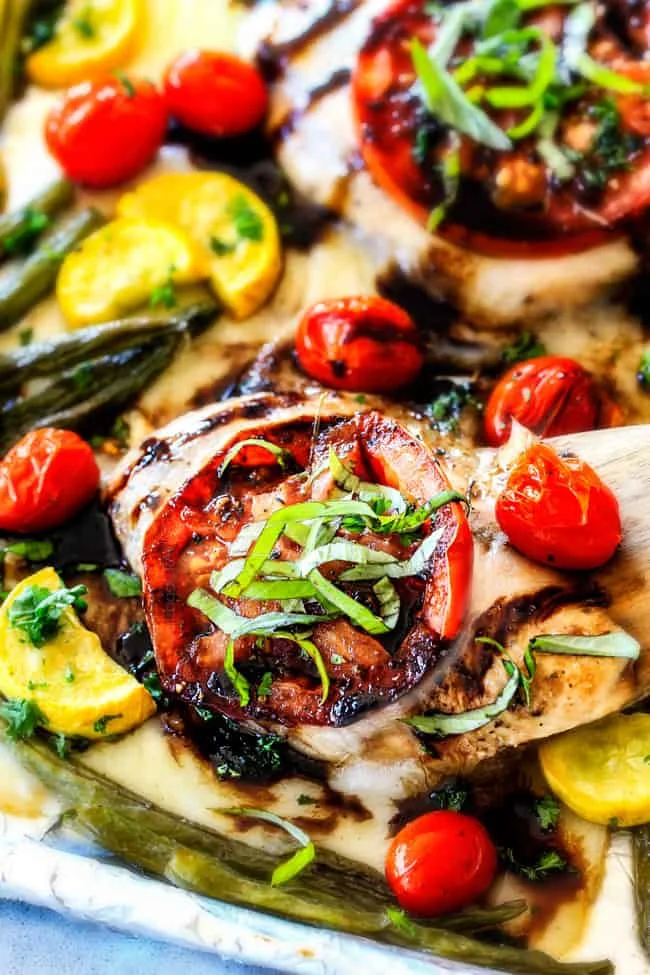
Baked Caprese Chicken pairs marinated chicken with mozzarella, tomato, basil and a tangy balsamic glaze, roasted alongside green beans and squash on one tray. It makes a colourful, satisfying dinner with minimal washing-up.
Ingredients
- 2 large (about 680 g total), sliced horizontally in halfchicken breasts
- As needed; 60 ml for the marinade, plus 15 ml and 5 ml for the vegetables and chickenolive oil
- To taste, plus 5 ml for the marinadesalt
- To taste, plus 2.5 ml for the marinadeblack pepper
- 4 thick slices, or 170–225 g shreddedmozzarella
- 45 mlbalsamic vinegar
- 30 mlhoney
- 15 mllemon juice
- 15 mlDijon mustard
- 5 ml eachdried oregano, dried basil, garlic powder, onion powder and salt
- 2.5 mlblack pepper
- 340 g, trimmedgreen beans
- ½ pint (about 240 ml)cherry tomatoes
- 1, halved and sliced into 6 mm piecesyellow squash
- 1 large, slicedtomato
- 60 ml, loosely packed and cut into ribbonsfresh basil
- 120 mlbalsamic vinegar
- 22.5 mlbrown sugar
- The reserved balsamic marinade, as directedreserved balsamic mixture
Instructions
- 1
Make the marinade
Whisk the 45 ml balsamic vinegar, honey, lemon juice, Dijon mustard, dried oregano, dried basil, garlic powder, onion powder, 5 ml salt and 2.5 ml pepper in a medium bowl. Measure out 60 ml of the mixture into a large freezer bag and whisk in 60 ml olive oil. Add the chicken and turn to coat. Refrigerate for 6 hours or overnight, keeping the remaining marinade covered in the fridge separately.
- 2
Prepare the tray
When ready to cook, leave the chicken at room temperature for at least 20 minutes. Prepare the vegetables, line a large rimmed baking tray with foil and coat the foil with non-stick cooking spray.
- 3
Heat the oven
Preheat the oven to 200°C.
- 4
Start the beans
Put the green beans on the prepared tray. Add 15 ml olive oil, 10 ml reserved balsamic mixture and 1.25 ml salt, then toss to coat. Bake for 8 minutes.
- 5
Add the vegetables
Take the tray out and move the beans to one side. Put the squash and cherry tomatoes on the other side; add 15 ml olive oil, 5 ml reserved balsamic mixture and 1.25 ml salt, then toss to coat. Mix all the vegetables together and push them towards the edges to leave space for the chicken in the middle.
- 6
Bake the chicken
Pat excess marinade off the chicken and set it in the centre of the tray. Drizzle with 5 ml reserved balsamic mixture and bake at 200°C for 15 minutes.
- 7
Add the topping
Remove the tray from the oven. Put a slice of mozzarella and then a tomato slice on each piece of chicken; season the tomatoes with freshly cracked salt and pepper to taste. Bake for a further 5 minutes, or until the chicken is cooked through and reaches 74°C internally. The cheese will spread and the beans will look wilted while remaining tender-crisp.
- 8
Reduce the glaze
Meanwhile, put all the remaining reserved balsamic mixture in a small saucepan with 120 ml balsamic vinegar and the brown sugar. Bring to the boil, then simmer until syrupy. Remove from the heat; if it thickens before serving, reheat it in the pan.
- 9
Finish and serve
Drizzle the balsamic reduction over the chicken and tomatoes, scatter over the fresh basil and serve straight away. Brown rice is a suggested accompaniment.
What is Caprese chicken?
Caprese refers to the Italian combination of tomato, mozzarella and basil, inspired by the flavours of a Caprese salad from the island of Capri. Here, those familiar ingredients top chicken rather than being served as a salad.
This sheet-pan version adds green beans, squash and cherry tomatoes, with balsamic in both the marinade and the finishing glaze. The separate glaze gives the tray-roasted ingredients a concentrated sweet-and-tart finish.
Nutrition and macros by portion
The nutrition label shows one serving as written: 570 calories, 49g protein, 36g carbs, 25g fat.
| Portion | Adjustment | kcal | Protein | Carbs | Fat |
|---|---|---|---|---|---|
| Lighter | Less mozzarella and glaze | 399 kcal | 34g | 25g | 18g |
| This serving | As written | 570 kcal | 49g | 36g | 25g |
| Hungry | Add brown rice | 855 kcal | 74g | 54g | 38g |
Chicken supplies most of the protein, while the honey, brown sugar and vegetables contribute carbohydrates. Mozzarella and olive oil provide much of the fat; serve with a moderate portion of brown rice and extra salad or vegetables to balance the plate.
Why marinate the chicken?
Balsamic marinade: vinegar, honey, lemon, mustard and dried herbs season the chicken before it goes in the oven. Allow 6 hours or overnight for the stated marinating time.
Keep some aside: the recipe reserves marinade separately for seasoning the vegetables and making the glaze. Keep it separate from the bag that holds raw chicken.
Getting the vegetables right
Green beans first: they get an 8-minute head start because they need more time in the oven than the chicken's final mozzarella topping.
Squash and tomatoes: add them after the beans' initial bake, then arrange the vegetables around the tray edges. This leaves room in the middle for the chicken and helps keep everything on one pan.
How to check the chicken
Even pieces: slicing each breast horizontally in half makes thinner pieces that cook more evenly. Pat off excess marinade before baking so the chicken can roast rather than sit in a pool of liquid.
Temperature cue: the recipe gives 15 minutes before adding the cheese, then at least 5 more minutes. Check the thickest part reaches 74°C; oven and piece thickness can affect the timing.
Melting the mozzarella
Layer order: put mozzarella directly on the chicken and a tomato slice on top. The cheese is expected to spread as it melts, so keep the vegetables pushed out towards the sides of the tray.
Fresh basil: add the basil after baking, just before serving. This keeps its fresh aroma distinct from the dried herbs in the marinade.
Making the balsamic glaze
Gentle reduction: simmer the reserved marinade with more balsamic vinegar and brown sugar until it becomes syrupy. Watch it as it reduces, since the mixture will thicken further as it cools.
If the glaze gets too thick while you finish the tray, reheat it in the saucepan as directed. Drizzle it over the chicken and tomatoes at the end rather than baking it on.
What to serve alongside
Brown rice is the suggested accompaniment and makes the meal more substantial. Spoon any glaze from the tray over the chicken and vegetables as you serve.
For a lighter side, serve the tray meal with a leafy salad. The green beans, squash and tomatoes already provide a generous vegetable component.
Recipe notes & tips
- Slice the chicken breasts evenly so the pieces finish cooking at about the same time.
- Keep the reserved marinade separate from the chicken while it is raw.
- Use a large rimmed tray so the vegetables can be spread around the chicken rather than piled up.
- Check the chicken temperature in the thickest part of a piece, avoiding the tray.
- Start checking the glaze as it simmers so it does not reduce past a syrupy consistency.
- Cut the basil into ribbons shortly before serving for its freshest flavour.
Variations
- Use shredded mozzarella: scatter 170–225 g over the chicken instead of using slices.
- Swap the squash: use sliced courgette in its place, keeping the pieces similarly sized.
- Add more tomatoes: increase the cherry tomatoes for a juicier vegetable mix.
- Change the side: serve with brown rice as suggested, or add crusty bread for the glaze.
- Use fresh herbs: replace the dried basil in the marinade with an equal amount of dried oregano only if keeping the listed seasoning balance is not essential.
Common mistakes to avoid
- Crowding the tray: piled-up vegetables can cook unevenly; spread them around the edges as directed.
- Skipping the beans' head start: they may remain too firm; bake them for the initial 8 minutes before adding the other vegetables.
- Using chicken straight from the fridge: the method allows at least 20 minutes at room temperature before cooking.
- Guessing doneness by the cheese: melted mozzarella is not a reliable sign that chicken is cooked; check for 74°C inside.
- Reducing the glaze too far: it can become overly thick; simmer only until syrupy and reheat if it sets before serving.
- Adding basil before baking: it loses its fresh finish; scatter it over the dish just before serving.
How to store
Refrigerate leftovers in a sealed container for up to 3 days. Reheat until piping hot in a covered ovenproof dish or in the microwave; the vegetables and mozzarella will soften further. Store any extra glaze separately if possible.
Frequently asked questions
Can I marinate the chicken overnight?
Yes. The method allows 6 hours up to overnight in the fridge. Keep the reserved marinade in a separate covered container.
Can I use chicken thighs instead?
Boneless thighs can be used, but their cooking time may differ from the sliced breasts in the recipe. Check the thickest piece reaches 74°C before serving.
Can I prepare the vegetables ahead?
You can trim and slice them ahead and keep them refrigerated. For the best texture, toss them with the oil and reserved marinade when you are ready to bake.
What can I use instead of yellow squash?
Sliced courgette is a close substitute. Cut it into pieces of a similar thickness so it cooks in the same tray timing.
How do I know when the balsamic reduction is ready?
It should have a syrupy consistency after simmering. It will thicken more as it cools, and can be reheated if it becomes too thick before serving.
Can I make this without a sheet pan?
Use a large ovenproof roasting tin instead, leaving enough space to keep the vegetables around the chicken. The vegetables may cook differently if they are crowded.
Cook it from the original
This recipe comes from carlsbadcravings.com. Their page has the author’s own photos, notes and tips — the best place to cook it from.
Open the recipe on carlsbadcravings.com