
Filet Mignon
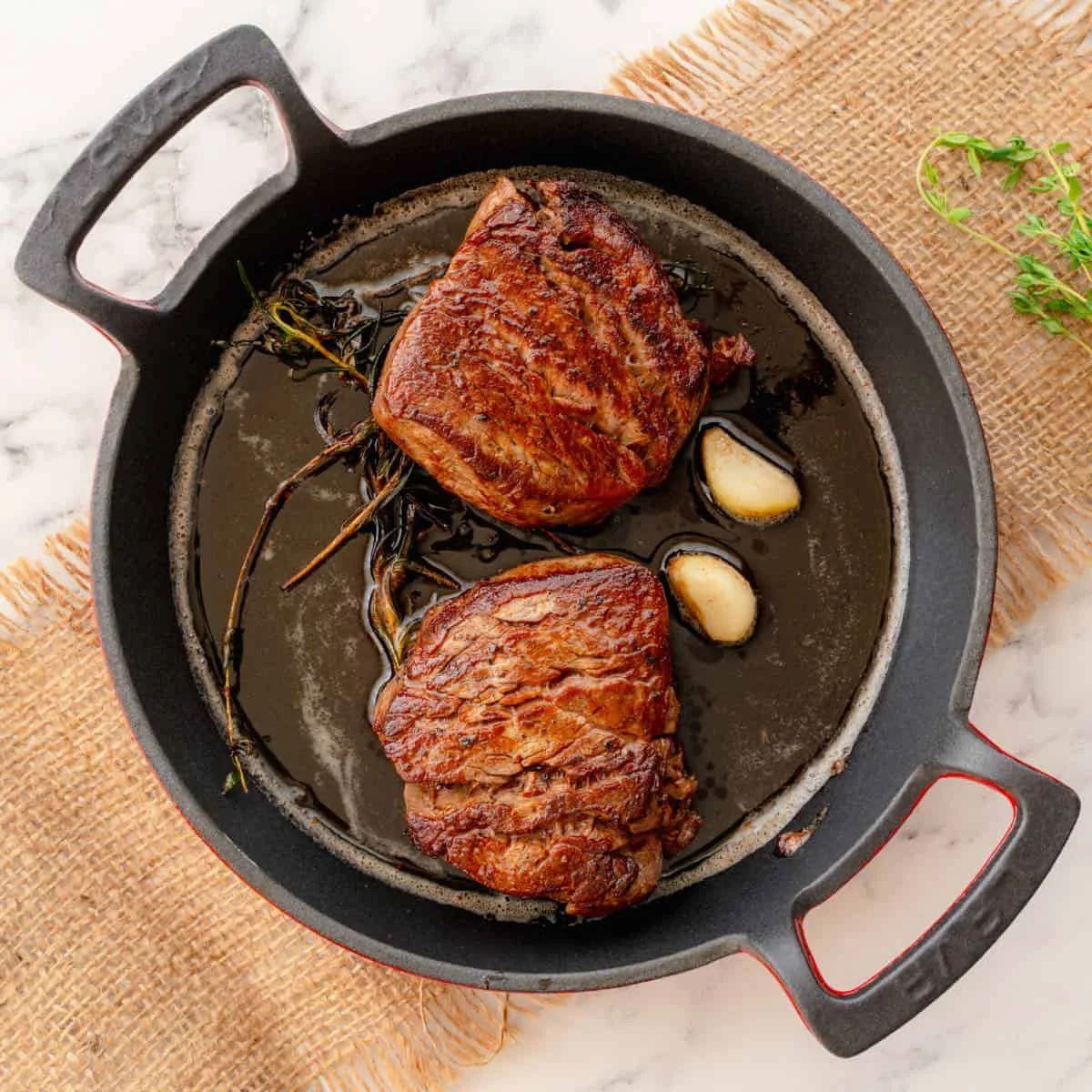
Filet mignon is a tender steak seared in a hot pan, then basted with butter, garlic and fresh herbs. It makes a straightforward dinner when you want a crisp, browned exterior and a rosy centre.
Ingredients
- 2 steaks, each 5 cm thick (170–227 g)filet mignon steaks
- 30 mlolive oil
- 28 gunsalted butter
- 2fresh garlic cloves
- 2 sprigsfresh rosemary
- 2 sprigsfresh thyme
- to tastesea salt and freshly cracked black pepper
Instructions
- 1
Season the steaks
Season the steaks with sea salt and freshly cracked black pepper.
- 2
Press in seasoning
Press the seasoning into the meat by hand so it coats the steaks, then set them aside.
- 3
Heat the skillet
Preheat a cast-iron skillet over medium-high heat.
- 4
Add the oil
Pour the olive oil into the hot skillet and swirl to coat the base evenly.
- 5
Add the steaks
When the oil is hot, place the seasoned steaks in the skillet in a single layer.
- 6
Sear the steaks
Sear for 4–5 minutes on each side for medium-rare. Use tongs to sear the sides as well.
- 7
Add butter and herbs
Meanwhile, add the butter, garlic and fresh herbs to the skillet.
- 8
Baste with butter
Tilt the skillet slightly and spoon the melted butter over the steaks.
- 9
Check the temperature
Remove the steaks from the skillet when their internal temperature reaches 57°C (135°F).
- 10
Transfer the steaks
Move the seared steaks to a cutting board or plate.
- 11
Rest before serving
Leave the steaks to rest for a few minutes so the flavours can settle.
- 12
Garnish and serve
Finish with fresh herbs or a sprinkle of chopped parsley before serving.
What is filet mignon?
Filet mignon is a thick cut of beef from the tenderloin, valued for its fine texture and mild flavour. The name comes from French, and the cut is commonly served as an individual steak.
This version keeps the preparation simple: a hot skillet creates a browned crust, while butter, garlic, rosemary and thyme add flavour as the steaks cook.
Nutrition and macros by portion
The nutrition label shows one serving as written: 697 calories, 31g protein, 1g carbs, 63g fat.
| Portion | Adjustment | kcal | Protein | Carbs | Fat |
|---|---|---|---|---|---|
| Lighter | Use less herb butter | 488 kcal | 22g | 1g | 44g |
| This serving | As written | 697 kcal | 31g | 1g | 63g |
| Hungry | Add a potato side | 1046 kcal | 47g | 2g | 95g |
The steak supplies most of the protein, while the olive oil and butter account for much of the fat and energy. The supplied nutrition lists very little carbohydrate; serve with vegetables or a salad for a balanced plate, or add potatoes if you want a more filling meal.
Choosing the steaks
Thickness matters: steaks about 5 cm thick give you time to brown the outside while the centre stays less cooked. The supplied quantity is 170–227 g per steak.
Bring the steaks out while you prepare the skillet so they are not very cold when they go into the pan. Patting them dry first can help the surface brown.
Getting a good sear
Hot pan: let the cast-iron skillet heat over medium-high before adding the oil. The oil should be hot before the steaks go in.
Room to brown: arrange the steaks in one layer without crowding them. Turn them after 4–5 minutes, and use tongs to brown the edges.
Basting with butter
Butter and aromatics: add the butter, garlic, rosemary and thyme to the skillet during cooking. Tilt the pan carefully so the melted butter collects at one side.
Spoon the butter over the steaks, taking care around the hot pan. This step adds flavour to the surface; it does not replace checking the centre for doneness.
Checking doneness
Temperature: the method gives 57°C (135°F) as the target internal temperature for medium-rare. Check the centre of each steak with a thermometer rather than relying only on the timing.
Resting: transfer the steaks to a board or plate and leave them for a few minutes before serving. The exact cooking time can vary with steak thickness and the heat of the pan.
What to serve with it
A green vegetable such as asparagus, green beans or broccoli pairs well with the rich butter and beef. A crisp salad can also keep the meal feeling fresh.
For a more substantial plate, add mashed potatoes or roasted potatoes. Spoon a little of the herb butter over the steaks just before serving.
Recipe notes & tips
- Dry the steak surface before seasoning if it feels damp.
- Use tongs to turn the steaks and sear their edges.
- Add the butter, garlic and herbs during cooking as directed so they can flavour the basting butter.
- Check each steak's centre with a thermometer; two steaks may not cook at exactly the same rate.
- Rest the steaks for a few minutes before cutting into them.
Variations
- Add parsley: finish with chopped parsley as suggested in the method.
- Use extra thyme: add another sprig for a more pronounced herbal note.
- Try a different herb: swap the rosemary for sage while keeping the thyme.
- Add a salad: serve with crisp leaves and a simple dressing for a lighter accompaniment.
Common mistakes to avoid
- Cool skillet: the steaks may not brown well; heat the cast iron before adding the oil.
- Crowded pan: the steaks can lose their sear; cook them in a single layer with space between.
- Guessing doneness: cooking times vary; check for 57°C (135°F) at the centre.
- Skipping the edges: use tongs to sear the sides as well as the broad faces.
- Cutting straight away: juices can escape; rest the steaks for a few minutes first.
How to store
Refrigerate leftover steak in a covered container within 2 hours and use within 3–4 days. Reheat gently in a covered pan over low heat until hot, to help prevent it from becoming tough.
Frequently asked questions
How thick should the steaks be?
The recipe specifies steaks about 5 cm thick. It gives a weight of 170–227 g for each steak.
How long should I sear filet mignon?
The method calls for 4–5 minutes on each side for medium-rare, plus searing the sides. Use the internal temperature as your main doneness check because timing varies.
What temperature is medium-rare here?
The recipe gives 57°C (135°F) as the internal temperature. Check the thickest part of each steak.
Can I use a different pan?
Cast iron is specified because it works well for searing, but you can use another heavy skillet that tolerates high heat.
Why does the recipe add butter near the end?
Butter, garlic and herbs are added for basting after the steaks have started searing. Tilting the pan lets you spoon the melted butter over the meat.
Can I prepare the steaks ahead?
You can season them shortly before cooking, but the method is designed for cooking and serving them fresh. Keep raw seasoned steaks covered in the refrigerator until you are ready to cook.
Cook it from the original
This recipe comes from castironketo.net. Their page has the author’s own photos, notes and tips — the best place to cook it from.
Open the recipe on castironketo.net