
Risotto alla Zucca (Winter Squash Risotto)
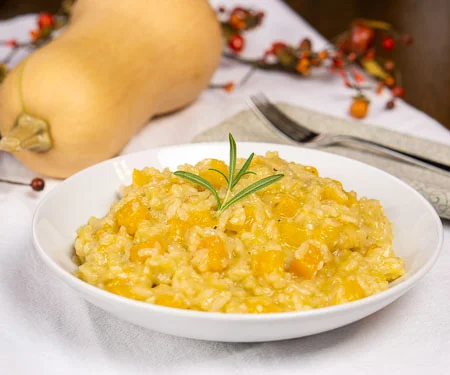
Risotto alla zucca is a creamy Italian rice dish made here with sweet butternut squash, rosemary and Parmesan. It makes a warming, hands-on dinner, with the squash softening into the rice as broth is added gradually.
Ingredients
- 28 g (2 Tbsp)unsalted butter
- 1onion, diced
- 1 clovegarlic, minced
- 454 g (1 lb), diced into 1.3 cm pieces (about 950 ml / 4 cups)butternut squash
- 5 ml (1 tsp)salt
- 5 ml (1 tsp)dried rosemary
- 1.54 litres (6½ cups), dividedvegetable or chicken stock
- 355 ml (1½ cups)Arborio rice
- 28 g (1 oz; about 80 ml / ⅓ cup), grated, plus extra to serveParmesan cheese
Instructions
- 1
Soften the vegetables
Melt the butter in a large, high-sided 30 cm (12-inch) sauté pan over medium heat. Add the diced onion and garlic and cook for 5 minutes, until softened. Stir in the squash, salt, rosemary and 120 ml (½ cup) of the stock; cook over medium heat for 5–8 minutes, until the squash starts to soften.
- 2
Warm the stock
While the squash cooks, bring the remaining 1.42 litres (6 cups) of stock to a simmer in a saucepan. Turn the heat down to low so it stays gently simmering.
- 3
Add the rice
Stir the rice into the squash mixture until it is evenly distributed.
- 4
Cook the risotto
Lower the heat to medium-low. Add the warm stock roughly 120 ml (½ cup) at a time, stirring between additions and waiting for each addition to be absorbed before adding more. Continue in this way for about 45 minutes, until the rice is soft and creamy; you may not need all the stock.
- 5
Stir in Parmesan
When the rice has reached the consistency you like, take the pan off the heat and stir in the grated Parmesan.
- 6
Serve straight away
Serve immediately, topped with extra Parmesan.
What is risotto alla zucca?
Risotto alla zucca is an Italian risotto made with zucca, or squash. It is a comforting dish often associated with northern Italian cooking, where rice-based meals are well established.
This version uses butternut squash, which brings gentle sweetness and softens as the rice cooks. Arborio rice and gradual additions of stock create the creamy texture, while rosemary and Parmesan add savoury depth.
Nutrition and macros by portion
The nutrition label shows one serving as written: 206 calories, 5g protein, 37g carbs, 5g fat.
| Portion | Adjustment | kcal | Protein | Carbs | Fat |
|---|---|---|---|---|---|
| Lighter | Less butter, more squash | 144 kcal | 3g | 26g | 3g |
| This serving | As written | 206 kcal | 5g | 37g | 5g |
| Hungry | Larger portion | 309 kcal | 7g | 56g | 7g |
The rice provides most of the carbohydrates, while the butter and Parmesan contribute much of the fat; the cheese and rice also supply some protein. For a more balanced plate, serve a portion with a green salad or simply cooked vegetables.
Why Arborio rice works
Rice choice: Arborio is a short-grain rice that releases starch as it is stirred and cooked with stock. That starch helps make the risotto creamy without needing cream.
Keep it dry: Don’t rinse the rice before cooking; the method relies on its surface starch to help the finished dish come together.
Getting the squash tender
Even pieces: Cut the squash into roughly 1.3 cm (½-inch) dice so it softens at a similar pace. The initial cooking with a little stock gives it a head start before the rice goes in.
Texture cue: The squash should begin to turn tender after 5–8 minutes, but it does not need to be completely soft at this stage; it will continue cooking with the risotto.
Adding stock gradually
Warm stock: Keep the remaining stock at a gentle simmer while the rice cooks. Adding it warm helps maintain the cooking temperature in the pan.
Small additions: Pour in about 120 ml (½ cup) at a time, stirring and waiting until it has been absorbed before adding more. The stated amount is a guide, so stop when the rice is creamy and tender rather than forcing in every last drop.
Stirring and doneness
Stir regularly: Stir after each stock addition to help the rice cook evenly and release starch. You do not need to stir without pause, but avoid leaving the pan unattended for long.
Taste to check: The recipe gives about 45 minutes for the rice to become soft and creamy. Check the grains near the end and continue with warm stock as needed until they are tender to your liking.
Finishing and serving
Off the heat: Stir the grated Parmesan in once the pan is removed from the hob. It melts into the rice and adds a savoury finish.
Serve promptly: Risotto thickens as it sits, so bring it to the table straight away with extra Parmesan. It makes a filling main course, or can be served in smaller portions alongside greens.
Recipe notes & tips
- Cut the squash into evenly sized pieces so they soften at the same rate.
- Keep the stock gently simmering in a separate saucepan while the rice cooks.
- Add stock only after the previous addition has been absorbed.
- Stir after each addition, scraping across the base of the pan to prevent sticking.
- Taste the rice near the end and stop adding stock when it is creamy and tender.
- Serve as soon as the Parmesan has been stirred in, before the risotto thickens further.
Variations
- Use chicken stock: Choose it instead of vegetable stock for a different savoury base.
- Change the herb: Use dried sage in place of rosemary for a different herbal note.
- Add black pepper: Season the finished risotto with freshly ground pepper at the table.
- Finish with lemon: Add a little finely grated lemon zest for a brighter finish.
- Try another squash: Use another firm winter squash, cut into similarly sized pieces.
Common mistakes to avoid
- Adding cold stock: It cools the pan; keep the stock at a gentle simmer beside the risotto.
- Pouring in too much at once: The rice can cook unevenly; add roughly 120 ml (½ cup) at a time.
- Skipping the absorption pause: Adding more stock too soon makes it harder to judge the texture; wait between additions.
- Cooking the squash in large chunks: They may stay firm; dice it into roughly 1.3 cm pieces.
- Cooking by time alone: Rice can vary; taste it and stop when the grains are soft and creamy.
- Leaving it to stand: The risotto thickens as it rests; serve it immediately after finishing.
How to store
Cool leftovers promptly and store them in a covered container in the fridge for up to 3 days. Reheat in a pan or microwave until piping hot, adding a splash of stock or water to loosen the texture.
Frequently asked questions
Can I use a different type of rice?
Arborio is the rice specified and helps give the dish its creamy texture. Other risotto rice varieties can also work, though cooking time and liquid absorption may differ.
Do I have to use all the stock?
No. Add it gradually and stop when the rice is soft and creamy; the recipe notes that some stock may remain.
How do I know when the risotto is done?
Taste the rice: it should be soft and creamy, without a hard centre. The method estimates about 45 minutes of gradual stock additions.
Can I make this with vegetable stock?
Yes. The recipe calls for either vegetable or chicken stock, so choose whichever suits your meal.
Can I prepare risotto ahead of time?
It is best served immediately because it thickens as it stands. Leftovers can be refrigerated and reheated with a splash of stock or water.
Cook it from the original
This recipe comes from curiouscuisiniere.com. Their page has the author’s own photos, notes and tips — the best place to cook it from.
Open the recipe on curiouscuisiniere.com