
Roasted Balsamic Pork Tenderloin
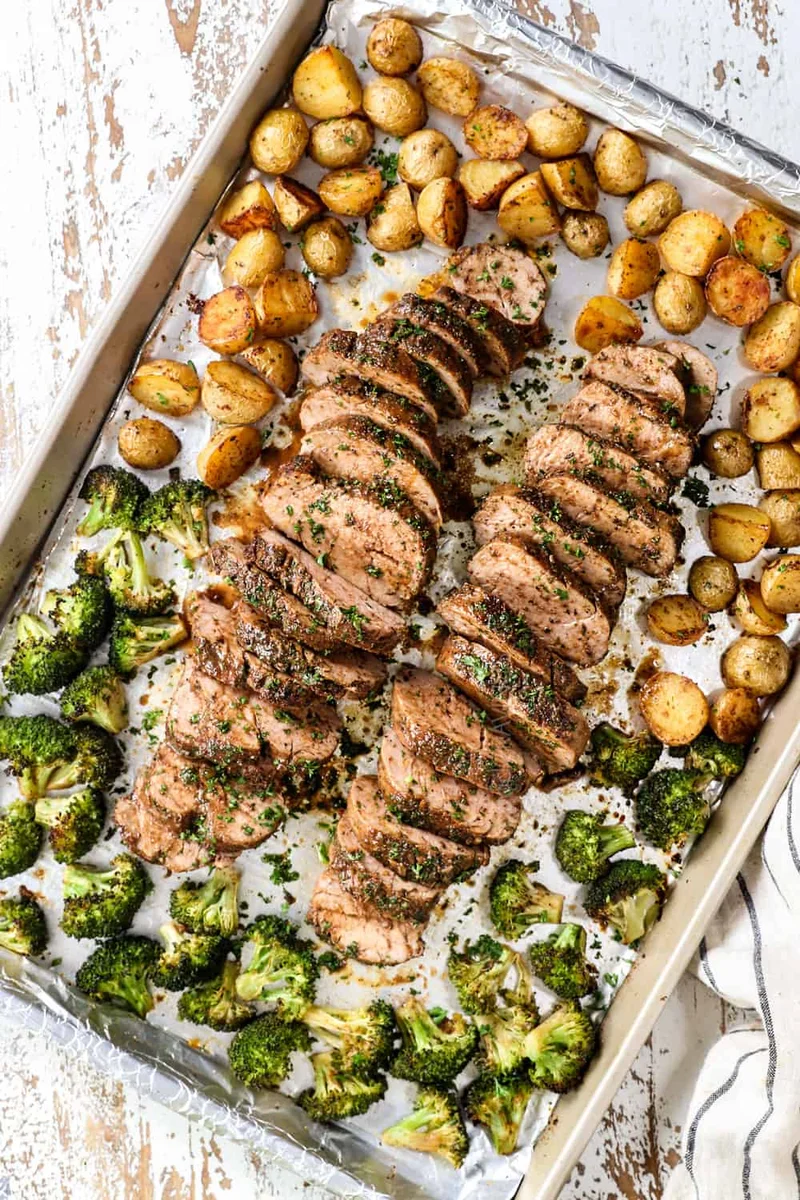
Roasted balsamic pork tenderloin pairs spice-rubbed pork with a sweet, tangy herb sauce and buttery juices. Roast it alongside optional potatoes and broccoli for an easy one-tray meal.
Ingredients
- 907 g–1.13 kg (2–2½ lb)pork tenderloins, trimmed (2 pieces)
- 710 ml (3 cups)broccoli florets (optional)
- 454 g (1 lb)baby Dutch potatoes, quartered or halved if smaller (optional)
- As neededvegetable oil and olive oil
- To tastesalt and pepper
- 28–42 g (2–3 tablespoons), sliced into 6 patsbutter
- 60 g (¼ cup)kosher salt
- 950 ml (4 cups)warm water
- 45 ml (3 tablespoons)balsamic vinegar
- 25 g (2 tablespoons)brown sugar
- 1 cup (about 240 ml)ice cubes
- 15 ml each (1 tablespoon each)chilli powder and garlic powder
- 5 ml each (1 teaspoon each)salt and onion powder
- 2.5 ml (½ teaspoon)paprika
- 1.25 ml (¼ teaspoon)pepper
- 80 ml (⅓ cup)balsamic vinegar
- 30 ml (2 tablespoons)honey
- 22.5 ml (1½ tablespoons)Dijon mustard
- 2.5 ml each (½ teaspoon each)dried oregano, dried basil and dried thyme
- 1.25 ml (¼ teaspoon)red pepper flakes
Instructions
- 1
Prepare the oven
Heat the oven to 200°C (400°F). Line a half-size rimmed baking sheet with foil and coat it with cooking spray. Lay two long pieces of foil beside the hob; you will use them to wrap the tenderloins separately after searing.
- 2
Brine the pork
In a gallon-size freezer bag, supported in a larger bowl if helpful, stir the kosher salt into the warm water until dissolved. Whisk in the vinegar, brown sugar and ice, then add the pork and ensure it is submerged. Brine for exactly 20 minutes. Remove the pork, rinse it and pat it very dry; leaving it in the brine longer can give it a mealy texture.
- 3
Mix spices and sauce
While the pork brines, whisk all the spice-mix ingredients together in a small bowl and set aside 1 teaspoon for the vegetables. In a separate medium bowl, whisk together the balsamic sauce ingredients.
- 4
Start the potatoes
If using, put the potatoes on the prepared baking sheet. Toss them with 1 tablespoon balsamic sauce, 1 tablespoon olive oil, ½ teaspoon of the reserved spice mix, ¼ teaspoon salt and ⅛ teaspoon pepper. Spread them in a single layer and bake at 200°C (400°F) for 15 minutes, then take the tray out.
- 5
Add the broccoli
If using, move the partly cooked potatoes to one side of the tray, keeping them in a single layer. Toss the broccoli with ½ tablespoon balsamic sauce, 1 tablespoon olive oil, ½ teaspoon reserved spice mix, ¼ teaspoon salt and ⅛ teaspoon pepper. Arrange it in a single layer on the other side of the tray.
- 6
Season and sear
Rub the dried pork evenly with the spice mix. Heat 2 tablespoons vegetable oil in a large cast-iron frying pan over medium-high heat. When the oil is very hot and just beginning to smoke, add the tenderloins, working in batches if needed. Sear each side until golden, then place the pork on the prepared foil.
- 7
Wrap with sauce
Fold the foil edges up around the tenderloins. Pour half the balsamic sauce over each one and place 3 pats of butter on each. Bring the foil edges together to enclose each tenderloin completely, then set the parcels in the middle of the baking tray between the vegetables.
- 8
Roast until done
Bake at 200°C (400°F) for 15–25 minutes, depending on thickness, until the thickest part of the pork registers 63–65°C (145–150°F). Check through the foil with a digital probe thermometer, or use an instant-read thermometer. The tenderloins may finish at different times, so remove one earlier if needed. If the vegetables are not tender when the pork is ready, take out the pork and roast the vegetables for a further 5–10 minutes.
- 9
Rest and slice
Move the cooked pork to a heatproof surface and carefully open the top of each foil parcel, watching for escaping steam. Leave the pork to rest for 10 minutes before slicing. Spoon the balsamic butter juices from the foil over the slices and add salt and pepper to taste.
What is balsamic pork tenderloin?
Pork tenderloin is a lean, tender cut that cooks relatively quickly and takes well to bold seasoning. Balsamic vinegar, herbs and a touch of sweetness give this version a tangy, savoury finish.
The recipe draws on Italian-inspired flavours rather than being a traditional regional dish. A short brine, spice rub and foil parcel help build flavour while keeping the pork moist.
Nutrition and macros by portion
The nutrition label shows one serving as written: 800 calories, 62g protein, 56g carbs, 31g fat.
| Portion | Adjustment | kcal | Protein | Carbs | Fat |
|---|---|---|---|---|---|
| Lighter | More broccoli, fewer potatoes | 560 kcal | 43g | 39g | 22g |
| This serving | As written | 800 kcal | 62g | 56g | 31g |
| Hungry | Add potatoes and bread | 1200 kcal | 93g | 84g | 47g |
Pork supplies most of the protein, while the potatoes and brown sugar contribute much of the carbohydrate. The butter and cooking oils are the main sources of fat, with additional carbohydrates from the honey and vegetables. Balance the plate with a generous portion of broccoli or salad, especially if you are serving bread as well.
The brine and spice rub
Short brine: the salt, water, vinegar and sugar season the pork before cooking. Keep the soak to exactly 20 minutes, then rinse and thoroughly dry the meat as directed.
Reserved seasoning: setting aside a teaspoon of the spice mix gives the optional vegetables a little of the same flavour as the pork. Keep the rest for rubbing over the tenderloins.
Making the balsamic sauce
Sweet and tangy: balsamic vinegar, honey and brown sugar balance the savoury herbs and mustard. Whisk the sauce until combined before dividing it between the two pork parcels.
Butter finish: the butter melts into the sauce as the pork roasts, creating juices to spoon over the sliced meat. Open the foil carefully, as hot steam can escape.
Getting the sear right
Hot pan: wait until the vegetable oil is very hot and just starting to smoke before adding the pork. This helps the surfaces turn golden rather than simply warming in the pan.
Work in batches: if both tenderloins do not fit comfortably, sear them separately. Crowding makes it harder to brown each side evenly.
Roasting the vegetables
Potatoes first: they need a 15-minute head start at 200°C (400°F), which gives them time to soften before the broccoli joins the tray.
Broccoli later: add it after the initial potato bake and keep both vegetables in a single layer. If they need more time once the pork is cooked, remove the meat and roast the vegetables for another 5–10 minutes.
How to tell when the pork is done
Use a thermometer: check the thickest part of each tenderloin for 63–65°C (145–150°F). Thickness affects the roasting time, so use the temperature rather than the clock alone.
Rest before slicing: leave the pork for 10 minutes after roasting. The rest also gives you time to spoon the buttery balsamic juices over the finished slices.
What to serve alongside
With the tray bake: the optional potatoes and broccoli make this a complete meal with a mix of hearty and green vegetables. A Caesar salad adds a crisp contrast.
For a fuller spread: serve with breadsticks or another crusty bread to catch the sauce. If you leave out the potatoes, add another substantial side to round out the plate.
Recipe notes & tips
- Use a thermometer to check each tenderloin, as they may differ in thickness and finish at different times.
- Dry the pork thoroughly after rinsing so the spice rub adheres and the meat can brown.
- Keep the vegetables in a single layer so they roast rather than steam.
- Set aside the teaspoon of spice mix before seasoning the pork so it is ready for the vegetables.
- Open the foil away from your face and hands to avoid the escaping steam.
- Spoon the foil juices over the pork just before serving for extra balsamic flavour.
Variations
- Skip the potatoes: roast the pork with broccoli only and serve another side separately.
- Swap the vegetables: use your favourite roasting vegetables, cutting them to sizes that cook at a similar pace.
- Adjust the heat: reduce or omit the red pepper flakes for a milder sauce.
- Add fresh herbs: scatter chopped parsley over the sliced pork just before serving.
- Make it without broccoli: use the potatoes as the tray-bake side and add a salad at the table.
Common mistakes to avoid
- Brining too long: keep the pork in the brine for exactly 20 minutes, then rinse and dry it.
- Skipping the drying step: pat the pork very dry after rinsing so the seasoning sticks and the surface can sear.
- Using a crowded pan: sear the tenderloins in batches if necessary so they brown rather than steam.
- Guessing the cooking time: check the thickest part with a thermometer and remove each tenderloin when it reaches 63–65°C (145–150°F).
- Cutting immediately: rest the pork for 10 minutes before slicing so you can serve it with the collected sauce.
- Leaving vegetables in too long with the pork: remove the meat when ready and give the vegetables another 5–10 minutes if needed.
How to store
Refrigerate leftover pork and vegetables in an airtight container for up to 3 days. Reheat gently in a covered ovenproof dish or in the microwave, adding a little of the stored sauce to help keep the pork moist. The pork can also be frozen in a sealed container; thaw it in the fridge before reheating.
Frequently asked questions
Can I make this without the potatoes and broccoli?
Yes. Both vegetables are optional; roast the pork on its own and serve it with sides of your choice.
Why does the pork brine for only 20 minutes?
The method specifies exactly 20 minutes because a longer brine can make the pork mealy. Rinse and dry it as soon as the time is up.
Can the tenderloins finish at different times?
Yes. Check each one separately and remove it as soon as its thickest part reaches 63–65°C (145–150°F).
How do I know the vegetables are tender?
Check that the potatoes and broccoli have softened to your liking. If they need more time after the pork is ready, remove the meat and roast the vegetables for another 5–10 minutes.
Can I prepare the pork ahead?
The recipe is described as prep-ahead friendly, but the method does not specify a make-ahead schedule. Keep any prepared ingredients chilled and follow the 20-minute brining time when you cook.
What should I do with the sauce in the foil?
After the pork has rested and been sliced, spoon the balsamic butter juices over the meat. Open the parcels carefully because hot steam will escape.
Cook it from the original
This recipe comes from carlsbadcravings.com. Their page has the author’s own photos, notes and tips — the best place to cook it from.
Open the recipe on carlsbadcravings.com