
Lemon Buttermilk Sorbet
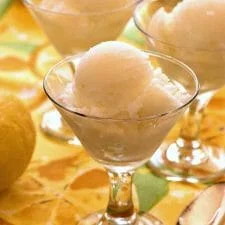
Lemon buttermilk sorbet is a bright, tangy frozen dessert with a softer, creamier feel than many fruit sorbets. Make it when you want a refreshing scoop with a short ingredient list and a gentle citrus finish.
Ingredients
- 100 g (½ cup)granulated sugar
- 120 ml (½ cup)water
- 480 ml (2 cups)buttermilk
- Seeds scraped from a 2.5 cm (1-inch) piecevanilla bean
- Juice and zest of 1lemon
Instructions
- 1
Make the syrup
Combine the sugar and water in a small saucepan, whisking until the sugar dissolves. Bring to a boil, remove from the heat and stir again to check that all the sugar has dissolved. Leave the syrup to cool slightly, then chill it completely in the refrigerator.
- 2
Mix the base
In a large bowl, combine the buttermilk, chilled syrup, vanilla seeds, lemon juice and lemon zest.
- 3
Churn the sorbet
Pour the mixture into an ice-cream maker and churn according to the manufacturer's instructions. If the zest has clumped together, separate it with your fingertips and stir it through with a spatula.
- 4
Serve or firm
Serve straight away for a soft-serve texture, or chill for several hours until firm enough to serve in scoops.
What is lemon buttermilk sorbet?
Sorbet is a frozen dessert traditionally made without a cream base. This version takes a French-inspired approach, using buttermilk for a creamy texture and a pleasantly tangy flavour.
Lemon brings both juice and zest, so the citrus comes through in the flavour as well as the aroma. Churning the chilled mixture helps give it a smooth, scoopable finish.
Nutrition and macros by portion
The nutrition label shows one serving as written: 120 calories, 3g protein, 22g carbs, 3g fat.
| Portion | Adjustment | kcal | Protein | Carbs | Fat |
|---|---|---|---|---|---|
| Lighter | Smaller scoop | 84 kcal | 2g | 15g | 2g |
| This serving | As written | 120 kcal | 3g | 22g | 3g |
| Hungry | Larger scoop | 180 kcal | 4g | 33g | 4g |
The sugar supplies most of the carbohydrates, while the buttermilk contributes protein and some of the fat; the recipe contains no substantial protein-rich ingredient. Serve a scoop alongside fresh fruit or a small biscuit if you want a more complete dessert plate.
Why use buttermilk?
Buttermilk: its acidity gives the dessert a lively edge, while its body makes the result feel silkier than a simple fruit-and-syrup sorbet.
Sugar syrup: dissolving the sugar in water before mixing helps distribute sweetness evenly through the cold base.
Getting the lemon and vanilla ready
Lemon zest: use the coloured outer peel and avoid grating deeply into the bitter white pith. Stir any zest that gathers into clumps back through the churned mixture, as the method directs.
Vanilla seeds: scrape them from the bean and add them to the base for a mellow note alongside the sharp lemon.
Chilling and churning
Cold syrup: chill it completely before combining it with the buttermilk. A properly cold base is ready to go into the ice-cream maker without a further cooling stage.
Churning: follow the instructions for your machine, since timing and the finished softness vary by model. The sorbet can be served straight from the churn for a softer texture.
Choosing the texture
Soft serve: serve immediately after churning for a light, yielding consistency.
Firm scoops: transfer the churned mixture to the freezer and chill for several hours before serving. Let it sit briefly if it becomes too hard to scoop.
What to serve with it
Serve a scoop on its own as a clean, citrusy finish to a meal. Fresh berries or a crisp biscuit make simple accompaniments without masking the lemon and buttermilk.
Recipe notes & tips
- Chill the syrup fully before mixing it into the buttermilk.
- Zest the lemon before juicing it, which makes the peel easier to handle.
- Keep the zest finely grated so it distributes more evenly through the base.
- Use a spatula to stir any zest clumps through the churned sorbet.
- For the firmest scoops, allow several hours of chilling after churning.
Variations
- More citrus: Add extra lemon zest for a stronger aromatic note.
- Orange twist: Replace some of the lemon zest with orange zest.
- Berry pairing: Serve with fresh raspberries or sliced strawberries.
- Herbal note: Add a little finely chopped mint when serving.
- Vanilla accent: Add a few extra vanilla seeds for a more pronounced vanilla flavour.
Common mistakes to avoid
- Warm syrup: it can leave the base insufficiently chilled; refrigerate it until completely cold.
- Undissolved sugar: the syrup may turn grainy; whisk before boiling and stir again once it comes off the heat.
- Skipping the machine instructions: churners differ; use the guidance supplied with your ice-cream maker.
- Zest clumps: they leave uneven patches of lemon; break them apart and stir them through with a spatula.
- Expecting firm scoops immediately: freshly churned sorbet is soft; chill it for several hours to firm up.
How to store
Store the sorbet in a sealed freezer-safe container. For best texture, use it within about 1–2 weeks; let it stand briefly at room temperature before scooping, as it is not suited to reheating.
Frequently asked questions
Can I make this without an ice-cream maker?
The method is designed for an ice-cream maker, which churns the mixture as it freezes. Without one, the texture may be less smooth; you can freeze the mixture in a shallow container and stir it regularly as it firms.
Why does the recipe use buttermilk?
Buttermilk gives the sorbet its distinctive tang and a creamier feel than a water-based fruit sorbet.
Can I serve it straight after churning?
Yes. It will have a soft-serve consistency; chill it for several hours if you prefer firmer scoops.
What should I do if the zest clumps together?
Separate the clumps with your fingertips and stir the zest through the mixture with a spatula, as described in the method.
How do I know when the sorbet is ready?
Use the ice-cream maker's instructions as your guide. It is ready for soft serving after churning, or can be chilled further until firm enough to scoop.
Cook it from the original
This recipe comes from afamilyfeast.com. Their page has the author’s own photos, notes and tips — the best place to cook it from.
Open the recipe on afamilyfeast.com