
Ficelle picarde - mushroom and ham crepes au gratin
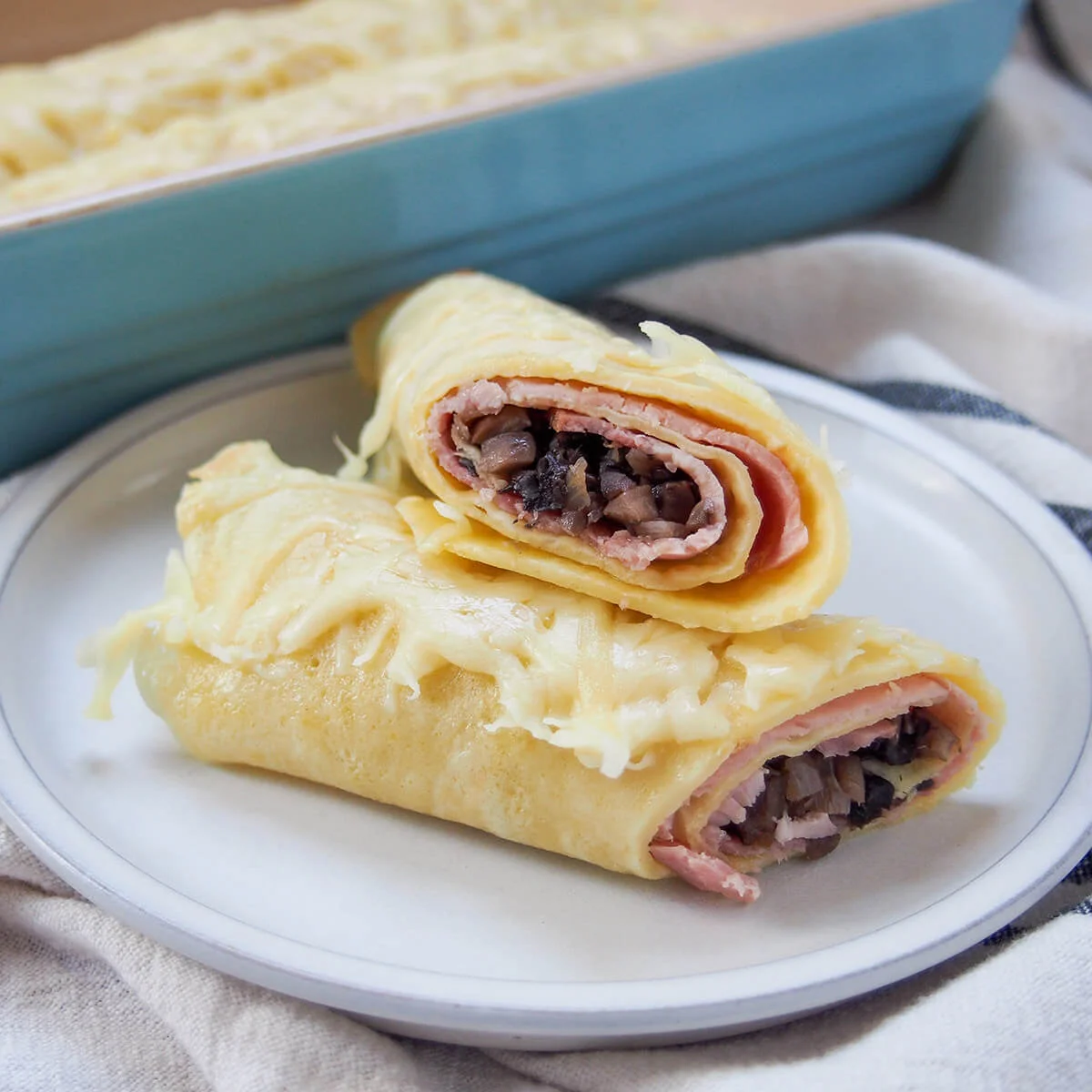
Ficelle picarde is a French savoury crêpe filled with ham and mushroom duxelles, rolled up and baked under a layer of cheese. It makes a comforting meal for two, with a crisp-edged top and a tender, savoury centre.
Ingredients
- 1egg
- 60 g (½ cup)plain flour
- 1 pinchsalt
- 120 ml (½ cup)milk
- 14 g (½ oz; about ½ a shallot)shallot
- 113 g (¼ lb)crimini or white mushrooms
- ½ clovegarlic (optional)
- 14 g (1 tbsp)butter
- 30 ml (2 tbsp)white wine (optional, but recommended)
- 7 g (½ tbsp, approximately)butter, for cooking the crêpes
- 3 slices (or 2 if the crêpes and ham slices are larger)cooked ham
- 57 g (2 oz)Gruyère or Emmental cheese, grated
Instructions
- 1
Mix the batter
Put the egg, flour and salt in a bowl and mix to form a paste, breaking up the egg even if the mixture is not yet smooth. Gradually whisk in the milk until smooth. Set the batter aside to rest for around 20–30 minutes; you can blend all the ingredients instead, and prepare the mushrooms while the batter rests.
- 2
Cook the mushrooms
Finely chop the shallot and dice the mushrooms into small pieces. Crush or finely chop the garlic if using. Melt the butter in a wide frying pan over a medium heat, add the shallot and cook until softened, stirring occasionally. After a minute, add the garlic if using and cook until soft without browning. Stir in the mushrooms and cook until softened, letting their liquid evaporate. Add the white wine and stir until it has been absorbed or evaporated and no liquid remains. Take the pan off the heat.
- 3
Cook the crêpes
When ready to cook, melt a little of the crêpe-cooking butter in a hot crêpe pan. Pour in some batter and quickly swirl the pan to spread it into a thin layer. Cook until the top looks dry and the edges begin to curl, then carefully flip with a spatula. Cook the other side until light brown spots appear, then remove and repeat with the remaining batter. The batter should make two large or three small crêpes, depending on the pan.
- 4
Fill and bake
Preheat the oven to 200°C (400°F). Lay a slice of ham on each crêpe and place a line of mushroom mixture slightly to one side. Starting from the side nearest the mushrooms, roll each crêpe around its filling, snugly but without squeezing the filling out. Arrange the rolls in an ovenproof dish and scatter the grated cheese evenly over them. Bake for around 5–7 minutes, until the cheese has melted and the crêpe edges are just beginning to brown.
What is ficelle picarde?
Ficelle picarde is a speciality associated with Picardy in northern France: a thin savoury crêpe wrapped around ham and a mushroom filling, then finished with cheese in the oven.
Here, a simple egg-and-milk batter makes the crêpes, while shallot-softened mushrooms provide the filling. Baking everything together melts the cheese and lightly browns the edges.
Nutrition and macros by portion
The nutrition label shows one serving as written: 465 calories, 26g protein, 32g carbs, 24g fat.
| Portion | Adjustment | kcal | Protein | Carbs | Fat |
|---|---|---|---|---|---|
| Lighter | Use less cheese | 326 kcal | 18g | 22g | 17g |
| This serving | As written | 465 kcal | 26g | 32g | 24g |
| Hungry | Add a larger crêpe | 698 kcal | 39g | 48g | 36g |
The crêpes provide most of the carbohydrates, while butter and cheese contribute much of the fat. Ham, egg, milk and cheese contribute protein. Pair a serving with salad or vegetables for a fresh, colourful side.
A smooth, rested batter
Start with the egg, flour and salt, mixing them into a paste before adding the milk gradually. This order helps you whisk out lumps as the batter loosens.
A rest of around 20–30 minutes gives the flour time to hydrate. If you are short on time, the recipe still gives the option of mixing the batter in a blender.
Build flavour in the pan
Shallot: soften it gently in butter before adding the mushrooms, so it becomes tender without browning.
Mushrooms: let their released liquid cook away before adding the wine. The mixture is ready to come off the heat when no liquid remains in the pan.
Wine: it is optional, but recommended in the recipe. Stir it through and allow it to absorb or evaporate before using the filling.
Spread thin crêpes
Pour in enough batter to coat the hot pan in a thin layer, then swirl quickly before it sets. The recipe makes two large or three small crêpes, depending on your pan.
Look for a dry surface and edges that are just starting to curl before flipping. A spatula helps turn the crêpe carefully; light brown spots on the second side signal it is ready to remove.
Roll without overfilling
Place the ham on the crêpe and set a line of mushroom filling slightly to one side. Roll from the side nearest the filling, keeping the crêpe snug enough to hold its shape.
Avoid pressing so firmly that the filling escapes. Arrange the rolls in the ovenproof dish with the seam underneath if it sits that way naturally.
Finish under cheese
Scatter the grated Gruyère or Emmental over the rolls so the tops are fairly evenly covered. Bake at 200°C for around 5–7 minutes.
The finish is brief: take the dish out when the cheese has melted and the crêpe edges have only just started to brown.
What to serve alongside
A green salad with a sharp vinaigrette is a simple contrast to the buttery crêpes, ham and melted cheese. Serve it alongside rather than covering the crêpes, so their browned edges remain visible.
For a more substantial meal, add a modest portion of steamed or roasted vegetables.
Recipe notes & tips
- Dice the mushrooms finely so the filling is easy to spread in a narrow line.
- Let the mushroom liquid evaporate before adding the wine, then cook until the pan is dry again.
- Swirl the batter as soon as it hits the hot pan to help it form an even, thin crêpe.
- Use a spatula to turn the crêpes once the surface is dry and the edges begin to lift.
- Roll the crêpes firmly enough to hold together, but do not squeeze the filling out.
- Keep an eye on the dish during the short bake and remove it once the cheese has melted.
Variations
- Swap the cheese: use Emmental instead of Gruyère, as suggested in the recipe.
- Skip the garlic: leave it out for a gentler mushroom filling.
- Omit the wine: leave it out and cook the mushrooms until the pan is dry.
- Make smaller crêpes: use a smaller pan and divide the batter into three crêpes.
- Add a salad: serve with a crisp green salad alongside the baked crêpes.
Common mistakes to avoid
- Lumpy batter: add the milk gradually and whisk until the mixture is smooth.
- Browned shallot or garlic: keep the pan at medium heat and cook just until softened.
- Watery filling: continue cooking the mushrooms until their liquid has evaporated before adding the wine.
- Crêpes that tear when flipped: wait until the top is dry and the edges begin to curl.
- Filling spills out: use a line of mushroom mixture and roll snugly without squeezing.
- Overbaked crêpes: check after 5 minutes and remove them once the cheese melts and the edges just begin to brown.
How to store
Refrigerate leftovers in a covered container and eat within 2 days. Reheat in an ovenproof dish until hot throughout; the crêpe edges may soften on storage.
Frequently asked questions
Can I make the batter ahead?
Yes. The method calls for resting it for around 20–30 minutes, and you can prepare the mushrooms during that time. Keep it covered in the fridge if making it further ahead.
How many crêpes does the batter make?
It makes two large or three small crêpes, depending on the size of your pan.
Can I leave out the white wine?
Yes, it is optional. Cook the mushrooms until their liquid has evaporated, then omit the wine step.
What cheese can I use instead of Gruyère?
The recipe suggests grated Emmental as an alternative.
How do I know the crêpes are ready to flip?
Wait until the top looks dry and the edges are starting to curl slightly. After flipping, cook until light brown spots appear on the other side.
Can I prepare the mushroom filling while the batter rests?
Yes. The recipe specifically suggests using the 20–30-minute rest to prepare the mushrooms.
Cook it from the original
This recipe comes from carolinescooking.com. Their page has the author’s own photos, notes and tips — the best place to cook it from.
Open the recipe on carolinescooking.com