
Escalivada - Catalan roasted vegetables
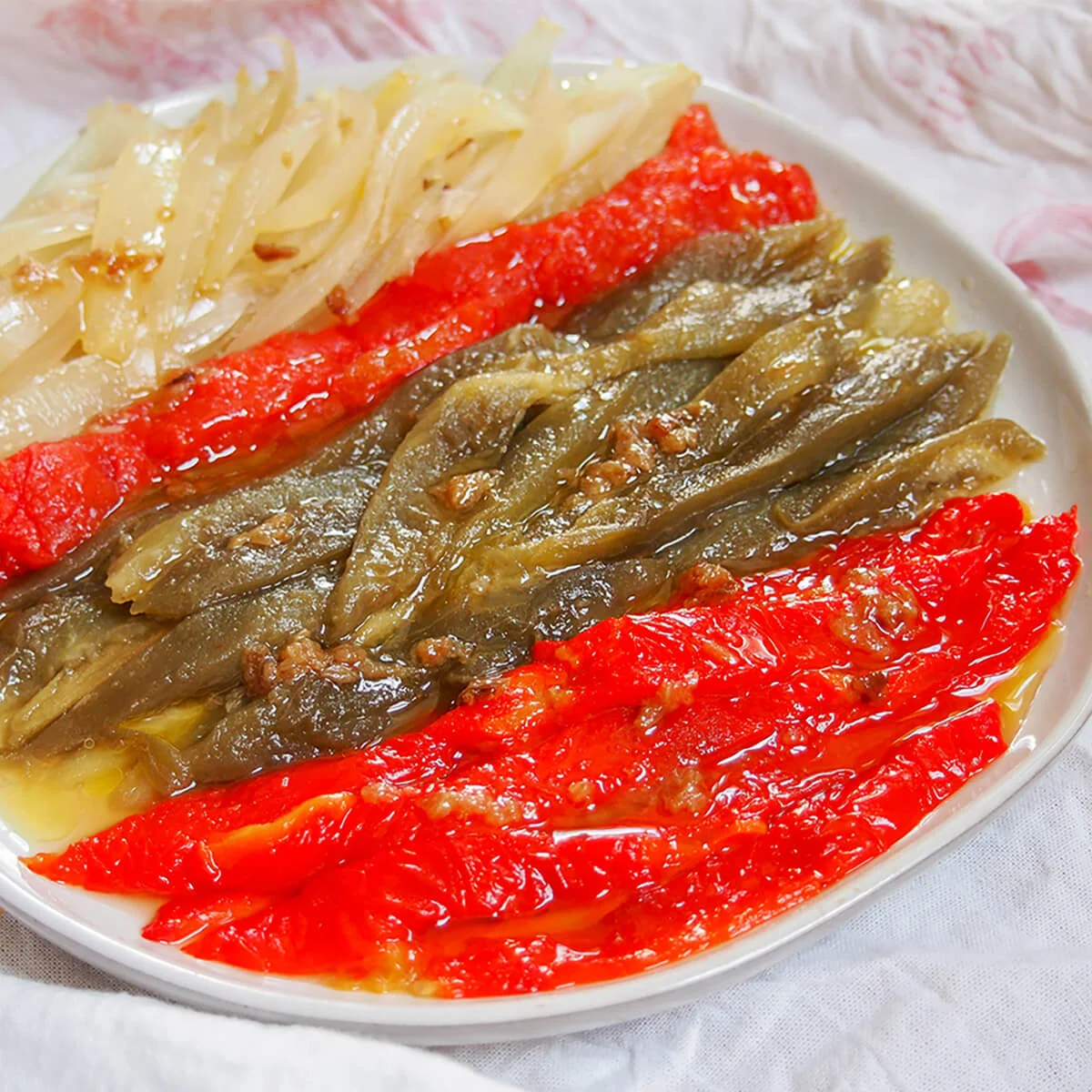
Escalivada is a Catalan dish of aubergine, red pepper, onion and tomato roasted until soft, then served with garlic oil. It makes a simple tapas plate or a colourful side that can be prepared mostly hands-off in the oven.
Ingredients
- 397 g (14 oz; 1 medium)aubergine
- 227 g (8 oz; 1 medium)red pepper
- 1 mediumonion
- 1 large, or 2 small-to-mediumtomato
- 1 clove, skin left ongarlic
- 30 ml (2 tbsp), plus a little more if neededextra-virgin olive oil
- 2.5 ml (½ tsp), optionalwine vinegar
Instructions
- 1
Heat the oven
Preheat the oven to 190°C (375°F).
- 2
Prick the skins
Prick the aubergine and pepper in several places with the tip of a sharp knife. Peel the onion if you wish, or leave its skin on.
- 3
Roast the vegetables
Put the aubergine, pepper, onion, tomato and unpeeled garlic in a roasting dish or on a baking sheet. Drizzle with about 7.5 ml (½ tbsp) of the olive oil and rub it over the skins. Roast for around 1 hour, until all the vegetables are very soft and tender. Turn them partway through if needed to help the other side char slightly.
- 4
Steam the pepper
Carefully take the aubergine and pepper out of the dish and put them in a large freezer bag. Close it loosely and leave them to steam so their skins loosen.
- 5
Make garlic oil
Meanwhile, let the other vegetables cool until they are safe to handle. Remove the garlic from its skin and mash it into the remaining olive oil, adding the vinegar if using.
- 6
Prepare tomato onion
Peel the tomato and cut it into medium-thick slices or strips. Leave the seeds in if you like, or remove them for a more even texture and fewer juices. Peel the onion and slice it thinly, or cut it into rings.
- 7
Peel and slice
Once cool, take the pepper and aubergine out of the bag and peel off their skins. Remove the pepper stem and seeds, then cut the flesh into strips. Peel the aubergine into strips; remove large seed chunks if you prefer.
- 8
Arrange and serve
Arrange the vegetables on a plate, grouped together or in alternating stripes. Drizzle with the garlic oil and serve.
What is escalivada?
Escalivada is a Catalan preparation of vegetables roasted until tender, traditionally including aubergine and peppers. Its name is associated with cooking over embers, though this version uses an oven.
Here, onion and tomato roast alongside the aubergine and red pepper, and a simple garlic-and-olive-oil dressing brings the vegetables together. The result works as a tapas dish or a side to a larger meal.
Nutrition and macros by portion
The nutrition label shows one serving as written: 232 calories, 4g protein, 25g carbs, 15g fat.
| Portion | Adjustment | kcal | Protein | Carbs | Fat |
|---|---|---|---|---|---|
| Lighter | Use less olive oil | 162 kcal | 3g | 18g | 11g |
| This serving | As written | 232 kcal | 4g | 25g | 15g |
| Hungry | Add bread or potatoes | 348 kcal | 6g | 38g | 23g |
Most of the carbohydrates come from the vegetables, while the olive oil supplies most of the fat; the vegetables provide a modest amount of protein. Pair a serving with a protein-rich main and bread or potatoes if you want a more substantial plate.
Why roast the vegetables whole?
Whole vegetables retain their shape while their skins darken and their insides soften. Pricking the aubergine and pepper gives steam a way to escape as they roast.
Olive oil rubbed over the skins helps coat the vegetables, while the long, moderate roast gives them time to become tender throughout.
The peeling step
Steaming the aubergine and pepper briefly in a loosely closed bag loosens their skins, making them easier to peel once cool enough to handle. Take care when moving them from the hot roasting dish.
The tomato and onion are peeled separately after cooling. Removing the tomato seeds is optional; it can make the finished plate less juicy.
How to judge doneness
The vegetables should be very soft and tender after about 1 hour at 190°C. If their skins have not coloured evenly, turn them partway through roasting.
Let the roasted vegetables cool enough to handle before peeling and slicing. This also makes it easier to arrange the strips neatly.
Making the garlic dressing
Mash the peeled roasted garlic into the olive oil left after using a little to coat the vegetables. The garlic should be soft enough to blend into the oil.
Wine vinegar is optional and adds a sharper note. Add it to the oil and garlic if you want a little acidity alongside the sweet, roasted vegetables.
Serving ideas
Serve escalivada on a platter, with the vegetables in separate groups or arranged in alternating strips. Spoon the garlic oil over just before serving.
It can accompany bread, grilled fish or other tapas. For a fuller plate, serve it alongside a source of protein and some bread or potatoes.
Recipe notes & tips
- Use a roasting dish or baking sheet large enough to keep the vegetables in a single layer.
- Rub the initial drizzle of oil over the skins rather than pouring it all in one spot.
- Turn the vegetables partway through if one side is colouring much faster than the other.
- Wait until the aubergine and pepper are cool enough to handle before peeling them.
- Arrange the vegetables just before serving to keep the strips intact.
Variations
- Add courgette: roast it with the other vegetables and slice it into strips.
- Use sherry vinegar: swap it for the wine vinegar for a different tang.
- Add fresh herbs: scatter chopped parsley over the arranged vegetables.
- Serve on toast: spoon the vegetables and garlic oil over slices of crusty bread.
- Add chilli: mix a little chilli into the garlic oil for gentle heat.
Common mistakes to avoid
- Skipping the pricks: the skins can split as the vegetables steam, so pierce the aubergine and pepper in several places.
- Removing the skins while hot: let the vegetables cool enough to handle first.
- Peeling before steaming: leave the aubergine and pepper in the loosely closed bag until their skins loosen.
- Over-roasting without checking: begin checking around the 1-hour mark and take the vegetables out when very soft and tender.
- Adding all the oil at once: reserve most of it for mashing with the roasted garlic.
How to store
Keep leftovers in a covered container in the fridge and eat within 3 days. Serve chilled or bring to room temperature; to warm them, heat gently in the oven until warmed through.
Frequently asked questions
Can I make escalivada ahead?
Yes. Roast and peel the vegetables ahead, then keep them covered in the fridge. Arrange them and add the garlic oil when ready to serve.
Do I have to peel the onion before roasting?
No. The onion can roast with its skin on, then be peeled once it has cooled enough to handle.
Should I remove the tomato seeds?
It is optional. Leaving them in is fine, while removing them gives the dish a less juicy, more even texture.
How do I know the vegetables are ready?
They should be very soft and tender after around 1 hour at 190°C. Turn them partway through if needed to colour the other side.
Can I serve escalivada cold?
Yes. It can be served at room temperature or chilled, as well as warm.
What can I serve with escalivada?
Serve it as tapas or alongside grilled fish, bread or potatoes. A protein-rich accompaniment can make it a more complete meal.
Cook it from the original
This recipe comes from carolinescooking.com. Their page has the author’s own photos, notes and tips — the best place to cook it from.
Open the recipe on carolinescooking.com