
Taiwanese oyster omelette
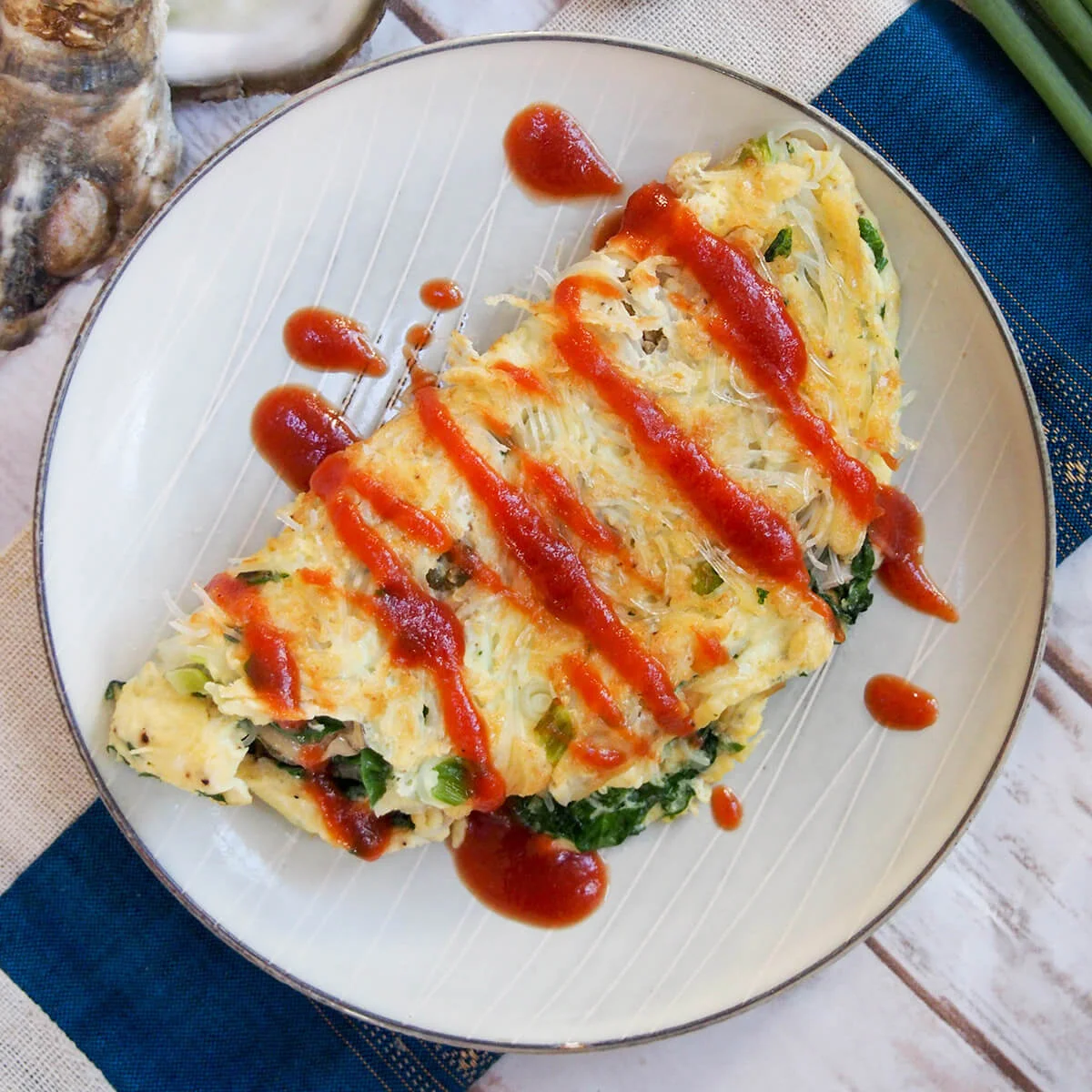
Taiwanese oyster omelette is a quick street-food dish of eggs, oysters, greens and rice noodles, finished with a savoury-sweet sauce. It makes a distinctive one-pan meal when you want something substantial in about 20 minutes.
Ingredients
- 30 ml (2 tbsp)ketchup
- 15 ml (1 tbsp)sugar
- 15 ml (1 tbsp)miso paste
- 15 g (½ oz)thin rice noodles
- 30 g (1 cup)greens, ideally Asian greens such as A-choy, or baby spinach
- 2spring onions
- 4 (3–6 depending on size)oysters, chopped if larger
- 2eggs, lightly beaten
- 30 ml (2 tbsp)vegetable oil
Instructions
- 1
Mix the sauce
Stir together the ketchup, sugar and miso paste, then set the sauce aside. You may not need it all; refrigerate any extra, where it will keep for a week or more.
- 2
Prepare the ingredients
Have everything ready before you start cooking, as the omelette cooks quickly. Soak the rice noodles in boiling water while you prepare the other ingredients. Shred the greens and thinly slice the spring onions. Open and drain the oysters, then cut each into two or three pieces of about 2.5 cm if needed. Lightly beat the eggs.
- 3
Cook the base
Warm the oil in a small to medium frying pan or wok over a medium heat. Add the spring onions and cook for 1 minute. Drain the noodles, add them to the pan and stir for 1 minute.
- 4
Add egg and oysters
Pour the eggs over the noodles, then quickly add the oysters and greens, pressing them into the egg if needed. Lower the heat slightly if necessary and cook for a couple of minutes, until the edges look set, the underside is lightly browned and the centre is beginning to firm.
- 5
Flip and serve
Carefully turn the omelette over using two spatulas. Cook until the other side is gently browned, then serve topped with some of the sauce.
What is Taiwanese oyster omelette?
Oyster omelette is a Taiwanese street-food dish that brings together oysters and eggs, often with greens and a starchy element. This version includes thin rice noodles and a ketchup, sugar and miso sauce.
The quick cooking keeps the oysters tender while the egg sets around the noodles and greens. Making the sauce first and preparing everything before heating the pan helps the dish come together smoothly.
Nutrition and macros by portion
The nutrition label shows one serving as written: 545 calories, 15g protein, 41g carbs, 36g fat.
| Portion | Adjustment | kcal | Protein | Carbs | Fat |
|---|---|---|---|---|---|
| Lighter | Use less oil and sauce | 382 kcal | 11g | 29g | 25g |
| This serving | As written | 545 kcal | 15g | 41g | 36g |
| Hungry | Add extra greens | 818 kcal | 23g | 62g | 54g |
The rice noodles and sugar provide much of the carbohydrate, while the eggs and oysters contribute protein. Most of the fat comes from the vegetable oil and eggs. To balance the plate, serve it with extra greens or a simple salad.
Get everything ready first
Noodles: soak them in boiling water while you prep the remaining ingredients, then drain them before they go into the pan.
Oysters: drain away their liquid and cut larger ones into smaller pieces so they cook through quickly.
Greens and spring onions: shred the greens and slice the onions thinly in advance; once the egg hits the pan, there is little time for chopping.
Keep the cooking quick
Noodle base: give the spring onions a minute in the oil, then stir the drained noodles for another minute. This warms the ingredients before the egg is added.
Egg layer: pour the beaten egg over the noodles and add the oysters and greens straight away. Press them gently into the egg so they are held in the omelette as it sets.
Look for these doneness cues
Edges and centre: the sides should look cooked, with the middle starting to firm before you flip. If the centre is still very liquid, give it a little longer over a slightly lower heat.
Underside: check for a light brown colour before turning. After flipping, cook until the second side is gently browned rather than letting the egg become dry.
Flipping and serving
Support: two spatulas make it easier to turn this soft, noodle-filled omelette without breaking it. Slide one underneath each side and turn with care.
Sauce: spoon some over the omelette just before serving. Keep any extra sauce separate so you can add more at the table or save it for another meal.
What to serve alongside it
For a simple meal, serve the omelette on its own while it is hot. The noodles and eggs make it filling, and the sauce adds a sweet, savoury finish.
If you want something fresh alongside, add a small serving of crisp salad or lightly dressed greens. Keep extra sauce on the side rather than covering the whole omelette.
Recipe notes & tips
- Measure and mix the sauce before heating the pan so the omelette can be cooked without interruption.
- Drain the noodles well to avoid adding excess water to the pan.
- Use a small to medium pan so the egg, noodles and fillings stay together.
- Lower the heat slightly if the underside browns before the centre begins to set.
- Use two spatulas to support the omelette evenly when flipping.
- Serve the sauce on top in a modest amount, with any extra at the side.
Variations
- Use baby spinach: swap it for the Asian greens if that is what you have.
- Adjust the oyster pieces: leave small oysters whole or chop larger ones into bite-sized pieces.
- Make the sauce milder: serve less on the omelette and offer the rest at the table.
- Add more greens: increase the greens for a vegetable-forward version.
- Change the pan: use a wok or a small to medium frying pan, whichever gives you room to turn the omelette.
Common mistakes to avoid
- Starting before prep is done: the omelette cooks quickly, so slice the greens and spring onions and prepare the oysters first.
- Adding wet noodles: drain them well after soaking so excess water does not interfere with setting the egg.
- Overcooking the base: use medium heat and lower it slightly if the underside browns too fast.
- Flipping too early: wait until the edges are set and the centre is beginning to firm.
- Turning without support: use two spatulas to help keep the noodle-filled omelette intact.
How to store
Refrigerate leftover omelette in a covered container and eat within 1–2 days. Reheat gently in a frying pan until hot throughout; the texture is best freshly cooked. Store extra sauce separately in the fridge for a week or more.
Frequently asked questions
Can I use baby spinach instead of Asian greens?
Yes. Baby spinach is given as an alternative; shred it before adding it to the pan.
Do I need to chop the oysters?
Chop larger oysters into two or three pieces of about 2.5 cm. Smaller oysters can be left whole.
How long should I soak the rice noodles?
Soak them in boiling water while you prepare the other ingredients, then drain them before cooking. Follow the noodle packet directions if they need a specific soaking time.
How can I tell when it is ready to flip?
Look for set edges, a lightly browned underside and a centre that is beginning to firm. If the middle is still very liquid, cook it a little longer.
Will I need all the sauce?
You may not need it all for the omelette. Serve some on top and refrigerate the remainder separately.
Can I make the sauce ahead?
Yes. Mix the ketchup, sugar and miso paste in advance and refrigerate it in a covered container.
Cook it from the original
This recipe comes from carolinescooking.com. Their page has the author’s own photos, notes and tips — the best place to cook it from.
Open the recipe on carolinescooking.com