
Caramelized apples
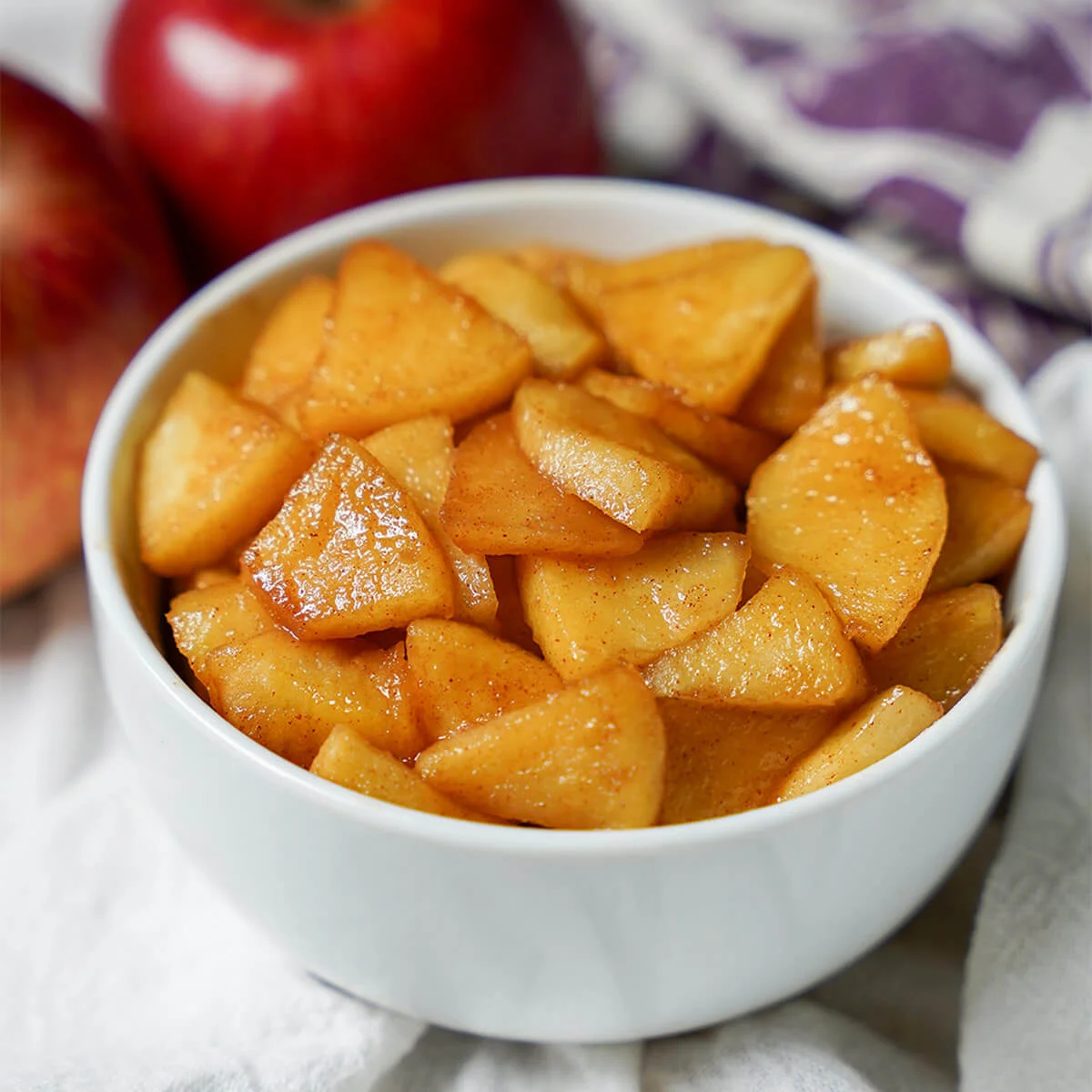
Soft apple slices cooked with brown sugar, cinnamon and butter make a warmly spiced, caramel-like topping. Spoon them over porridge, pancakes or yoghurt, or use them as a filling for desserts.
Ingredients
- 2 mediumapples (see notes)
- 1 tsp, approximately, or a little more or less to tastelemon juice
- 2 tbspbrown sugar
- ½ tsp, or a little more to tastecinnamon
- 1 tbspunsalted butter
Instructions
- 1
Prepare the apples
Peel and core the apples, then cut them into small slices or a fairly small dice. Put them in a bowl, add the lemon juice and toss gently. Add the cinnamon and brown sugar, then mix until the apple pieces are evenly coated.
- 2
Cook until tender
Melt the butter in a medium frying pan over a medium-low heat, then add the apples. Stir to coat them in butter and spread them in an even layer. Cook for around 6–8 minutes, stirring occasionally so they cook evenly. They are ready when gently soft and the liquid has reduced to a thicker, caramel-like consistency.
- 3
Serve or store
Use the apples straight away, or let them cool and transfer them to a jar or container for the fridge. Stir before using and serve warm or chilled.
What are caramelized apples?
Caramelized apples are fruit cooked with sugar and fat until tender and coated in a glossy, sweet sauce. This American-style preparation uses familiar baking flavours—brown sugar and cinnamon—and is quick enough to make as a breakfast topping or dessert filling.
Small pieces cook through in the pan while their juices combine with the sugar and butter. Lemon juice adds a little tartness to balance the sweetness.
Nutrition and macros by portion
The nutrition label shows one serving as written: 194 calories, 1g protein, 38g carbs, 6g fat.
| Portion | Adjustment | kcal | Protein | Carbs | Fat |
|---|---|---|---|---|---|
| Lighter | Use less butter and sugar | 136 kcal | 1g | 27g | 4g |
| This serving | As written | 194 kcal | 1g | 38g | 6g |
| Hungry | Serve with porridge | 291 kcal | 2g | 57g | 9g |
The apples and brown sugar provide most of the carbohydrates, while the butter contributes most of the fat; the apples add only a small amount of protein. Serve a portion with plain yoghurt or another protein-rich accompaniment, or alongside a more substantial meal, to make the plate more balanced.
Choose and cut the apples
Apple choice: The recipe leaves the variety to your preference; medium apples provide the intended starting amount. A firmer variety will generally keep more shape, while a softer one may break down further as it cooks.
Even pieces: Slice or dice the apples relatively small, and aim for pieces of a similar size. That helps them soften at roughly the same rate.
Coat before cooking
Lemon first: Toss the cut apples gently with the lemon juice before adding the cinnamon and brown sugar. This gives the seasoning a chance to cling to the fruit.
Even coating: Mix until the sugar and spice are distributed around the pieces. This helps avoid bites that are much sweeter or more heavily spiced than others.
Keep the heat gentle
Butter: Warm it over a medium-low heat, as directed, before adding the apples. Stir to coat the pieces and spread them into an even layer.
Stirring: Turn the apples now and then rather than leaving them untouched. The recipe calls for around 6–8 minutes of cooking, but use the texture and sauce as your cues.
Check the finish
Tender fruit: The apples should be gently soft when done, not necessarily falling apart. If you prefer more shape, keep an eye on them as they approach tenderness.
Thickened sauce: Look for the liquid to reduce to a thicker, caramel-like consistency. The apples can be served warm straight from the pan or cooled for later.
Ways to serve them
Breakfast: Spoon the apples over porridge, pancakes or yoghurt for a sweet, spiced topping. They also work alongside French toast.
Dessert: Use them as a filling or serve them over ice cream, cake or custard. Their soft texture and buttery sauce pair well with creamy accompaniments.
Recipe notes & tips
- Cut the apples to a similar size so they soften evenly.
- Use medium-low heat to cook the fruit gently in the butter.
- Spread the pieces into an even layer in the pan.
- Stir occasionally to help the slices cook evenly.
- Use the thicker sauce and gently soft fruit as doneness cues.
- Stir the apples before serving them chilled.
Variations
- Extra cinnamon: Add a little more cinnamon to taste.
- More tartness: Adjust the lemon juice slightly to suit the apples.
- Softer texture: Cut the apples into a small dice so they cook down readily.
- Chunkier topping: Use slices and stop cooking when they are tender but still hold their shape.
Common mistakes to avoid
- Uneven pieces: Cut the apples to a similar size so they cook at the same pace.
- High heat: Keep the pan at medium-low so the apples can soften gently.
- Crowded layer: Spread the apples evenly in the pan to help them cook consistently.
- Too little stirring: Stir now and then so the slices cook evenly.
- Cooking by the clock alone: Check for gently soft apples and a thickened, caramel-like liquid.
How to store
Let the apples cool, then transfer them to a covered jar or container and keep them in the fridge. Stir before serving, and warm gently in a pan or microwave if you prefer them hot.
Frequently asked questions
Which apples work best?
The recipe does not specify a variety, so use medium apples you enjoy. Firmer apples tend to retain more shape, while softer ones may become more tender.
Can I leave the apples unpeeled?
The method calls for peeling them. You can leave the peel on if you prefer, though the finished texture will be different.
How do I know when the apples are done?
They should be gently soft, and the liquid in the pan should have reduced to a thicker, caramel-like consistency. The cooking time is around 6–8 minutes.
Can I serve them cold?
Yes. The recipe says to cool and store them in the fridge, then stir before serving warm or chilled.
What can I serve caramelized apples with?
Try them on porridge, pancakes or yoghurt, or use them as a dessert filling or topping.
Cook it from the original
This recipe comes from carolinescooking.com. Their page has the author’s own photos, notes and tips — the best place to cook it from.
Open the recipe on carolinescooking.com