
Québécois Pea Soup
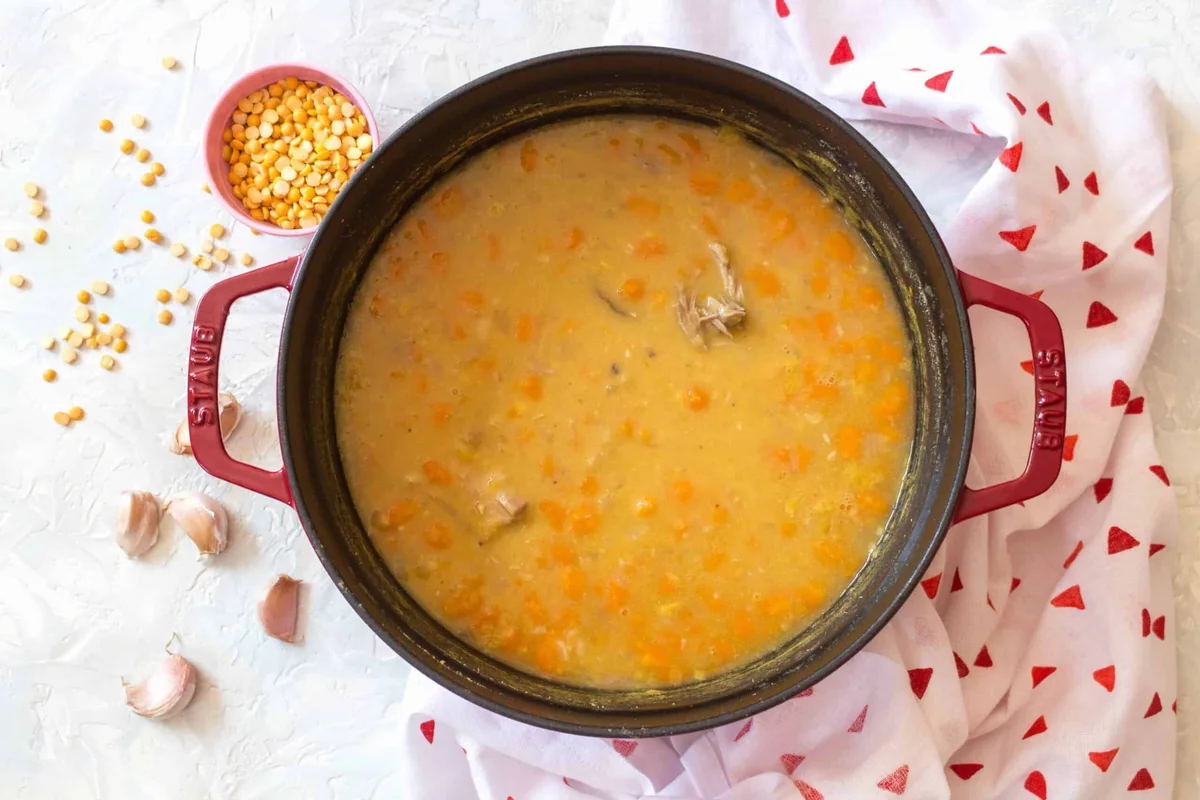
Québécois pea soup is a hearty Canadian soup made with yellow split peas, vegetables and ham hock. A long, gentle simmer softens the peas and brings the smoky meat through the broth.
Ingredients
- 454 g (1 lb)unsmoked ham hock, skin and fat removed
- 45 ml (3 tablespoons)butter
- 5carrots, diced
- 1onion, diced
- 5 clovesgarlic, minced
- 400 g (2 cups)dried yellow split peas
- 2bay leaves
- to tastesalt
- to tastepepper
- 1.9 litres (8 cups)water
Instructions
- 1
Trim the hock
Cut away and discard the ham hock skin, then set the hock aside.
- 2
Soften the vegetables
Melt the butter in a large Dutch oven or French oven over medium heat. Add the carrots, onion and garlic, and cook, stirring occasionally, for 10–15 minutes, until softened.
- 3
Add the peas
Stir in the split peas, bay leaves, salt and pepper. Cook for 1 minute, stirring.
- 4
Add water and ham
Pour in 1.9 litres (8 cups) of water, then add the ham hock carefully.
- 5
Simmer the soup
Bring the soup to the boil, then lower the heat, cover and simmer for 2 hours, stirring occasionally. The peas should soften and the soup should thicken.
- 6
Shred and return ham
Remove and discard the bay leaves, then lift out the ham hock and set it aside to cool. Pull the meat from the bone, discarding the bone and any fat, and return the meat to the soup. Heat through before serving.
What is Québécois pea soup?
This is a traditional Québécois-style soup built around dried yellow split peas and ham hock. Pea soup has a long place in French Canadian cooking, where simple pantry ingredients make a filling pot of food.
Here, the vegetables are softened in butter before the peas and ham simmer together. The hock gives the broth savoury depth, while the peas thicken it as they cook.
Nutrition and macros by portion
The nutrition label shows one serving as written: 557 calories, 0g protein, 0g carbs, 0g fat.
| Portion | Adjustment | kcal | Protein | Carbs | Fat |
|---|---|---|---|---|---|
| Lighter | Smaller bowl, extra vegetables | 390 kcal | 0g | 0g | 0g |
| This serving | As written | 557 kcal | 0g | 0g | 0g |
| Hungry | Larger bowl | 836 kcal | 0g | 0g | 0g |
The split peas and carrots provide most of the carbohydrates, while butter contributes fat and ham hock provides protein and some fat. Pair a bowl with a green salad or another vegetable side for a more varied meal.
The role of each ingredient
Yellow split peas: they provide the soup’s substantial body and soften during the long simmer. There is no need to soak them for this method.
Ham hock: removing the skin and fat before cooking keeps the preparation straightforward, while the meat adds flavour as it simmers.
Vegetables: carrots, onion and garlic form the flavour base. Dicing them helps them soften evenly in the butter.
Start with softened vegetables
Butter: melt it over medium heat before adding the diced vegetables. Cook them for the full 10–15 minutes, stirring now and then, until they have softened.
Split peas: stir them with the bay leaves and seasoning for 1 minute before adding water. This brief step distributes the ingredients through the pot.
Keep the simmer gentle
Once the soup reaches a boil, lower the heat and cover the pot. A gentle simmer gives the peas time to soften without needing constant attention.
Stir occasionally, especially as the soup thickens, to keep the peas from settling on the bottom of the pot.
Check the texture
The soup is ready when the split peas are soft and the broth has thickened. If the peas still feel firm, continue simmering until they soften.
The ham needs to cool enough to handle before you pull the meat from the bone. Return the meat to the pot and heat the soup through before serving.
Serve it as a meal
Serve the soup hot, with the shredded ham distributed through the bowls. Bread or toast makes a simple accompaniment for a thick soup.
For a balanced plate, pair a bowl with a green salad or another vegetable side.
Recipe notes & tips
- Use a large, heavy-based pot so the soup has room to simmer.
- Stir occasionally during the simmer, scraping across the bottom of the pot.
- Lower the heat after the soup boils so it simmers gently.
- Let the hock cool before removing the meat from the bone.
- Taste the soup before serving and adjust the salt and pepper if needed.
Variations
- Add herbs: stir in chopped parsley just before serving.
- Use stock: replace some or all of the water with stock for a fuller savoury flavour.
- Add celery: dice it and soften it with the carrots and onion.
- Serve with mustard: offer mustard at the table as a sharp accompaniment to the ham.
- Make it meat-free: omit the ham hock and use vegetable stock, keeping in mind the soup will have a different flavour.
Common mistakes to avoid
- Boiling hard: lower the heat after the initial boil so the peas cook gently.
- Skipping the stirring: stir now and then to stop thickening peas from sticking to the bottom.
- Adding the hock carelessly: lower it into the pot slowly to prevent splashing.
- Removing the meat while hot: let the hock cool enough to handle before pulling off the meat.
- Serving firm peas: simmer until the split peas are soft and the soup has thickened.
How to store
Cool leftovers and refrigerate them in a covered container for up to 3 days. Reheat gently in a saucepan, stirring occasionally; add a little water if the soup has thickened in the fridge.
Frequently asked questions
Do I need to soak the split peas first?
No soaking is included in this method. Add the dried split peas directly to the pot.
How do I know when the soup is ready?
The peas should be soft and the soup thickened. If the peas are still firm, continue simmering until they soften.
Can I make this without a ham hock?
Yes, you can leave it out, though the soup will lose the ham’s savoury flavour. Vegetable stock can be used in place of the water for a meat-free version.
Why remove the meat after cooking?
Taking out the hock lets you pull the cooked meat from the bone and discard the bone and any remaining fat. Return the meat to the soup and heat it through.
Can I freeze the soup?
Yes. Freeze it in airtight portions once cool, then thaw and reheat gently, stirring well.
Cook it from the original
This recipe comes from carmyy.com. Their page has the author’s own photos, notes and tips — the best place to cook it from.
Open the recipe on carmyy.com