
Chinese Sichuan Mapo Tofu
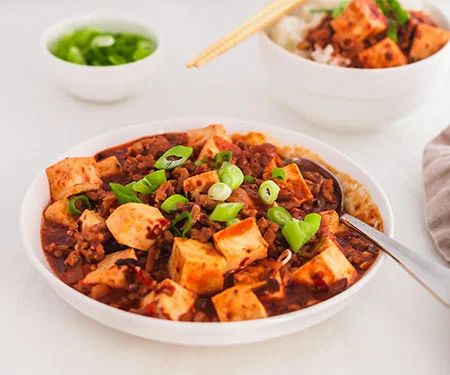
This quick Sichuan-inspired mapo tofu combines soft tofu and minced pork in a savoury, spicy sauce thickened until it clings to every bite. Make it for a flavour-packed dinner that comes together in about 20 minutes, then serve it hot over steamed rice.
Ingredients
- 45 ml (3 tbsp)doubanjiang (red fermented broad bean paste)
- 15 ml (1 tbsp)sugar
- 15 ml (1 tbsp)douchi (salted black beans)
- 8 g (1 tbsp)cornflour
- 360 ml (1½ cups), dividedwater or chicken stock
- 15 ml (1 tbsp)vegetable oil
- 150 g (⅓ lb)lean minced pork
- 1 largewhite onion, diced
- 1 packagemedium-firm tofu, cut into cubes
- 5 ml (1 tsp), optionalchilli oil
- 1 g (¼ tsp), optionalground Sichuan peppercorns
- To tastespring onions, chopped, for garnish
Instructions
- 1
Mix the sauce
In a small bowl, combine the doubanjiang, sugar and douchi. Set aside.
- 2
Make the slurry
In another small bowl, stir the cornflour into 120 ml (½ cup) of the water or chicken stock until dissolved.
- 3
Brown the pork
Heat a large wok over high heat and add 15 ml (1 tbsp) vegetable oil. Add the minced pork, breaking it into small pieces with a spatula, and fry for about 2 minutes. Add the diced onion and cook with the pork for another 3–4 minutes, until fragrant.
- 4
Add the tofu
Add the cubed tofu to the pork mixture and stir gently to combine.
- 5
Coat the ingredients
Pour in the remaining 240 ml (1 cup) water or chicken stock and add the doubanjiang mixture. Stir to coat the pork and tofu.
- 6
Thicken the sauce
Bring the mixture to the boil, then stir in the cornflour slurry. Cook until the sauce thickens and coats the pork, tofu and onion.
- 7
Season and serve
Stir in the chilli oil and ground Sichuan peppercorns, if using. Once the mapo tofu reaches a simmer, take it off the heat and garnish with chopped spring onions. Serve hot over steamed rice.
What is mapo tofu?
Mapo tofu is a Sichuan dish known for tofu in a bold, savoury sauce, often made with minced meat and fermented bean paste. Its characteristic flavour comes from the combination of chilli heat and the distinctive tingle of Sichuan pepper.
This home-style version uses pork, onion and a simple cornflour slurry. The slurry gives the sauce enough body to coat the tofu without a long simmer.
Nutrition and macros by portion
The nutrition label shows one serving as written: 270 calories, 17g protein, 17g carbs, 16g fat.
| Portion | Adjustment | kcal | Protein | Carbs | Fat |
|---|---|---|---|---|---|
| Lighter | Use less oil | 189 kcal | 12g | 12g | 11g |
| This serving | As written | 270 kcal | 17g | 17g | 16g |
| Hungry | Serve with extra rice | 405 kcal | 26g | 26g | 24g |
The tofu and pork provide most of the protein, while the tofu and cooking oil contribute much of the fat. Carbohydrate comes mainly from the onion, sugar and bean pastes; the estimate excludes the rice suggested for serving. Balance the plate with steamed rice and a portion of lightly cooked greens.
Build flavour with the paste
Fermented pastes: Doubanjiang brings salty, savoury depth and chilli warmth. Douchi adds another layer of concentrated fermented flavour, so mix both with the sugar before they go into the wok.
Optional heat: Chilli oil and ground Sichuan peppercorns are added near the end. Leave them out or adjust them to suit your preference.
Keep the tofu intact
Gentle handling: Medium-firm tofu is soft enough to take on the sauce but sturdy enough for this quick stir. Fold it through carefully rather than tossing it vigorously.
Even cubes: Cut the tofu into similar-sized pieces so they warm through at roughly the same rate. Once it is in the wok, avoid unnecessary stirring.
Get the sauce consistency right
Cornflour slurry: Stir the cornflour into cold water or stock until smooth before adding it. This helps it disperse evenly rather than forming lumps.
Thickening cue: Add the slurry once the wok mixture has boiled, then stir as the sauce thickens. Stop when it clings to the pork, tofu and onion.
Use the short cooking time well
Pork first: Break the mince into small pieces as it fries so it cooks evenly and mixes through the sauce. Give the onion its stated 3–4 minutes with the pork to soften and become fragrant.
Finish promptly: The tofu only needs to be heated through in the simmering sauce. Take the wok off the heat once it is simmering, as prolonged cooking can make the tofu more fragile.
Serve it with rice
Steamed rice is the suggested accompaniment and helps balance the assertive sauce. Spoon the tofu and pork over the rice while both are hot.
For a fuller meal, serve with a simply cooked green vegetable on the side. Keep the side lightly seasoned so it does not compete with the fermented sauce.
Recipe notes & tips
- Measure out the sauce ingredients and mix the cornflour slurry before heating the wok.
- Break the pork into small pieces so it distributes evenly through the finished dish.
- Use a wide wok or pan to give the pork and onion room to fry.
- Stir the tofu gently to keep the cubes from breaking apart.
- Add the chilli oil and Sichuan pepper at the end so you can control their intensity.
- Serve as soon as the sauce has thickened and the tofu is hot.
Variations
- More heat: Add extra chilli oil a little at a time.
- Milder sauce: Leave out the chilli oil and Sichuan peppercorns.
- Chicken stock: Use chicken stock instead of water for the sauce liquid.
- No pork: Omit the pork for a tofu-focused version.
- Extra greens: Serve with steamed greens alongside the tofu.
Common mistakes to avoid
- Lumpy slurry: Dissolve the cornflour completely in the measured cold liquid before adding it.
- Broken tofu: Stir gently after adding the cubes rather than tossing the mixture.
- Uneven pork: Break up the mince with a spatula as it fries.
- Thin sauce: Bring the wok mixture to the boil before adding the slurry.
- Overcooking tofu: Remove the pan from the heat once the dish reaches a simmer.
- Over-seasoning: Remember that doubanjiang and douchi are salty; taste before adding any extra seasoning.
How to store
Cool leftovers promptly and refrigerate in a covered container for up to 3 days. Reheat gently in a saucepan until piping hot, adding a splash of water or stock if the sauce has thickened too much.
Frequently asked questions
Can I make mapo tofu without chilli oil?
Yes. The chilli oil is optional, so leave it out for a milder result. You can also omit the Sichuan peppercorns.
What is doubanjiang?
Doubanjiang is a fermented broad bean paste used in Sichuan cooking. It gives the sauce a salty, savoury flavour and chilli warmth.
Can I use soft tofu?
You can, but it is more delicate and may break up as you stir. Medium-firm tofu is easier to handle in this method.
How do I stop the sauce going lumpy?
Mix the cornflour thoroughly with the 120 ml (½ cup) cold water or stock before it goes into the wok. Stir it in after the mixture boils.
What should I serve with mapo tofu?
Serve it hot over steamed rice, as suggested in the recipe. A simply cooked green vegetable also makes a good side.
Cook it from the original
This recipe comes from curiouscuisiniere.com. Their page has the author’s own photos, notes and tips — the best place to cook it from.
Open the recipe on curiouscuisiniere.com