
Vietnamese fried spring rolls - cha gio
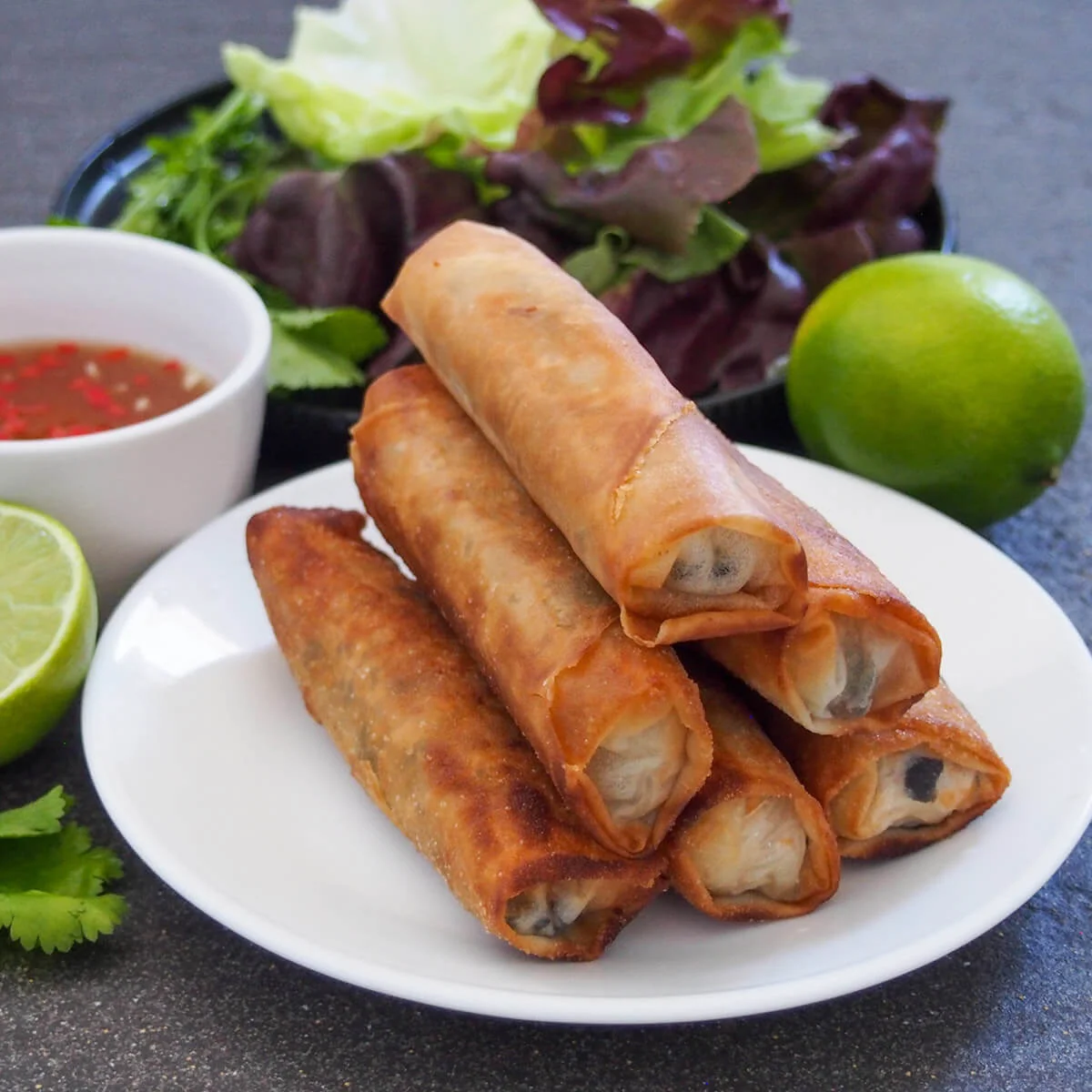
Cha gio are Vietnamese fried spring rolls with a crisp wrapper and a savoury pork, mushroom and vermicelli filling. They make a flavourful appetiser, especially when wrapped in lettuce and herbs and dipped in nuoc cham.
Ingredients
- 1/4 cup (around 14 g; 1/2 oz)dried wood ear mushroom
- 28 g (1 oz)dried vermicelli noodles
- 2shallots
- 1carrot
- 227 g (1/2 lb)ground pork
- 1/2 tspsalt
- 1/2 tsppepper
- 1/2 tspsugar
- 12spring roll wrappers
- 120 ml (1/2 cup), or more as neededsoybean oil, or canola oil
- 1/2small red chilli, or more or less to taste
- 1/2 clovegarlic
- 2 tbspwater
- 1 1/2 tbsplime juice
- 1 tbspfish sauce
- 1/2 tbspsugar
- 1/8 tspsalt
- To servebutter or red lettuce leaves, and herbs such as coriander, Vietnamese mint and/or perilla
Instructions
- 1
Soak mushrooms
Put the wood ear mushrooms and vermicelli noodles in separate small bowls and cover with hot water. Leave until the mushrooms have expanded and the noodles have turned white, about 5–10 minutes. Drain them, finely chop the mushrooms and cut the noodles into short lengths.
- 2
Prepare vegetables
While the mushrooms and noodles soak, finely chop the shallots. Peel and grate the carrot.
- 3
Mix the filling
Combine the pork, mushrooms, noodles, shallots, carrot, 1/2 tsp salt, 1/2 tsp pepper and 1/2 tsp sugar. Mix thoroughly, using your hands if needed; the mixture does not have to bind completely. Divide it into 12 roughly equal portions.
- 4
Fill the wrappers
Place a wrapper on a clean surface with one corner pointing towards you, and set a small bowl of water nearby. Fold the nearest corner in towards the middle, then place a portion of filling in a small crosswise log near the folded edge.
- 5
Roll them up
Fold both sides in so they cover the ends of the filling log and sit parallel to each other. Fold the first corner over the filling, keeping the sides tucked in, then roll towards the far corner, leaving the final triangle unfolded. Try not to trap much air inside.
- 6
Seal each roll
Dampen a fingertip and moisten the edges of the remaining triangle. Continue rolling so the wrapper end lies flat against the roll. Repeat with the remaining wrappers and filling.
- 7
Fry until golden
Heat the oil in a frying pan over a medium-high heat. Fry the rolls for about 2–3 minutes on each side, until golden all over. Work in batches as needed, remove the cooked rolls and drain them on kitchen paper; add more oil if needed for the remaining batches.
- 8
Make nuoc cham
Finely chop the chilli and garlic. Combine them with the water, lime juice, fish sauce, 1/2 tbsp sugar and 1/8 tsp salt, stirring until the sugar dissolves. Serve as a dip; traditionally, wrap each roll in a lettuce leaf with a couple of herb stems before dipping.
What are cha gio?
Cha gio are Vietnamese fried spring rolls, also known in some places as nem ran. They are wrapped parcels with a savoury filling and a crisp fried exterior, often served with fresh herbs, lettuce and a dipping sauce.
This version pairs pork with wood ear mushrooms, vermicelli and carrot. The mushroom and noodles give the filling a varied texture, while nuoc cham brings a bright, salty-sour contrast.
Nutrition and macros by portion
The nutrition label shows one serving as written: 203 calories, 5g protein, 15g carbs, 14g fat.
| Portion | Adjustment | kcal | Protein | Carbs | Fat |
|---|---|---|---|---|---|
| Lighter | More lettuce, less oil | 142 kcal | 4g | 11g | 10g |
| This serving | As written | 203 kcal | 5g | 15g | 14g |
| Hungry | Add another spring roll | 305 kcal | 8g | 23g | 21g |
The vermicelli and wrapper provide most of the carbohydrates, while the pork contributes protein and the frying oil supplies much of the fat. Serve a roll with plenty of lettuce and herbs, and add a vegetable side to round out the plate.
The filling ingredients
Wood ear mushroom: once rehydrated and finely chopped, it adds a springy bite without overwhelming the pork. Drain it well so excess soaking water does not make the filling wet.
Vermicelli: mung bean noodles are traditional, though rice vermicelli can also be used. Cut the softened noodles into short lengths so they are easier to mix and portion.
Pork and vegetables: ground pork provides the main savoury element, while carrot and shallots add sweetness and flavour. Grating the carrot and chopping the shallots finely helps them distribute through the filling.
Rolling without leaks
Set out the wrappers, filling portions and a small bowl of water before you start. Keeping the filling in a compact crosswise log makes it easier to fold the wrapper neatly around it.
Tuck both sides in before rolling, and keep them tucked as you go. Avoid leaving a large air pocket, and moisten only the final wrapper edge enough to help it stick flat.
Getting a crisp finish
Fry over medium-high heat, turning the rolls so they colour on all sides. The recipe gives a guide of 2–3 minutes per side; use the golden colour as your visual cue.
Give the pan enough room to turn the rolls comfortably. Smaller batches can be easier to manage, while larger batches may take less time overall if your pan allows them to move freely.
The dipping sauce
Nuoc cham combines lime juice and fish sauce with water, chilli, garlic, sugar and salt. Stir until the sugar has dissolved, then taste and adjust the chilli to suit your preference.
The sauce is meant for dipping, not coating the rolls in advance. Serve it alongside so the wrappers stay crisp until each bite.
How to serve them
Offer the rolls with lettuce leaves and herbs such as coriander, Vietnamese mint or perilla. Wrapping a roll in a leaf with a few herb stems adds a fresh, aromatic contrast to the fried wrapper.
Serve while the rolls are freshly fried, with the nuoc cham in a small bowl for dipping. They work well as an appetiser or as part of a meal with other Vietnamese-style dishes.
Recipe notes & tips
- Drain the soaked mushrooms and noodles well before mixing the filling.
- Divide the filling into 12 portions before you begin wrapping for more even rolls.
- Keep the filling compact and the wrapper sides tucked in as you roll.
- Fry in batches that leave enough space to turn each roll.
- Drain cooked rolls on kitchen paper before serving.
- Stir the nuoc cham until the sugar is fully dissolved.
Variations
- Use rice vermicelli: swap it for mung bean vermicelli if that is what you have.
- Adjust the chilli: use less for a milder dipping sauce or add more for extra heat.
- Change the herbs: serve with Vietnamese mint, perilla, coriander or a combination.
- Choose canola oil: use it in place of soybean oil for frying.
- Add lettuce: wrap each fried roll in a leaf with herbs just before dipping.
Common mistakes to avoid
- Wet filling: drain the mushrooms and noodles thoroughly so the wrapper is less likely to soften.
- Loose folds: tuck both sides in firmly before rolling to help keep the filling enclosed.
- Air pockets: roll snugly without trapping much air inside the wrapper.
- Overcrowded pan: leave room to turn the rolls, or fry them in smaller batches.
- Uneven browning: turn the rolls as they cook so each side becomes golden.
- Soggy rolls: drain them on kitchen paper and serve soon after frying.
How to store
For the best crisp texture, serve the rolls soon after frying. Refrigerate cooked leftovers in a covered container for up to 3 days; reheat in an oven until hot and crisp, rather than in a microwave. Store the dipping sauce separately in the fridge.
Frequently asked questions
Can I use rice vermicelli instead of mung bean noodles?
Yes. The recipe allows rice vermicelli as an alternative to the traditional mung bean noodles.
How do I know when the rolls are cooked?
Fry them for about 2–3 minutes on each side, until golden all over. Make sure the filling is cooked through before serving.
Can I make the rolls in batches?
Yes. Fry as many as fit comfortably in the pan, leaving space to turn them, then repeat with the remaining rolls. Top up the oil as needed.
What should I serve with cha gio?
Serve them with lettuce leaves, fresh herbs and nuoc cham. You can wrap a roll in lettuce with a few herb stems before dipping.
Can I make the dipping sauce less spicy?
Yes. Use less than half a small chilli, or leave it out if you prefer a mild sauce.
Cook it from the original
This recipe comes from carolinescooking.com. Their page has the author’s own photos, notes and tips — the best place to cook it from.
Open the recipe on carolinescooking.com