
Pickled Peppers
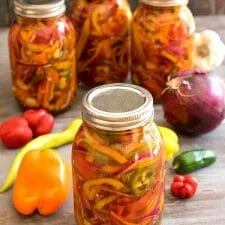
These Southern-style pickled peppers combine fresh peppers, red onion and garlic with a tangy, warmly spiced vinegar brine. Make a batch for a sharp, crunchy addition to sandwiches, salads and winter meals.
Ingredients
- 2.8 L (12 cups)fresh garden peppers, cored, seeded and cut into strips or slices
- 1 largered onion, cut into thin half-moon slices
- 8 large clovesgarlic, lightly smashed but left whole
- 600 ml (2 1/2 cups)white vinegar
- 480 ml (2 cups)cider vinegar
- 960 ml (4 cups)water
- 100 g (1/2 cup)granulated sugar
- 75 ml (5 tablespoons)kosher salt
- 60 ml (4 tablespoons)whole black peppercorns
- 15 ml (1 tablespoon)coriander seeds
- 5 ml (1 teaspoon)star anise seeds or 1 whole star anise pod
- 10 ml (2 teaspoons)juniper berries
- 5 ml (1 teaspoon)celery seeds
- 3bay leaves
Instructions
- 1
Pack the jars
Slice the peppers and onion, then mix them with the garlic in a large bowl. Press the mixture into four sterilised quart-sized Mason jars.
- 2
Boil the brine
Put all the brine ingredients in a large saucepan and bring to the boil. Boil for 5 minutes.
- 3
Add the brine
Pour the hot liquid into the jars, leaving 1.3 cm (1/2 inch) of space at the top of each.
- 4
Seal or chill
Close each jar tightly. To seal, boil the jars in a hot-water bath for 10 minutes; alternatively, refrigerate them and eat the peppers within 1 month.
- 5
Check canning guidance
For more specific canning instructions, consult FreshPreserving.com.
What are pickled peppers?
Pickled peppers are vegetables preserved in an acidic, seasoned brine, a familiar way of keeping garden produce for later use. This Southern-inspired batch pairs the peppers with onion and garlic, then layers in aromatic seeds and spices.
The two vinegars bring a lively tang, while a little sugar rounds off their sharpness. The result is a versatile pickle to serve alongside rich or savoury dishes.
Nutrition and macros by portion
The nutrition label shows one serving as written: 185 calories, 5g protein, 43g carbs, 2g fat.
| Portion | Adjustment | kcal | Protein | Carbs | Fat |
|---|---|---|---|---|---|
| Lighter | Use less added sugar | 130 kcal | 4g | 30g | 1g |
| This serving | As written | 185 kcal | 5g | 43g | 2g |
| Hungry | Serve a larger portion | 278 kcal | 8g | 65g | 3g |
The peppers and onion provide most of the vegetable carbohydrates, while the added sugar contributes additional carbohydrate; the vinegar and spices add flavour with little energy. The salt is a major source of sodium, and this recipe contains no substantial protein source. Serve a modest amount alongside a protein-rich main and other vegetables to make a more balanced plate.
Choosing the peppers
Pepper mix: Use fresh garden peppers and choose the heat level to suit your preference. Cutting them into strips or slices helps them fit into the jars and makes them easy to serve.
Preparing the jars
Clean jars: The method calls for four sterilised quart-sized jars. Pack the pepper, onion and garlic mixture firmly, but leave enough room for the brine to flow around the pieces.
Headspace: Stop pouring when the liquid is about 1.3 cm (1/2 inch) from the rim. Keeping this gap matches the recipe's filling instruction.
Building the brine
Vinegar blend: White vinegar and cider vinegar form the acidic base, with water to dilute it and sugar to soften the edge. Bring all the brine ingredients to a boil and keep it boiling for 5 minutes.
Whole spices: Peppercorns, coriander, star anise, juniper, celery seeds and bay leaves season the liquid. Leaving them whole gives the brine a varied, aromatic flavour.
Sealing or refrigerating
Hot-water bath: The recipe specifies boiling the covered jars for 10 minutes to seal them. For canning, follow current, detailed guidance for your equipment and process; the recipe directs readers to FreshPreserving.com for specifics.
Refrigerator option: If you are not sealing the jars, refrigerate them and use the peppers within 1 month, as directed.
Texture and serving
Cut size: Thin slices and strips are convenient for sandwiches and salads, while slightly wider pieces make a chunkier pickle. Keep the pieces fairly even so they are easy to pack and serve.
Serving ideas: Add the peppers to sandwiches, burgers, grain bowls or a cheese board. Their vinegar tang also works well beside roasted vegetables or other rich dishes.
Recipe notes & tips
- Cut the peppers and onion into pieces that fit comfortably into the jars.
- Lightly smash the garlic so it releases flavour while remaining whole.
- Measure the brine ingredients before heating to make the 5-minute boil straightforward.
- Pour slowly and check the headspace in each jar as you fill it.
- Choose the refrigerated option if you do not plan to follow a tested canning process.
Variations
- Change the heat: Mix mild and hot garden peppers for a range of spice.
- Use different colours: Combine red, yellow and green peppers for a varied-looking jar.
- Adjust the onion: Use a little less red onion for a more pepper-forward pickle.
- Lean into the spices: Add the whole star anise pod rather than the measured seeds.
- Serve it chopped: Dice the drained peppers and onion to use as a sharp sandwich topping.
Common mistakes to avoid
- Overfilling the jars: Leave 1.3 cm (1/2 inch) of space at the top as the method specifies.
- Skipping the brine boil: Bring the complete brine mixture to the boil and maintain it for 5 minutes.
- Using unsterilised jars: Sterilise the four jars before packing the vegetables.
- Relying on an improvised canning process: Follow detailed, current canning instructions for safe sealing.
- Leaving refrigerated jars too long: Keep them chilled and use the peppers within 1 month.
How to store
If using the refrigerator option, refrigerate the jars and eat the peppers within 1 month. For sealed jars, use a tested canning process and follow its storage guidance; this recipe does not specify a shelf-storage period.
Frequently asked questions
Can I use peppers of different heat levels?
Yes. The recipe calls for fresh garden peppers without specifying a variety, so you can choose a mix that suits your taste.
Do I have to use both types of vinegar?
The recipe uses both white vinegar and cider vinegar. For its intended flavour and acidity, keep the listed vinegar amounts rather than substituting one without a tested canning recipe.
How much space should I leave at the top?
Fill each jar to within 1.3 cm (1/2 inch) of the top, as directed.
Can I skip the hot-water bath?
The recipe offers refrigeration as an alternative to the 10-minute hot-water bath. If refrigerating, keep the jars chilled and eat the peppers within 1 month.
How long do the peppers take to make?
The stated total time is 60 minutes. The method includes a 5-minute brine boil and, if sealing the jars, a 10-minute hot-water bath.
Cook it from the original
This recipe comes from afamilyfeast.com. Their page has the author’s own photos, notes and tips — the best place to cook it from.
Open the recipe on afamilyfeast.com