
Catalan coca (Spanish pizza)
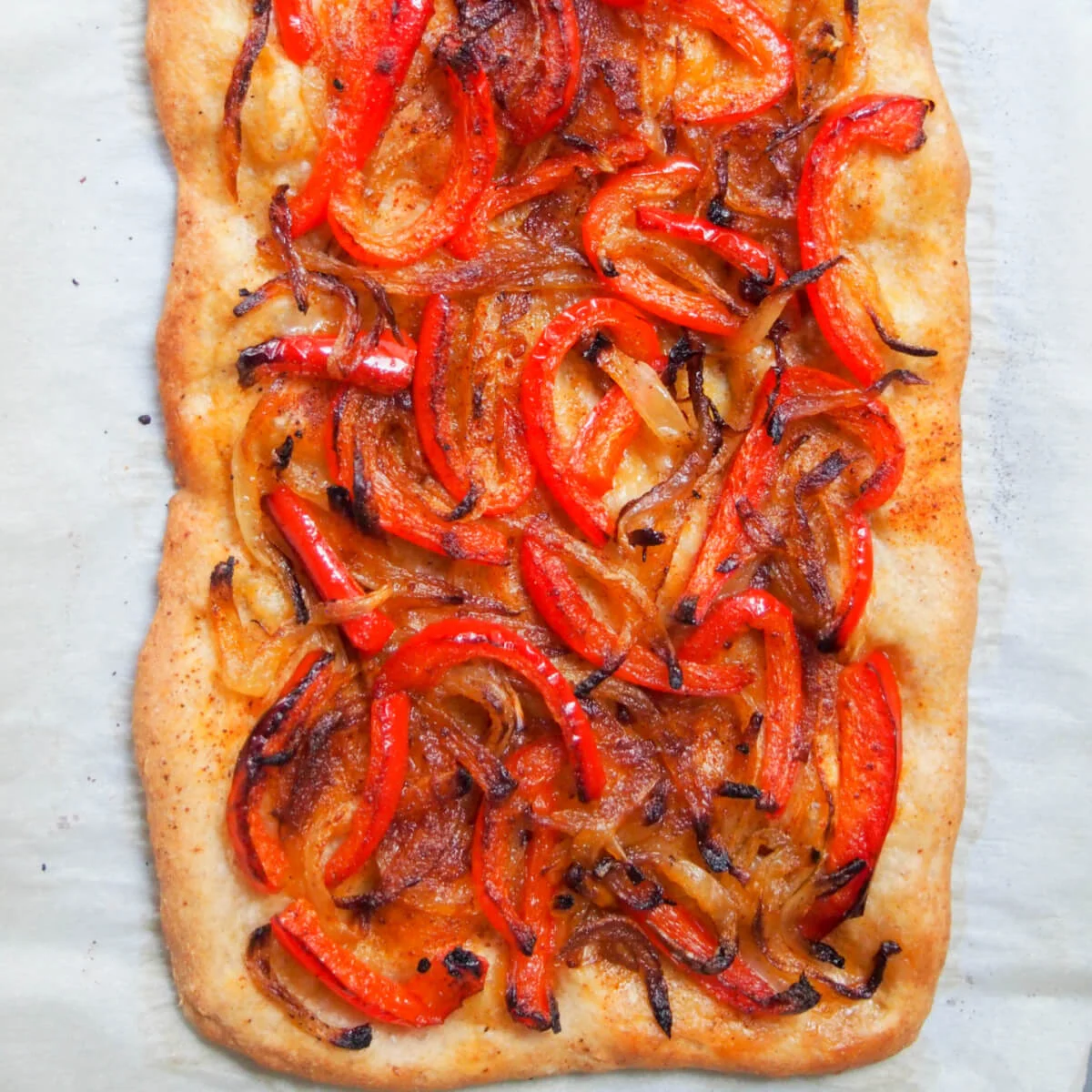
Catalan coca is a thin, savoury bake topped here with soft onions, red pepper and paprika rather than tomato or cheese. It takes a little time for the dough to rise, but the simple topping and crisp base make it a satisfying meal to share.
Ingredients
- 125 g (1 cup)plain flour
- 125 g (1 cup)strong white bread flour, or more plain flour
- 5 ml (1 tsp)fast-action dried yeast
- 2.5 ml (1/2 tsp)salt
- 2.5 ml (1/2 tsp)sugar
- 15 ml (1 tbsp)olive oil
- 160 ml (2/3 cup), warm, plus a little more if neededwater
- 1onion
- 1, or 2 if smallred pepper
- 60 ml (4 tbsp)olive oil
- 5 ml (1 tsp)paprika
Instructions
- 1
Mix the dough
Put both flours, the yeast, salt and sugar in a large bowl and mix. Make a small well in the centre, add the 15 ml olive oil and warm water, then mix carefully to form a slightly sticky ball of dough.
- 2
Knead and rise
Turn the dough out onto a floured surface and knead for about 5 minutes: stretch it away from you, fold it back over itself, turn it 90 degrees and repeat. Add only a little flour if needed. Once it no longer feels sticky, lightly oil the cleaned bowl, shape the dough into a ball and return it to the bowl. Cover with cling film and leave in a warm place at room temperature for about 1 hour, or longer, until doubled in size.
- 3
Cook the topping
Thinly slice the onion and red pepper. Warm 60 ml olive oil in a medium frying pan over medium heat and cook the onion, stirring regularly, until it just starts to soften. Lower the heat if it begins to brown. Add the pepper and continue cooking until both vegetables are very soft and the onion is slightly darker and beginning to caramelise, without charring. Set aside.
- 4
Heat the oven
When ready to assemble the coca, preheat the oven to 220°C (425°F). Put baking sheets in the oven to heat up.
- 5
Divide the dough
Turn the risen dough out of the bowl and prod it with your fingers to knock it back. Divide it into 2 pieces, or make one large coca or several smaller ones. Keep the pieces you are not working with covered to one side.
- 6
Shape the bases
Stretch one piece of dough into a circle or rectangle to suit your baking sheet, rolling it as thin as you can. Transfer it to a piece of baking parchment and repeat with the remaining dough.
- 7
Top and bake
Spread the onion and pepper mixture over the bases and sprinkle with paprika. Bake for about 10–12 minutes, until the bases are lightly browned. Trim away any burnt onion pieces before serving.
What is Catalan coca?
Coca is a traditional Catalan flatbread, often topped with savoury ingredients and baked until the base is crisp. This version is sometimes described as Spanish pizza, though it skips the familiar tomato and cheese.
Soft onion and red pepper provide sweetness, while paprika adds warmth. The thin, lightly browned dough gives the topping room to shine.
Nutrition and macros by portion
The nutrition label shows one serving as written: 838 calories, 18g protein, 107g carbs, 38g fat.
| Portion | Adjustment | kcal | Protein | Carbs | Fat |
|---|---|---|---|---|---|
| Lighter | Use less topping oil | 587 kcal | 13g | 75g | 27g |
| This serving | As written | 838 kcal | 18g | 107g | 38g |
| Hungry | Serve a larger portion | 1257 kcal | 27g | 161g | 57g |
The flour supplies most of the carbohydrates, while the olive oil carries much of the fat and energy. The flours contribute some protein, with smaller amounts from the vegetables. Pair a portion with a generous salad or other vegetables for a more balanced plate.
Choosing the flour
Plain flour: it forms part of the dough and keeps the base tender.
Bread flour: its higher protein content helps the dough develop structure, though the recipe allows more plain flour as a substitute.
Kneading and rising
Kneading: stretch, fold and turn the dough for about 5 minutes. Add flour sparingly; the dough should start slightly sticky and become easier to handle as you work it.
Rising: cover the dough and leave it somewhere warm at room temperature for about an hour, or until it has doubled. The time can vary, so use the change in size as the cue.
Getting the topping soft
Onions first: cook them over medium heat, stirring regularly, until they begin to soften. Reduce the heat if they start to brown before the peppers go in.
Peppers next: continue cooking until both vegetables are very soft and the onion has darkened slightly and started to caramelise. Avoid charring, which can make the topping taste bitter.
Shaping a thin base
Stretch the dough into a circle or rectangle that fits your baking sheet, then roll it as thin as you can. Keep the other portion covered while shaping the first one so it does not dry out.
Baking parchment makes it easier to move the shaped dough onto the hot tray. The preheated sheet helps the base begin cooking as soon as it goes into the oven.
Checking when it is done
Bake at 220°C for about 10–12 minutes. Look for a lightly browned base rather than relying only on the clock, as thickness and oven performance can affect the timing.
The onion and pepper should already be soft before baking; the short oven time is mainly for cooking the thin base and warming the topping.
Serving the coca
Serve the coca warm, cut into slices or pieces. A crisp green salad or simply dressed vegetables make a fresh contrast to the soft, oil-cooked topping.
For a shared meal, cut each coca into smaller pieces. Keep the topping spread evenly so each portion gets onion, pepper and paprika.
Recipe notes & tips
- Use warm rather than hot water when mixing the dough.
- Add extra flour gradually during kneading so the dough does not become dry.
- Slice the onion and pepper thinly so they soften evenly in the pan.
- Lower the heat if the onion starts browning before it becomes soft.
- Keep unworked dough covered while shaping the bases.
- Watch for a lightly browned base after 10 minutes of baking.
Variations
- Use all plain flour: replace the bread flour with the same amount of plain flour, as the recipe allows.
- Make one large coca: shape all the dough into a single base and bake until lightly browned.
- Make smaller cocas: divide the dough into more pieces and shape each one thinly.
- Change the shape: stretch the dough into a circle or rectangle to suit your baking sheet.
- Adjust the peppers: use two small red peppers instead of one larger one.
Common mistakes to avoid
- Adding too much flour: the dough can become dry, so add only a little when it is needed.
- Browning the onions too soon: reduce the heat and cook them gently until soft.
- Charring the topping: take the pan off the heat when the vegetables are soft and the onions have only begun to caramelise.
- Leaving dough uncovered: keep pieces you are not shaping covered so they do not dry out.
- Skipping the hot trays: preheat the baking sheets in the oven as directed.
- Overbaking the base: begin checking at about 10 minutes and take it out when lightly browned.
How to store
Store cooled leftovers in a covered container in the fridge and eat within 3 days. Reheat in the oven until warmed through so the base can crisp again.
Frequently asked questions
Can I use only plain flour?
Yes. The recipe says that the bread flour can be replaced with additional plain flour.
How do I know when the dough has risen enough?
It should have doubled in size. This may take about an hour or a little longer, depending on the room.
Can I make one large coca instead?
Yes. The dough can be shaped as one large pizza-style base rather than divided into two.
Can I prepare the topping ahead?
Yes. Cook the onion and pepper until very soft, then set them aside as directed. Add them to the bases when you are ready to bake.
Why preheat the baking sheets?
The method calls for hot baking sheets before the shaped dough is transferred to the oven. Use baking parchment to move the bases onto them.
What should the base look like when it is ready?
After about 10–12 minutes at 220°C, it should be lightly browned. Trim off any burnt onion pieces before serving.
Cook it from the original
This recipe comes from carolinescooking.com. Their page has the author’s own photos, notes and tips — the best place to cook it from.
Open the recipe on carolinescooking.com