
Favorite Vinaigrette
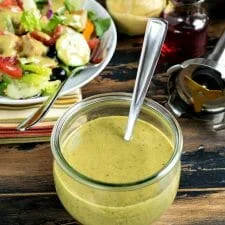
This quick American-style vinaigrette combines red wine vinegar, Dijon mustard and olive oil into a tangy, herb-flecked dressing. Make it when you want a versatile dressing that comes together in minutes and clings well to salad leaves.
Ingredients
- 15 ml (1 tablespoon)Dijon mustard
- 60 ml (4 tablespoons)red wine vinegar
- 4 g (1 teaspoon)granulated sugar
- 2.5 ml (1/2 teaspoon)salt
- 2.5 ml (1/2 teaspoon)freshly ground black pepper
- To taste (about 15–30 ml, or 1–2 tablespoons, fresh parsley was used)minced parsley and/or snipped fresh chives
- 120 ml (1/2 cup)extra virgin olive oil
Instructions
- 1
Combine seasonings
Put the mustard, vinegar, sugar, salt, pepper and herbs to taste in a tall cup, ideally the cup supplied with an immersion blender. Give them a light mix with a fork.
- 2
Blend the dressing
Pour in the olive oil and blend with an immersion blender until the dressing is fully combined and thickened.
- 3
Adjust seasoning
Taste the dressing and adjust the seasonings to your liking.
- 4
Cover until needed
Cover the dressing until you are ready to use it.
- 5
Whisk by hand
If you do not have an immersion blender, whisk all the ingredients by hand until thickened.
What is vinaigrette?
Vinaigrette is a dressing built around vinegar and oil, often sharpened with mustard and seasoning. This American-style version uses red wine vinegar for tang, Dijon to help the mixture come together, and fresh herbs for a green, savoury note.
Blending turns the ingredients into a thicker dressing that coats leaves more evenly than oil and vinegar simply stirred together.
Nutrition and macros by portion
The nutrition label shows one serving as written: 990 calories, 1g protein, 7g carbs, 109g fat.
| Portion | Adjustment | kcal | Protein | Carbs | Fat |
|---|---|---|---|---|---|
| Lighter | Use less olive oil | 693 kcal | 1g | 5g | 76g |
| This serving | As written | 990 kcal | 1g | 7g | 109g |
| Hungry | Serve over a larger salad | 1485 kcal | 2g | 11g | 164g |
Most of the calories and fat in this batch come from the olive oil; the small amount of sugar contributes most of its carbohydrates, while the mustard and herbs add only a little protein. Serve a modest amount over a generous bowl of vegetables, and add a protein-rich food such as beans or eggs to round out the plate.
Why Dijon matters
Mustard: Dijon contributes a gentle heat and helps the oil and vinegar combine into a more cohesive dressing. Make sure it is mixed with the vinegar before adding the oil.
Choosing the herbs
Parsley or chives: Use either herb or a mixture, according to what you have. The recipe gives the herbs to taste and notes that about 15–30 ml (1–2 tablespoons) of parsley was used.
Getting the texture right
Blend: A tall, narrow cup gives the immersion blender room to work through the dressing. Blend until the mixture looks thickened and evenly combined, rather than stopping while oil is still visibly separate.
Whisk: Without a blender, whisk all the ingredients together by hand until thickened, as the recipe directs.
Balancing the flavour
Taste: The vinegar gives this dressing its sharpness, while sugar softens the edge and salt and pepper bring the flavours into focus. Adjust the seasonings after blending, tasting a little with a leaf if you plan to serve it on salad.
When to make it
Timing: The dressing takes about 10 minutes from start to finish. It can be made ahead and kept covered until you are ready to use it.
What to serve it with
Salad leaves: Toss the vinaigrette with crisp greens just before serving so they are dressed without sitting in the liquid for too long. It also works with sliced tomatoes or steamed green vegetables.
Recipe notes & tips
- Use a tall, narrow cup so the immersion blender can blend the dressing evenly.
- Add the herbs to the vinegar and mustard before blending, as directed.
- Blend until the dressing has visibly thickened and the oil is incorporated.
- Taste after blending, then adjust the seasoning to suit your salad.
- If whisking by hand, keep whisking until the mixture thickens.
Variations
- Use chives: Swap in snipped fresh chives for a mild onion-like flavour.
- Mix the herbs: Combine parsley and chives for a more layered green flavour.
- Make it sharper: Add a little more red wine vinegar, then taste again.
- Soften the tang: Add a little more sugar and blend it in.
- Whisk by hand: Skip the immersion blender and whisk all the ingredients until thickened.
Common mistakes to avoid
- Adding oil before mixing the base: Lightly combine the mustard, vinegar, sugar, salt, pepper and herbs first.
- Using a cup that is too wide: Choose a tall, narrow cup so the immersion blender can work through the mixture.
- Stopping before it thickens: Continue blending until the oil and vinegar are fully combined.
- Skipping the taste: Adjust the seasonings after blending, rather than assuming the balance is right.
- Expecting a blender: Whisk all the ingredients by hand until thickened if you do not have an immersion blender.
How to store
Cover the vinaigrette and keep it refrigerated until ready to use. If it separates during storage, blend or whisk it again before serving.
Frequently asked questions
Can I make this without an immersion blender?
Yes. Whisk all the ingredients together by hand until the dressing thickens.
Which herbs should I use?
Use minced parsley, snipped fresh chives, or both. The recipe suggests about 15–30 ml (1–2 tablespoons) of parsley as a guide.
Why is my vinaigrette separating?
Oil and vinegar can separate if they are not fully blended. Blend or whisk the dressing again until it comes together.
Can I make the dressing ahead?
Yes. Cover it until you are ready to use it, and reblend or whisk if it separates.
How should I adjust the flavour?
Taste it after blending and adjust the seasonings to your preference. A little more vinegar makes it sharper, while a little more sugar softens the tang.
Cook it from the original
This recipe comes from afamilyfeast.com. Their page has the author’s own photos, notes and tips — the best place to cook it from.
Open the recipe on afamilyfeast.com