
Creamy Oven-Baked Polenta Recipe
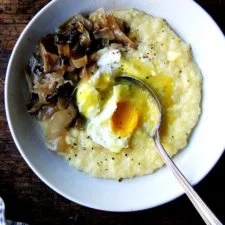
This Italian-style oven-baked polenta is creamy, comforting and mostly hands-off: stir it once during baking, then serve it with a poached egg and your choice of toppings. It makes a versatile base for greens, beans or braised meat.
Ingredients
- For greasingbutter
- 160 g (1 cup)medium-coarse or coarse cornmeal, preferably stone-ground
- 960–1,200 ml (4–5 cups), see noteswater
- 240 ml (1 cup)milk
- 14 g (1 tablespoon)butter or 15 ml (1 tablespoon) olive oil
- 5 g (1 teaspoon), plus more to tastekosher salt
- As neededeggs for poaching
- A splashvinegar
- To serve, optionalshaved Parmesan
- To serve, optionalsea salt, pepper and truffle oil
- To serve alongside, optionalsautéed greens
Instructions
- 1
Mix the polenta
Heat the oven to 180°C (350°F). Grease a large ovenproof frying pan or Dutch oven. Add the cornmeal, water, milk, butter and salt, then whisk or stir with a fork until combined; the mixture will not look emulsified.
- 2
Bake until creamy
Bake uncovered for 40 minutes. Stir, taste and add salt if needed, then bake for another 10–20 minutes or longer, until it reaches the consistency you like. Remove from the oven, stir, and serve straight away or cover to keep warm.
- 3
Poach the eggs
Bring a shallow pan of water to the boil. Crack each egg into a separate ramekin or small bowl, add a splash of vinegar to the water, then reduce the heat until it is barely simmering. Lower each ramekin slowly and tip the egg into the water. Set a timer for 4 minutes. Lift an egg with a slotted spoon to check: the white should be fully set and the yolk soft to the touch. Poaching takes practice; the recipe typically takes 4–5 minutes, depending on how many eggs you cook. Adjust the heat as needed to keep the water barely simmering. Drain the cooked eggs briefly on a plate lined with paper towel.
- 4
Serve the polenta
Spoon the polenta into bowls and add Parmesan shavings if you like. Top each portion with a poached egg, season with sea salt and pepper, and drizzle with truffle oil if desired. Serve with greens on the side, if using.
What is polenta?
Polenta is an Italian dish made by cooking ground cornmeal until tender; it can be served soft and spoonable or allowed to firm up. This version adapts Paula Wolfert’s Fine Cooking recipe and uses the oven to do most of the work.
Oven baking: The cornmeal cooks gently in a mixture of water and milk, with just one stir during baking. A poached egg and optional truffle oil make it a satisfying bowl, while greens add a fresh side.
Nutrition and macros by portion
The nutrition label shows one serving as written: 220 calories, 10g protein, 20g carbs, 10g fat.
| Portion | Adjustment | kcal | Protein | Carbs | Fat |
|---|---|---|---|---|---|
| Lighter | Use water, skip toppings | 154 kcal | 7g | 14g | 7g |
| This serving | As written | 220 kcal | 10g | 20g | 10g |
| Hungry | Serve a larger bowl | 330 kcal | 15g | 30g | 15g |
Cornmeal provides most of the carbohydrates, while butter or oil contributes fat and milk adds a little protein and fat. A poached egg adds protein; serve the bowl with greens for a more balanced plate.
Choose the right cornmeal
Grind: Medium-coarse or coarse cornmeal gives the polenta a pleasantly textured finish. Stone-ground cornmeal is the preferred choice here; finer cornmeal may cook to a smoother texture.
Adjust the liquid
Four cups: Using 960 ml water makes a creamy polenta that thickens more quickly.
Five cups: Using 1,200 ml water gives a looser mixture that takes longer to thicken, but finishes especially creamy. You can use water instead of milk if you prefer.
Look for the texture you like
After the first 40 minutes, stir well and check the consistency before returning the dish to the oven. The additional baking time is 10–20 minutes or longer, so use the texture you want as your guide rather than relying only on the clock.
For serving: The polenta should be soft enough to spoon into bowls. Stir it once more after baking, and cover it to keep warm if you are not serving it immediately.
Poach eggs gently
Bare simmer: Keep the water barely moving rather than at a rolling boil, which can break up the egg white. Add the eggs one at a time from small bowls and allow about 4 minutes before checking.
Doneness: A set white and soft yolk are the cues in this recipe. Cooking time can vary with the number of eggs in the pan, so check each one and adjust the heat to maintain a gentle simmer.
Serve it with
Toppings: Parmesan, sea salt, pepper and a little truffle oil are optional ways to finish each bowl. Sautéed greens make a simple accompaniment.
For a heartier meal: The polenta also works as a base for beans, braised short ribs or chicken. Add those separately at serving time.
Recipe notes & tips
- Grease the ovenproof dish before adding the cornmeal mixture to help prevent sticking.
- Whisk or stir the liquid and cornmeal thoroughly before baking, even though the mixture will not look emulsified.
- Use 960 ml water for quicker thickening or 1,200 ml for a looser, creamier finish.
- Taste after the first 40 minutes and add salt before the final bake if needed.
- Keep the poaching water at a bare simmer and check the egg after 4 minutes.
- Drain poached eggs briefly on paper towel before placing them on the polenta.
Variations
- Use all water: Replace the milk with water for a dairy-free base.
- Choose olive oil: Use 15 ml olive oil instead of the tablespoon of butter in the polenta.
- Add Parmesan: Finish each bowl with shaved Parmesan for a savoury topping.
- Serve with greens: Add sautéed greens alongside for a simple meal.
- Top with beans: Spoon cooked beans over the polenta for a heartier serving.
- Try braised meat: Serve it beneath braised short ribs or chicken.
Common mistakes to avoid
- Expecting an emulsified mixture: The cornmeal and liquid may look separate before baking; stir them together and proceed.
- Using too little baking time: If the polenta has not reached your preferred consistency, return it to the oven for longer.
- Boiling the poaching water hard: Lower the heat until the water is barely simmering to help the eggs hold their shape.
- Cooking every egg for exactly the same time: Check for a set white and soft yolk, as the timing changes with the number of eggs.
- Leaving the eggs to drain too long: Transfer them to the polenta after a brief drain so they do not cool unnecessarily.
How to store
Refrigerate leftover polenta in a covered container for up to 3 days. Reheat gently in a pan or microwave, stirring in a little water or milk to loosen it; poached eggs are best made fresh.
Frequently asked questions
Can I use 4 cups of water instead of 5?
Yes. Four cups (960 ml) makes a creamy polenta that thickens more quickly; five cups (1,200 ml) takes longer and gives a looser, creamier result.
Can I make it without milk?
Yes. The recipe notes that you can use all water instead of adding milk.
How do I know when the polenta is ready?
Bake until it reaches the consistency you like. After the initial 40 minutes, stir and continue baking for 10–20 minutes or longer as needed.
How long should I poach the eggs?
Start checking at 4 minutes. The white should be set and the yolk soft; the total time can vary with the number of eggs and the heat of the water.
What can I serve with oven-baked polenta?
Try sautéed greens, beans, chicken or braised short ribs. A poached egg and optional Parmesan or truffle oil also make good toppings.
Can I keep the polenta warm before serving?
Yes. Stir it after baking, then cover it until you are ready to serve.
Cook it from the original
This recipe comes from alexandracooks.com. Their page has the author’s own photos, notes and tips — the best place to cook it from.
Open the recipe on alexandracooks.com