
Super Asparagus-y Risotto with Farro (or Not)
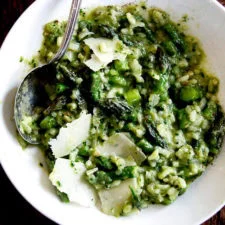
This asparagus-forward risotto gets its vivid flavour from puréed asparagus and the water used to cook it. Make it with farro for a pleasantly chewy finish, or choose Arborio or Carnaroli rice for a more classic risotto texture.
Ingredients
- 907 g (2 lb)asparagus
- 950–1,420 ml (4–6 cups)water, chicken stock or vegetable stock
- 30 ml (2 tablespoons)butter or extra-virgin olive oil
- 1 onion, finely diced to yield about 240 ml (1 cup)onion
- 240 ml (1 cup)semi-pearled farro, Arborio rice or Carnaroli rice
- 120 ml (½ cup)dry white wine or Prosecco
- 1 heaped teaspoonkosher salt
- 120–180 ml (½–¾ cup), or more or less to tastegrated Parmigiano Reggiano
- 120 ml (½ cup)toasted, coarsely crushed hazelnuts, optional
- 60–120 ml (¼–½ cup)finely chopped parsley, optional
Instructions
- 1
Prepare asparagus
Bring a pot of water to the boil and add 1 tablespoon kosher salt. Cut off the asparagus tips and set them aside. Split the stalks into two equal portions: roughly chop one portion, and slice the other into 6–12 mm pieces to keep with the tips. Boil the roughly chopped stalks until soft, about 5 minutes. Lift them out with a slotted spoon, rinse briefly under cold water or in ice water, drain, then purée until smooth in a blender or food processor. Set the purée aside. Boil the tips and sliced stalks in the same water for 2 minutes, then lift them out, rinse briefly under cold water or in ice water, and drain. Keep the cooking water to use as the risotto liquid if you like.
- 2
Soften onion
If using stock or fresh water rather than the asparagus-cooking water, warm it in a medium saucepan over low heat. Put the butter in a large, deep pan over medium heat. Once hot, add the onion, lower the heat, and cook, stirring occasionally, until softened, 5–7 minutes.
- 3
Cook the grains
Add the farro or rice and stir occasionally for 2–3 minutes, until glossy. Pour in the wine or Prosecco, stir, and let the liquid bubble away. Add the salt. Add warm stock or asparagus water about 120 ml (½ cup) at a time, stirring occasionally; when most of each addition has evaporated, add the next.
- 4
Check for doneness
Start tasting after 30 minutes. The grains should be tender but retain a little bite; they may need up to 45 minutes in total. When ready, stir in the asparagus purée and the drained asparagus pieces.
- 5
Finish and serve
Stir everything together, then take the pan off the heat. Add the cheese and, if using, the hazelnuts and parsley; stir well. Taste and adjust the seasoning if needed, then serve immediately.
What is asparagus risotto?
Risotto is an Italian rice dish made by gradually adding liquid to grains as they cook. This version takes inspiration from a recipe adapted from Gourmet and Mark Bittman, and gives asparagus a starring role.
Asparagus stalks are divided between a smooth purée and tender pieces, so its flavour runs through the dish as well as appearing in distinct bites. Farro offers a chewy alternative to the traditional risotto rice.
Nutrition and macros by portion
The nutrition label shows one serving as written: 430 calories, 16g protein, 61g carbs, 14g fat.
| Portion | Adjustment | kcal | Protein | Carbs | Fat |
|---|---|---|---|---|---|
| Lighter | Skip optional hazelnuts | 301 kcal | 11g | 43g | 10g |
| This serving | As written | 430 kcal | 16g | 61g | 14g |
| Hungry | Serve a larger bowl | 645 kcal | 24g | 92g | 21g |
Most of the carbohydrates come from the farro or rice, while the butter or oil and cheese contribute much of the fat; the grains, cheese and asparagus provide protein. For a balanced plate, serve a moderate bowl with a generous side of salad or other vegetables.
Choosing the grain
Farro: Semi-pearled farro keeps a firm, pleasantly chewy texture and takes longer to cook than rice. Begin tasting at 30 minutes and allow up to 45 minutes, as the method suggests.
Rice: Arborio or Carnaroli gives a creamier, more classic risotto. The method is the same, but check the texture as it cooks rather than relying on the farro timing.
Making the asparagus work twice
Puréed stalks: Boiling the roughly chopped stalks until soft makes them easy to blend into a smooth, green base. A quick cold rinse stops them cooking further before puréeing.
Tips and slices: These cook for only 2 minutes, which keeps them more distinct from the purée. Drain them well before they go into the risotto.
Adding liquid gradually
Small additions: Add warm liquid roughly 120 ml at a time, waiting until most of it has evaporated before adding more. Stir occasionally, rather than constantly, as the grains cook.
Asparagus water: The water left from boiling the asparagus can provide the risotto liquid, carrying some of its flavour into the grains. Stock or fresh water also works.
Knowing when it is ready
Taste the grains after 30 minutes, then check again as needed. They should be tender but still have a little bite; the farro may take as long as 45 minutes.
The asparagus purée and pieces go in once the grains are ready. Stir them through, then finish off the heat with cheese and any optional toppings.
Finishing and serving
Parmigiano Reggiano adds savoury richness, while toasted hazelnuts bring a crunchy contrast. Parsley adds a fresh note, but both toppings are optional.
Serve the risotto as soon as it is finished. A simple green salad or plainly cooked vegetables make an easy accompaniment without competing with the asparagus.
Recipe notes & tips
- Keep the cooking liquid warm if you are using stock or fresh water.
- Reserve the asparagus-cooking water if you want to use it as the risotto liquid.
- Rinse the blanched asparagus briefly to halt the cooking and help it keep its shape.
- Drain the asparagus tips and slices thoroughly before stirring them in.
- Taste the grains as they cook, since farro and rice can take different amounts of time.
- Add the cheese off the heat to finish the risotto.
Variations
- Use Arborio: Choose it for a softer, creamier risotto texture.
- Use Carnaroli: Swap in Carnaroli for a classic rice-based version.
- Choose olive oil: Use extra-virgin olive oil instead of butter.
- Add hazelnuts: Scatter in the toasted nuts for a crunchy finish.
- Add parsley: Stir in chopped parsley for a fresh herbal note.
Common mistakes to avoid
- Overcooking the tips: Boil them for just 2 minutes so they stay distinct; rinse and drain them promptly.
- Adding all the liquid at once: Add it about 120 ml at a time and wait until most has evaporated before the next addition.
- Skipping the taste test: Start checking after 30 minutes and continue until the grains are tender with a little bite.
- Adding wet asparagus: Drain the tips and slices well before stirring them into the risotto.
- Cooking the cheese: Take the pan off the heat before stirring in the Parmigiano Reggiano.
How to store
For the best texture, serve the risotto immediately. Refrigerate leftovers in a covered container for up to 3 days, then reheat gently in a saucepan with a splash of water or stock, stirring until hot.
Frequently asked questions
Can I use rice instead of farro?
Yes. The recipe allows Arborio or Carnaroli rice, which gives a creamier result than farro. Check the grains as they cook, since cooking time can vary.
Do I have to use stock?
No. The asparagus-cooking water is suggested as the risotto liquid, and fresh water works too. Stock is another option if you prefer.
Can I make this without wine?
The listed recipe uses dry white wine or Prosecco. You can omit it and continue with the stock, water or asparagus-cooking water, though the flavour will differ.
How do I know when the farro is cooked?
Begin tasting after 30 minutes. It should be tender with a little chew, and may take up to 45 minutes.
Are the hazelnuts and parsley essential?
No, both are optional. The risotto is finished with cheese either way.
Cook it from the original
This recipe comes from alexandracooks.com. Their page has the author’s own photos, notes and tips — the best place to cook it from.
Open the recipe on alexandracooks.com