
Roasted Ratatouille = The Best Ratatouille
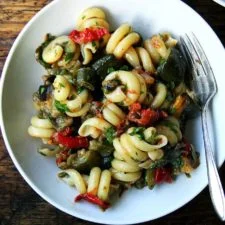
This French-inspired roasted ratatouille brings aubergine, tomatoes, courgette and peppers together in a rich, tender vegetable dish. Slow roasting lets the vegetables soften and their juices thicken, making it lovely on toast or tossed through pasta.
Ingredients
- 340 gaubergine, about 1, cut into 2.5 cm pieces
- 567 gtomatoes, cut into 2.5 cm pieces
- 340 gcourgettes, about 2, cut into 2.5 cm pieces
- 2red peppers (or other peppers), deseeded and roughly chopped
- 1yellow or white onion, chopped
- 1shallot, thinly sliced
- 4 clovesgarlic, minced
- 60–120 mlolive oil
- 30–60 mlwhite balsamic vinegar
- 2 tspfresh thyme, chopped (optional)
- 1 tsp, plus more to tastekosher salt
- to tastefreshly cracked black pepper
- to tastedried pasta
- to tasteroasted ratatouille
- to tastefreshly grated Parmesan
- to tastebasil
Instructions
- 1
Heat the oven
Preheat the oven to 200°C.
- 2
Combine vegetables
Put the tomatoes, aubergine, courgettes, peppers, onion, shallot and garlic in a large roasting tin or casserole. You can add the vegetables as you chop them, lightly salting each layer.
- 3
Make the dressing
In a small bowl or jug, whisk together the olive oil, vinegar, thyme and 1 teaspoon of kosher salt. Pour over the vegetables and toss to coat, then season with pepper. Alternatively, if you have salted each layer generously, pour over just the oil and vinegar; the thyme can be left out.
- 4
Roast until tender
Roast for 30 minutes, then stir well. Roast for another 30–45 minutes, or longer if you have increased the quantities, until the vegetables are very tender and their juices are beginning to thicken. A very full roasting tin may need about 3 hours, with a stir every hour. Taste and add more salt and pepper if needed.
- 5
Serve with pasta
Spoon the ratatouille over toast, or toss it with cooked pasta, grated Parmesan and finely chopped basil. Add enough reserved pasta cooking water to make a loose sauce.
What is ratatouille?
Ratatouille is a French Provençal dish of stewed vegetables, commonly including aubergine, tomatoes, courgettes and peppers. This version takes a more hands-off route, roasting the vegetables together rather than cooking them separately on the hob.
Roasting concentrates the vegetables’ juices and gives the finished mixture a soft, thick texture. The range of vegetables is flexible, so the dish works even when the proportions vary.
Nutrition and macros by portion
The nutrition label shows one serving as written: 1500 calories, 33g protein, 180g carbs, 79g fat.
| Portion | Adjustment | kcal | Protein | Carbs | Fat |
|---|---|---|---|---|---|
| Lighter | Use less olive oil | 1050 kcal | 23g | 126g | 55g |
| This serving | As written | 1500 kcal | 33g | 180g | 79g |
| Hungry | Serve with pasta | 2250 kcal | 50g | 270g | 119g |
The vegetables provide most of the carbohydrates, while olive oil contributes most of the fat; the listed ingredients contain relatively little protein unless you include Parmesan or serve the dish with pasta. For a more balanced plate, add a protein-rich accompaniment and choose a moderate portion of pasta or toast.
Choosing the vegetables
Aubergine and courgette: Cut them into similarly sized pieces so they become tender at roughly the same pace. The recipe can still work if you have more of one than the other.
Tomatoes and peppers: These contribute much of the moisture and sweetness as they roast. Use a balanced mix if you can, but the method is forgiving of different varieties and proportions.
Seasoning the layers
Salt: The recipe seasons the dressing, but you can instead lightly salt each layer as the chopped vegetables go into the tin. If you choose that approach, take care not to add the full dressing quantity of salt again.
Thyme and vinegar: Thyme adds an herbal note, while white balsamic vinegar brings acidity. The thyme is optional, and the vegetables can be roasted with oil and vinegar alone.
Getting the texture right
Stir after the first 30 minutes so the vegetables cook more evenly and are coated in the juices gathering in the tin. Return them to the oven until they are very tender.
Look for juices that have reduced and begun to thicken rather than relying only on the clock. A full roasting tin can take considerably longer, so continue roasting and stir about once an hour if needed.
Making a pasta sauce
Cook the pasta separately and reserve some of its cooking water before draining. Toss the pasta with ratatouille, Parmesan and chopped basil, then add the water gradually until the sauce coats the pasta.
The pasta water is not listed with a fixed quantity because you only need enough to loosen the mixture. Add it a little at a time to avoid making the sauce watery.
What to serve it with
For a simple meal, spoon the ratatouille over toast or use it as a pasta sauce. Parmesan and fresh basil add a savoury finish to the pasta version.
It can also be served as a vegetable side alongside another main. Keep any pasta, toast or cheese portions separate when you want more control over the final plate.
Recipe notes & tips
- Cut the vegetables into similarly sized pieces for more even cooking.
- Use a large roasting tin so the vegetables can be stirred without spilling.
- Add salt to each layer if you prefer to season as you chop.
- Stir well after the first 30 minutes to redistribute the juices.
- If the tin is very full, allow extra roasting time and stir about once an hour.
- Reserve pasta cooking water before draining so you can loosen the sauce at the end.
Variations
- Change the mix: Use different proportions of aubergine, courgette, tomatoes and peppers.
- Skip the thyme: Leave it out and season the vegetables with salt as you layer them.
- Serve on toast: Spoon the roasted vegetables over toast instead of mixing them with pasta.
- Finish with basil: Add finely chopped basil when serving the pasta version.
- Make it cheesier: Add freshly grated Parmesan to the pasta and ratatouille.
Common mistakes to avoid
- Crowding the tin: A full pan needs longer to roast; allow extra time and stir periodically.
- Stopping too soon: The vegetables should be very tender and the juices beginning to thicken; keep roasting if they are still watery.
- Skipping the mid-roast stir: Stir well after the first 30 minutes so the vegetables cook more evenly.
- Over-salting: If you salt each vegetable layer, avoid adding the full amount of salt to the dressing as well.
- Adding pasta water all at once: Stir it in gradually until the sauce reaches the consistency you want.
How to store
Refrigerate leftover ratatouille in a covered container and use within 3–4 days. Reheat gently in a saucepan or microwave until hot throughout; if it has thickened, stir in a little water. Store cooked pasta separately where possible.
Frequently asked questions
Can I leave out the courgettes?
Yes. The recipe is flexible, and you can adjust the vegetable mix to suit what you have. Keep an eye on the texture and roast until everything is very tender.
Can I omit the thyme?
Yes, thyme is optional. You can season the layers of vegetables with salt as you add them, then pour over the oil and vinegar.
How long should I roast a full tin?
A heavily loaded tin may take about 3 hours. Stir about once every hour and continue until the vegetables are tender and the juices have reduced and thickened.
Can I use regular balsamic vinegar?
The recipe calls for white balsamic vinegar. Regular balsamic can be used as a substitute, though it will give the vegetables a darker colour and a different flavour.
How do I serve ratatouille with pasta?
Toss it with cooked pasta, grated Parmesan and chopped basil. Add reserved pasta cooking water a little at a time to make a sauce.
Cook it from the original
This recipe comes from alexandracooks.com. Their page has the author’s own photos, notes and tips — the best place to cook it from.
Open the recipe on alexandracooks.com