
Basic Risotto
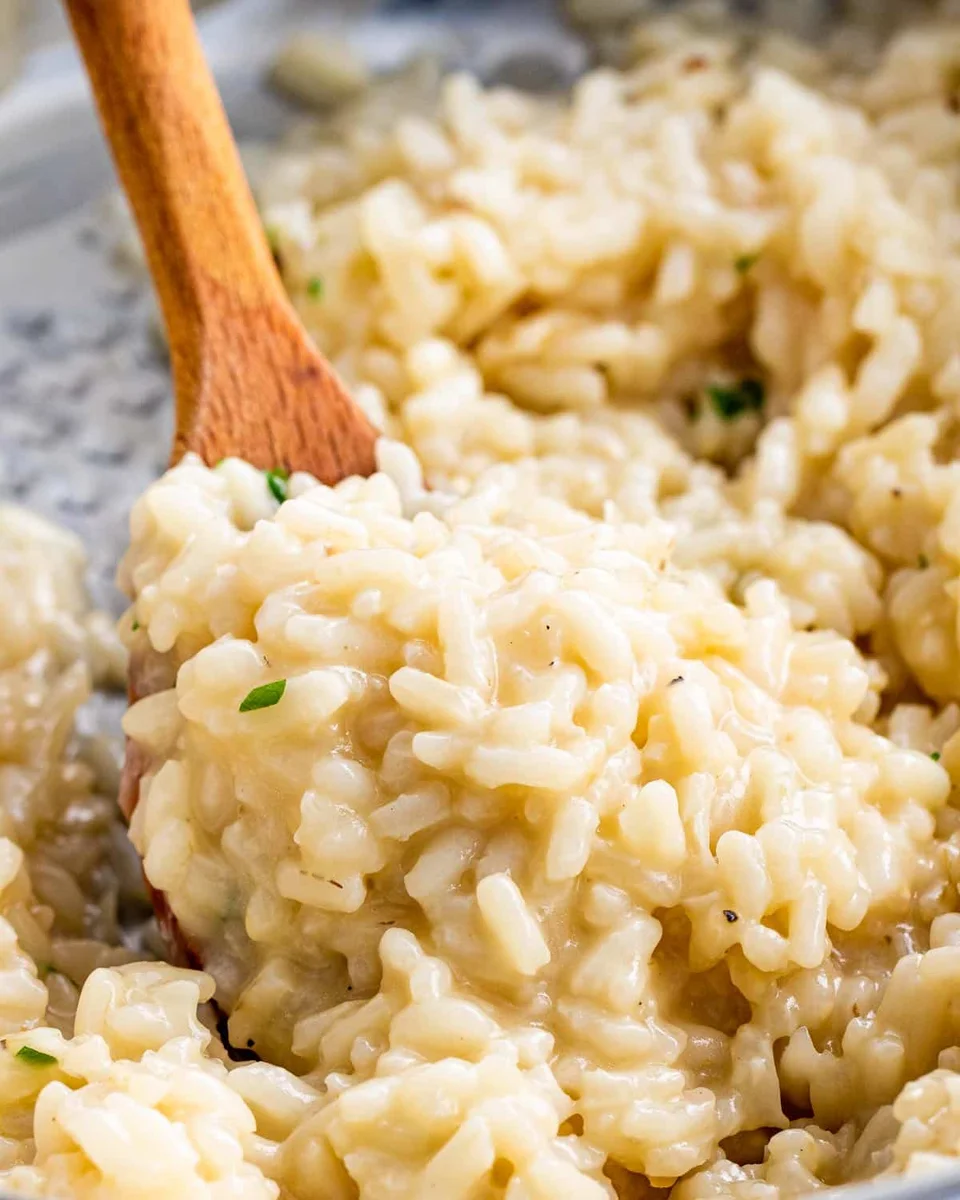
This Italian risotto is a creamy rice dish made with chicken broth, wine, Parmesan and a few kitchen staples. Serve it on its own or alongside a main, and stir in the broth gradually for its characteristic texture.
Ingredients
- 1.9 L (8 cups)low-sodium chicken broth
- 2.5 g (½ teaspoon), or to tastesalt
- 57 g (¼ cup), dividedunsalted butter
- 1 mediumonion, diced
- 2 clovesgarlic, minced
- 120 ml (½ cup)dry white wine, such as Pinot Grigio, Sauvignon Blanc or unoaked Chardonnay
- 400 g (2 cups)arborio rice, also known as risotto rice
- 100 g (1 cup)freshly shredded Parmesan cheese
- 1.25 g (¼ teaspoon), or to tastepepper
- 4 g (1 tablespoon)fresh parsley, chopped
Instructions
- 1
Warm the broth
Put the chicken broth and salt in a deep stockpot. Bring it to a gentle simmer rather than a boil; keep it slightly under-salted.
- 2
Soften the aromatics
Melt 28 g (2 tablespoons) of the butter in a large skillet or lidded pot over medium-high heat. Add the onion and cook for 3–4 minutes, until soft and translucent. Stir in the garlic and cook for 30 seconds, then pour in the wine. Bubble for 1–2 minutes, until reduced.
- 3
Cook the risotto
Lower the heat to medium-low, add the rice and stir often until it has absorbed most of the wine. Add 1 cup of hot broth at a time, stirring occasionally until each addition is absorbed. Continue until the rice is creamy and tender, about 25–30 minutes; you may not need all the broth.
- 4
Finish and serve
Turn off the heat and stir in the Parmesan and the remaining 28 g (2 tablespoons) of butter. Taste and add salt if needed. Finish with freshly cracked pepper and chopped parsley.
What is risotto?
Risotto is an Italian rice dish cooked by gradually adding warm liquid and stirring as the grains release starch. The result is creamy, while the rice should still have some bite.
This basic version builds flavour with onion, garlic, dry white wine and Parmesan. Arborio rice is a practical choice because its starch helps create the characteristic texture.
Nutrition and macros by portion
The nutrition label shows one serving as written: 448 calories, 17g protein, 60g carbs, 14g fat.
| Portion | Adjustment | kcal | Protein | Carbs | Fat |
|---|---|---|---|---|---|
| Lighter | Less butter and Parmesan | 314 kcal | 12g | 42g | 10g |
| This serving | As written | 448 kcal | 17g | 60g | 14g |
| Hungry | Larger risotto portion | 672 kcal | 26g | 90g | 21g |
The rice supplies most of the carbohydrates, while butter and Parmesan contribute much of the fat. Parmesan and chicken broth provide protein, with the rice adding some as well. To balance the plate, serve a smaller bowl alongside vegetables and a protein-rich main.
Choose the right rice
Arborio rice: its short, plump grains absorb broth while releasing starch, helping the dish turn creamy without adding cream.
Keep the grains whole: avoid rinsing the rice, which can wash away surface starch that contributes to the sauce.
Build flavour before adding broth
Onion and garlic: cook the onion until softened and translucent, then give the garlic only 30 seconds so it becomes fragrant without browning.
Wine: let it bubble for 1–2 minutes and reduce before adding broth. A dry white wine keeps the flavour balanced rather than sweet.
Add broth gradually
Hot broth: keep it at a gentle simmer in a separate pot so each addition does not cool the rice mixture.
Small additions: add 1 cup at a time and wait until most of it is absorbed before adding more. Stir often, but it is not necessary to stir constantly.
Check the texture
Tender grains: after about 25–30 minutes, taste the rice. It should be tender with a slight firmness at the centre, not mushy.
Creamy finish: the rice should move easily when stirred and look moist, not stiff. The recipe may not need all 1.9 litres of broth.
Serve it while creamy
Butter and Parmesan: stir them in after turning off the heat for a rich, cohesive finish. Taste before adding more salt, since Parmesan and broth both contribute seasoning.
On its own, risotto makes a substantial bowl; it also works as a side for roasted vegetables, chicken or fish. Add the parsley and pepper just before serving.
Recipe notes & tips
- Warm the broth before adding it so the rice cooks steadily.
- Use a wide skillet or pot to give the rice room to cook evenly.
- Stir often enough to prevent sticking, especially as the liquid reduces.
- Taste the rice near the end of cooking rather than relying only on the timer.
- Season cautiously at first because the broth and Parmesan can both be salty.
- Serve promptly, while the risotto is still loose and creamy.
Variations
- Use vegetable broth: swap it for the chicken broth for a meat-free version.
- Add mushrooms: cook sliced mushrooms with the onion until softened.
- Try another cheese: replace some of the Parmesan with finely grated Pecorino.
- Add peas: stir in peas near the end and cook until just tender.
- Skip the wine: use an extra ladle of hot broth in its place.
- Add herbs: finish with chopped chives or thyme alongside the parsley.
Common mistakes to avoid
- Boiling the broth: a rolling boil can make it harder to control the cooking; keep it at a gentle simmer.
- Adding cold broth: it can interrupt the cooking; ladle in broth while it is hot.
- Pouring in all the broth at once: the rice may cook unevenly; add it gradually and let each addition absorb.
- Overcooking the rice: it can turn mushy; start tasting around the 25-minute mark.
- Browning the garlic: it can taste bitter; add it after the onion and cook for only 30 seconds.
- Adding salt too early: broth and Parmesan vary in saltiness; taste the finished risotto before adjusting.
How to store
Refrigerate leftovers in an airtight container for up to 3 days. Reheat gently in a saucepan with a splash of broth or water, stirring until hot; the texture will be thicker than when freshly made.
Frequently asked questions
Do I need to stir risotto constantly?
No. Stir often enough to keep the rice from sticking and to help it cook evenly, then let each addition of broth absorb before adding more.
How do I know when the rice is done?
Taste a grain: it should be tender but retain a slight bite at the centre. The risotto should look creamy and moist rather than stiff.
Will I use all the broth?
Not necessarily. Add it gradually and stop when the rice is creamy and tender; the amount absorbed can vary.
Can I make this without wine?
Yes. Leave out the wine and use some of the hot broth instead, adding it gradually as directed.
Can I make risotto ahead?
It is best served straight after cooking, when it is at its creamiest. You can reheat leftovers with a splash of broth or water, though the texture will be denser.
Cook it from the original
This recipe comes from cravinghomecooked.com. Their page has the author’s own photos, notes and tips — the best place to cook it from.
Open the recipe on cravinghomecooked.com