
Coq au Vin
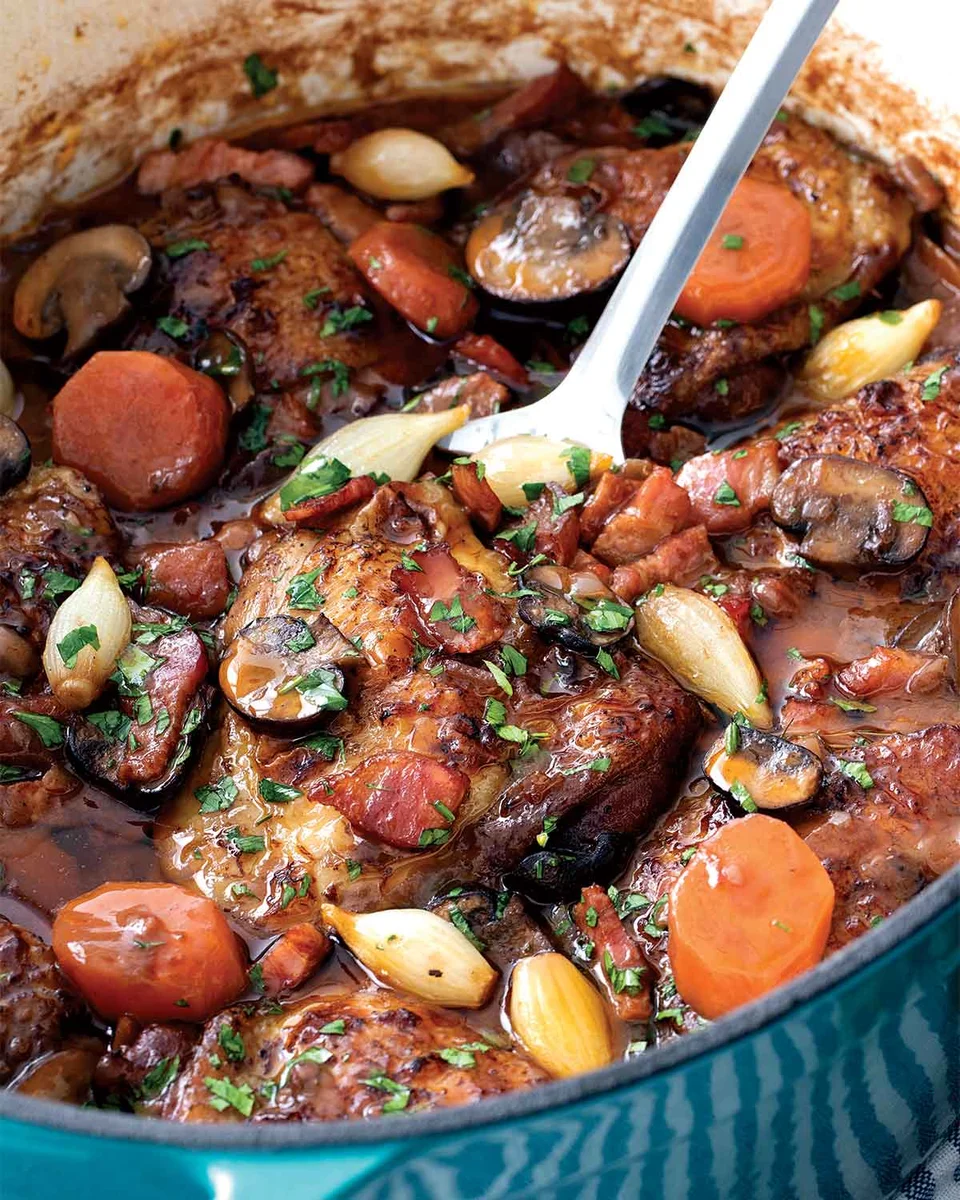
Coq au vin is a French chicken stew braised with red wine, bacon, mushrooms and pearl onions. This version builds a rich sauce in one pot, then finishes the chicken under the grill for crisp skin.
Ingredients
- 15 mlolive oil
- 8 slices, cut into 2.5 cm piecesbacon
- 8bone-in, skin-on chicken thighs
- 1 teaspoon (5 ml), or to tastesalt
- ½ teaspoon (2.5 ml), or to tastepepper
- 1 medium, choppedyellow onion
- 2 large, cut into 1.3 cm piecescarrots
- 3 cloves, mincedgarlic
- 2 tablespoons (30 ml)cognac
- 1 tablespoon (15 ml)tomato purée
- 475 ml (2 cups)red wine, preferably Burgundy or Pinot Noir
- 240 ml (1 cup)chicken stock
- 4 sprigsfresh thyme
- 2bay leaves
- 57 g (¼ cup), softened and unsaltedbutter
- 170 g (6 oz)pearl onions
- 227 g (½ lb), slicedcremini mushrooms
- 2 tablespoons (about 16 g)plain flour
- To tastefresh parsley, chopped, for garnish
Instructions
- 1
Cook the bacon
Heat the olive oil in a large Dutch oven over medium heat. Add the bacon and cook for 5–7 minutes, until crisp. Lift it out with a slotted spoon and set aside, leaving the fat in the pot.
- 2
Brown the chicken
Season the chicken thighs with the salt and pepper. Raise the heat to medium-high and place the chicken skin-side down in the pot. Cook until the skin is crisp and golden, then remove the chicken and set it aside.
- 3
Build the sauce
Lower the heat to medium and add the onion and carrots. Cook for 4–5 minutes, until the onion softens. Add the garlic and cook for 30 seconds, then pour in the cognac and cook for 1 minute. Stir in the tomato purée and cook for 30 seconds more, then add the red wine, chicken stock, thyme and bay leaves.
- 4
Braise the chicken
Bring the mixture to the boil, then lower the heat to a simmer. Return the chicken to the pot and nestle it into the liquid. Cover and simmer for 20 minutes.
- 5
Brown the vegetables
Meanwhile, melt 2 tablespoons of the butter in a separate frying pan over medium heat. Add the pearl onions and mushrooms and cook for 10–12 minutes, stirring often, until well browned.
- 6
Thicken the sauce
Mix the remaining butter with the flour to make a paste. Remove the chicken from the pot and set it aside. Whisk the paste into the sauce and raise the heat to medium-high, whisking until thickened. Add the pearl onions and mushrooms, then simmer over medium heat for 5 minutes.
- 7
Crisp the skin
While the sauce simmers, place the chicken skin-side up on a baking sheet. Grill for 2–5 minutes to crisp the skin.
- 8
Finish and serve
Return the chicken and bacon to the pot. Garnish with freshly chopped parsley.
What is coq au vin?
Coq au vin is a French braise traditionally made by slowly cooking chicken in wine with savoury additions such as bacon and vegetables. The wine gives the dish its deep colour and flavour, while the long, gentle cooking melds the ingredients into a hearty stew.
This version uses chicken thighs, red wine, mushrooms and pearl onions. Browning the chicken and vegetables first gives the sauce extra depth, and a brief grill at the end helps restore crispness to the skin.
Nutrition and macros by portion
The nutrition label shows one serving as written: 578 calories, 29g protein, 11g carbs, 41g fat.
| Portion | Adjustment | kcal | Protein | Carbs | Fat |
|---|---|---|---|---|---|
| Lighter | Less bacon and butter | 405 kcal | 20g | 8g | 29g |
| This serving | As written | 578 kcal | 29g | 11g | 41g |
| Hungry | Add potatoes or bread | 867 kcal | 44g | 17g | 62g |
The chicken supplies much of the protein, while the bacon and butter contribute a substantial share of the fat. Carbohydrates come mainly from the carrots, onions, tomato purée and flour used to thicken the sauce. For a balanced plate, serve a thigh with a generous helping of vegetables and a measured portion of potatoes or bread.
Why these ingredients work
Wine and stock: Red wine forms the backbone of the sauce, while chicken stock rounds it out. Burgundy or Pinot Noir are suggested, but use a red wine you would also enjoy drinking.
Bacon and mushrooms: Bacon leaves savoury fat in the pot for browning the chicken, and the mushrooms bring a mellow, earthy note. Pearl onions add small pockets of sweetness to the finished stew.
Browning before braising
Chicken skin: Set the thighs skin-side down in the hot pot and let them colour before turning or removing them. That browned surface contributes flavour to the cooking fat and sauce.
Vegetables: Give the pearl onions and mushrooms time to brown in their separate pan, stirring often. They go into the stew near the end, so they keep more texture than if they simmered from the start.
Thickening the sauce
Butter paste: Mixing softened butter with flour before adding it helps the thickener disperse into the sauce. Whisk it in steadily and keep whisking as the sauce heats until it thickens.
Sauce texture: The sauce should coat the chicken rather than feel watery. If it thickens quickly, whisk carefully and keep the heat controlled to avoid sticking.
Timing and doneness
Gentle simmer: Keep the covered pot at a simmer for the stated 20 minutes rather than letting it boil vigorously. This gives the chicken time to cook in the wine and stock without roughing up the sauce.
Final grill: The optional 2–5 minutes under the grill is for crisping the skin, not replacing the braise. Watch closely, as the skin can brown quickly.
Serving coq au vin
Make it a full meal: Serve the stew with mashed potatoes, crusty bread or buttered noodles to catch the wine sauce. A simple green salad or steamed green vegetables bring a fresh contrast.
At the table: Spoon plenty of mushrooms, pearl onions and sauce over each chicken thigh. Add parsley just before serving for a fresh finish.
Recipe notes & tips
- Pat the chicken skin dry before browning if it is damp.
- Brown the thighs in batches if they do not fit in a single layer.
- Use a wine with enough flavour to stand up to the bacon and stock.
- Stir the mushrooms and pearl onions regularly so they brown without catching.
- Keep a close eye on the chicken under the grill during the final step.
Variations
- Use chicken legs: Swap the thighs for bone-in legs and keep the other ingredients the same.
- Try another red wine: Use a different dry red if Burgundy or Pinot Noir is unavailable.
- Add more herbs: Include a little extra thyme for a more pronounced herbal note.
- Serve with mash: Spoon the sauce over mashed potatoes for a comforting accompaniment.
- Skip the grill: Serve the chicken straight from the pot if crisp skin is not a priority.
Common mistakes to avoid
- Crowding the pot: The chicken will colour less evenly; brown it in batches if needed.
- Boiling hard: A vigorous boil can make the braise rough; lower the heat to maintain a gentle simmer.
- Rushing the vegetables: Give the mushrooms and onions their full browning time for better colour and flavour.
- Adding flour directly: It can form lumps; first mix it with the remaining softened butter into a paste.
- Leaving the grill unattended: The skin can go from crisp to burnt quickly; watch it throughout.
How to store
Cool leftovers promptly and refrigerate in a covered container for up to 3 days. Reheat gently in a covered pan until piping hot, adding a splash of stock or water if the sauce has thickened; the skin may soften after storage.
Frequently asked questions
Can I make coq au vin ahead?
Yes. Cook the stew, cool it promptly and refrigerate it, then reheat gently before serving. Grill the chicken skin at the end if you want to crisp it again.
What wine should I use?
The recipe recommends Burgundy or Pinot Noir. A dry red wine that you enjoy drinking is a suitable alternative.
Can I use boneless chicken thighs?
Bone-in, skin-on thighs are specified for this recipe. Boneless thighs can be used, but they may cook more quickly, so check them during the braise.
Do I have to grill the chicken?
No. The grilling step is optional and is only there to crisp the skin. You can return the chicken to the sauce and serve it without grilling.
How can I tell when the sauce is thick enough?
After whisking in the butter and flour paste, the sauce should thicken enough to coat the chicken. Keep whisking as it heats so it thickens evenly.
Cook it from the original
This recipe comes from cravinghomecooked.com. Their page has the author’s own photos, notes and tips — the best place to cook it from.
Open the recipe on cravinghomecooked.com